
From picking your first campsite to sleeping soundly in a tent — the only camping guide for beginners you’ll need to go from zero experience to genuinely enjoying the outdoors.
Key Takeaways
- Car camping at an established campground with facilities is the best starting point for first-time campers — you get the outdoor experience without the technical complexity of backcountry camping
- Your first camping trip should be one or two nights maximum, close to home, at a campground with running water and bathrooms
- The three non-negotiables for a comfortable first camping experience: a tent you’ve practiced setting up, a sleeping pad (not just a sleeping bag), and more layers than you think you need
- A complete beginner camping kit costs $75–200 if you shop smart and borrow what you can — you don’t need to spend thousands to camp well
- The American Camping Association reports that over 40 million Americans camp each year — and the vast majority started exactly where you are now, with no experience and a lot of questions
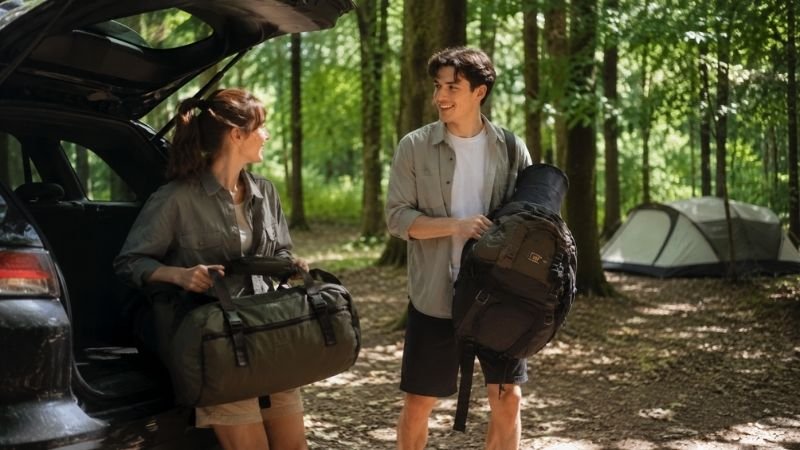
You’ve been thinking about it for a while. Maybe a friend posted photos from a camping trip that made you genuinely envious. Maybe you’ve been feeling the pull to get outside and do something that isn’t a workout class or a weekend at a bar. Maybe you just want to know what sleeping under the stars actually feels like.
Whatever brought you here, welcome. Camping for beginners doesn’t have to be complicated, expensive, or intimidating — but it does help to know what you’re getting into before you go.
This guide covers everything: what type of camping to start with, how to find and book your first campsite, what gear you actually need (and what you don’t), how to sleep comfortably outdoors, what to eat, how to stay safe, and what to expect from your first night in a tent. By the time you finish reading, you’ll have a clear picture of exactly how to plan your first camping trip — and a realistic sense of what it’s going to be like.
What Is Camping, Really? (And What Type Should Beginners Start With?)
Before anything else, it helps to understand that “camping” covers a huge range of experiences — from parking your car next to a maintained campsite with flush toilets and a camp store, to hiking 15 miles into the backcountry and sleeping under a tarp.
For beginners, the answer is simple: start with car camping at a developed campground.
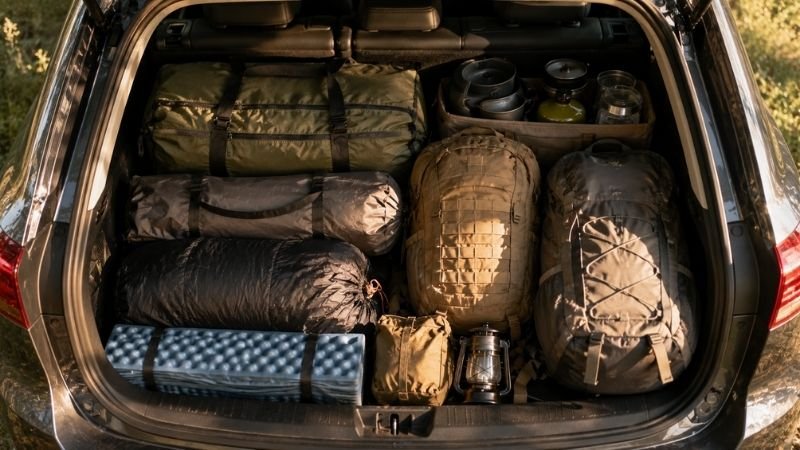
Car camping means your vehicle parks at or very near your campsite. You can bring as much gear as fits in your car — a full-size cooler, camp chairs, a proper lantern, extra blankets, and everything else that makes your first experience comfortable. The campsite typically has a flat tent pad, a picnic table, a fire ring, and access to bathrooms and running water within walking distance.
This is the right starting point for several reasons:
- You can bail if things go wrong — your car is right there
- Weight doesn’t matter, so you can prioritize comfort over gear minimalism
- Developed campgrounds have facilities that significantly lower the logistical challenge
- You can start close to home and work your way to more remote experiences over time
More advanced forms of camping — backpacking (hiking in with everything on your back), dispersed camping (camping without any facilities), or winter camping — require significantly more gear, knowledge, and experience. They’re genuinely wonderful, but they’re not where to start.
Editor’s note: The single most common reason people have a bad first camping experience is choosing a trip that’s too ambitious. One night, close to home, at a campground with bathrooms. That’s the formula. Save the backcountry for trip three or four.
Planning Your First Camping Trip: The Decisions That Matter

How Long Should Your First Trip Be?
One night. Maybe two if you’re feeling confident.
A single overnight trip is long enough to experience actual camping — sleeping in a tent, cooking outdoors, waking up in nature — without the accumulated discomfort that tends to set in on day three for people who aren’t used to it. If you love it, you’ll already be planning the next trip. If it’s harder than expected, you’ll be home in the morning without having committed to a week.
When Should You Go?
Late spring through early fall is ideal for beginner camping in most of North America. Aim for mild-weather windows — weeknights if possible (campgrounds are less crowded), and check the forecast before you commit. Your first trip should not happen in the rain if you can help it. A dry, mild first experience is much more likely to make you want to do it again.
Summer weekends at popular campgrounds fill up weeks or months in advance. Book early or plan for shoulder-season dates.
Where Should You Go?
For your first trip, prioritize these factors in order:
1. Close to home. Within 1–2 hours. If something goes wrong — forgotten gear, uncomfortable conditions, a tent that won’t stay up — you want to be able to go home. There’s no shame in bailing on a first trip, and it’s much easier when home is nearby.
2. Has facilities. Running water and flush toilets make an enormous difference for first-timers. Look for campgrounds rated “developed” or that specify they have restrooms and water access.
3. Good recent reviews. Check Recreation.gov, Reserve America, or the campground’s own site for recent user reviews. Look for mentions of noise levels, site conditions, wildlife activity, and whether the facilities are clean and functional.
4. Has a reservation system. Popular campgrounds require reservations — sometimes months in advance. Don’t assume you can show up and find a site.
Where to find campgrounds:
- Recreation.gov — federal campgrounds (national parks, forests, BLM land)
- Reserve America — state park campgrounds
- Hipcamp — private campgrounds and unique camping experiences
- The Dyrt — community-driven campground reviews and discovery
Essential Camping Gear for Beginners: What You Actually Need
Gear anxiety is real — the outdoor industry makes it easy to think you need $2,000 of equipment before you can spend a night outside. You don’t. Here’s an honest breakdown of what matters and what can wait.
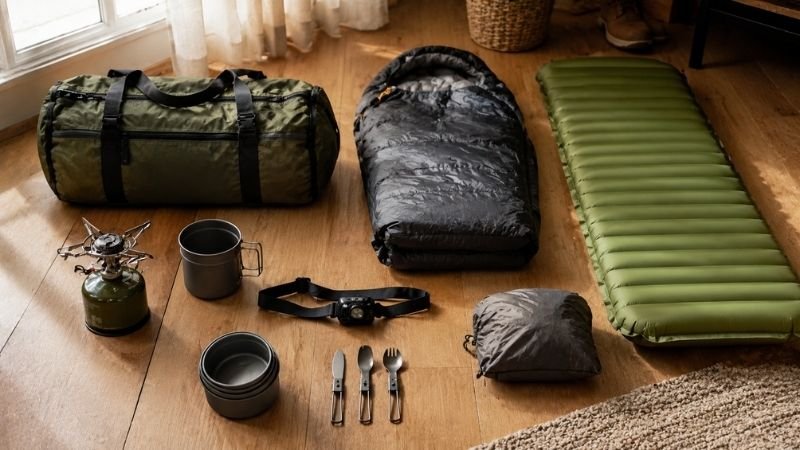
The Non-Negotiables
Shelter: Your Tent Your tent is your bedroom, your weather protection, and your psychological home base for the trip. For car camping beginners, a basic 2-person or 3-person dome tent in the $50–120 range is completely adequate for three-season camping (spring through fall).
Key things to look for:
- Freestanding design (stands on its own without stakes — easier to set up and reposition)
- Includes a rainfly (the waterproof outer cover — critical even on “clear” nights)
- Fits your group with a little extra space (tent capacity ratings are optimistic — size up if you can)
Before you go: Practice setting up your tent at home, in your backyard or living room. This is the most commonly skipped and most impactful preparation you can do. Read more in our complete tent setup guide for beginners.
Sleep System: Sleeping Bag + Sleeping Pad Both matter. This is where many beginners make their first mistake.
Your sleeping bag keeps you warm from the air around you. Your sleeping pad keeps you warm from the ground — which conducts heat away from your body significantly faster than air does. A great sleeping bag on bare ground will still produce an uncomfortably cold night.
For beginner car camping:
- Sleeping bag rated for temperatures 10–15°F below the expected nighttime low
- A sleeping pad with at least a 2.0 R-value for three-season camping (higher for colder conditions)
Read our detailed guide on sleeping bag temperature ratings explained before buying.
Lighting: Headlamp (Not a Flashlight) A headlamp gives you hands-free light for setting up camp, cooking, navigating to the bathroom at 2am, and dozens of other camp tasks. A flashlight requires a free hand. Bring at least one headlamp per person with fresh batteries.
Water The National Park Service recommends 1 gallon (about 4 liters) of water per person per day for camping — for drinking, cooking, and basic hygiene. Most beginners bring half that. Bring more water than you think you need.
At established campgrounds, there’s usually a water spigot nearby. Bring containers to fill. At more primitive sites, you may need to carry all your water or use a filter.
What to Borrow or Rent First
Before buying anything, check what you can borrow from friends or rent from outdoor gear shops:
- Tents and sleeping bags are the most commonly borrowed items — large, rarely used, and ideal to borrow for a first trip before committing to a purchase
- REI and many outdoor retailers rent camping gear by the day or night — often significantly cheaper than buying for a one-time test trip
- Sleeping pads are less commonly lent but worth asking about
Gear You Already Own That Works
- Any moisture-wicking athletic clothes (no cotton)
- A rain jacket
- A fleece or insulating layer
- Athletic shoes or trail runners (for easy campground terrain)
- Kitchen items from home (plates, pots, utensils all work for car camping)
- A regular backpack or duffel for your personal items
Complete Beginner Camping Gear List
For the full breakdown of everything to pack — including the 10 most commonly forgotten items — see our complete camping packing list for beginners.
How to Set Up Camp: What to Do When You Arrive
Arriving at your campsite for the first time can feel slightly chaotic. Here’s a straightforward sequence that makes it manageable:
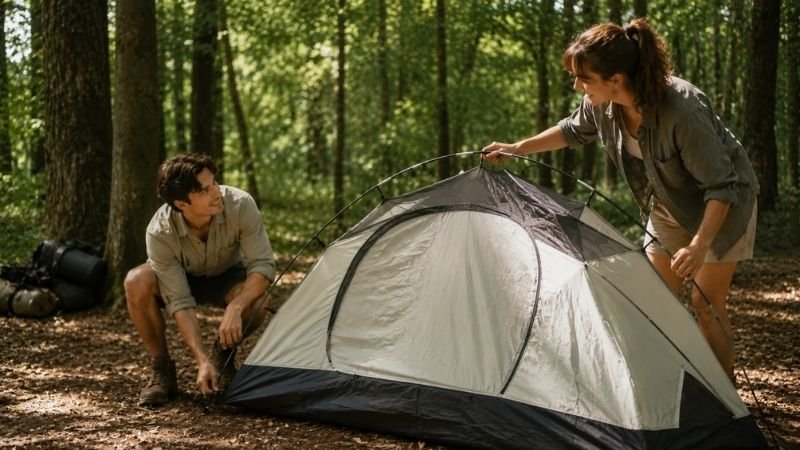
1. Arrive before dark. Setting up a tent in the dark is significantly harder than in daylight. Plan to arrive at least 2–3 hours before sunset.
2. Walk the site before unpacking. Look at the tent pad, find the water source, locate the bathrooms, and note which direction the wind is coming from before you start unloading.
3. Set up the tent first. Everything else can wait, but your bedroom needs to be ready. Clear the tent area of rocks, pinecones, and debris. Lay down your footprint. Set up the tent. Attach and tension the rainfly.
4. Set up your sleep system inside the tent. Sleeping pad first, then sleeping bag on top. Get this done while there’s still light.
5. Set up your kitchen area. Camp stove, food, cooler — ideally downwind from your tent and at least 100 feet away from your sleeping area to minimize food smells near where you sleep.
6. Organize your gear. Know where everything is before you need it in the dark. Headlamps accessible, rain gear accessible, first aid kit accessible.
For complete step-by-step tent setup instructions, see our how to set up a tent guide.
Sleeping Outdoors: How to Actually Sleep Well in a Tent
First-time campers are often surprised by how differently sleep works outdoors. Here’s what to expect and how to optimize it.
What disrupts sleep camping:
- Ground cold — the sleeping pad prevents this; without it, you’ll be cold regardless of your sleeping bag
- Noise — campgrounds can be louder than you expect (other campers, wildlife, wind in trees). Earplugs help more than most people think
- Light — it gets light outside much earlier than you’re probably used to. A sleep mask or a hat pulled over your eyes helps
- Temperature drop — nighttime temperatures at camp drop significantly after the campfire dies, often 20–30°F lower than the afternoon. Dress warmer than you think you need to
Tips for better camp sleep:
- Eat a substantial meal before bed — your body burns calories keeping you warm overnight
- Wear a beanie to sleep — you lose significant body heat through your head
- Put tomorrow’s clothes in your sleeping bag with you — you’ll be grateful for warm socks in the morning
- Ventilate your tent slightly even in cold weather — condensation from your breath builds up without airflow and makes everything feel damp
Camping Food: What to Eat and How to Cook Outdoors
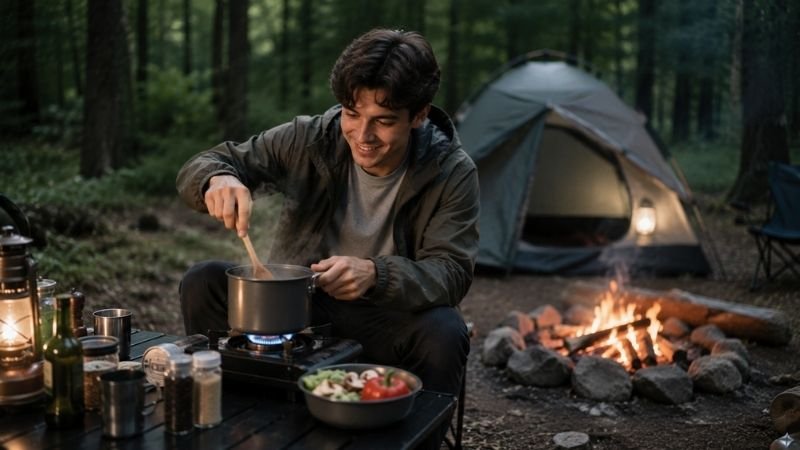
Camp cooking is one of the genuine joys of camping once you figure out a few basics. The key principle for beginners: keep it simple. Elaborate camp meals are something to work toward after you’ve mastered the basics.
Planning Your Camp Meals
Write out every meal before you go. Not a vague list of ingredients — actual meals with specific amounts. This prevents both forgetting food and bringing so much you can’t eat it all.
Simple beginner meal plan:
- Breakfast: Instant oatmeal with nuts and dried fruit, instant coffee or tea, fruit
- Lunch: Sandwiches, crackers and cheese, trail mix, fresh fruit (day 1), bars and jerky (day 2)
- Dinner: Hot dogs or sausages over the fire (night 1), pasta with jarred sauce cooked on the camp stove (night 2)
- Snacks: Trail mix, energy bars, chips, fresh fruit
Camp Cooking Basics
Your camp stove is your kitchen. A basic single-burner canister stove (the kind that screws onto a small propane/isobutane canister) is the most beginner-friendly option — simple to use, reliable, and enough to cook most camp meals. Bring more fuel than you think you need.
Campfire cooking is optional, not required. Building and cooking over a fire is a satisfying skill to develop, but it’s not necessary for good camp food. A stove gives you more consistent results with less work.
Food storage rules:
- Never leave food out overnight — even in campgrounds without bears, wildlife will investigate any unattended food
- Store food in your car or a provided bear box when not in use
- Pack all trash out — nothing goes into the fire except wood
Water at Camp
Know your water situation before you arrive. At most developed campgrounds, there are water spigots — fill your containers when you arrive. At more primitive sites, you may need to filter or treat water from natural sources.
Campfire Basics for Beginners
A campfire is one of the most iconic camping experiences — and one that comes with some important responsibilities.
Before you build one:
- Check if fires are permitted (many areas have fire restrictions, especially in dry conditions — check before you go)
- Use only the designated fire ring or fire pit — never build a fire directly on the ground
- Check if outside firewood is allowed — many campgrounds prohibit bringing in wood from outside the area to prevent spreading invasive insects
Building a basic campfire:
- Place tinder (dry leaves, small twigs, paper) in the center of the fire ring
- Build a small teepee of kindling over the tinder
- Light the tinder and gently blow at the base to encourage the flame
- Add larger pieces of wood as the fire grows, but don’t smother it — airflow is essential
- Never leave a fire unattended
- To extinguish: drown with water, stir the ashes, drown again. Cold to the touch is the standard, not just “looks out”
Camping Safety: The Basics Every First-Timer Needs
Safety at an established campground is genuinely lower-stakes than most beginners fear. The most important safety habits are simple:
Tell someone your plan. Before any camping trip, tell a friend or family member where you’re going, which campground, and when you expect to be home. This costs nothing and matters if anything goes wrong.
Know the campground’s emergency information. Where’s the nearest ranger station? Is there cell service? Is there a campground host? Know these before you need them.
Store food properly. In bear country, this is critical — check local regulations for food storage requirements. Even outside bear country, food left out attracts wildlife.
Basic first aid. Carry a first aid kit with blister pads, bandages, pain reliever, and antihistamines. See our complete hiking first aid guide for full details.
Weather awareness. Check the forecast for your specific campground before you go and again the morning of. If severe weather (thunderstorms, high winds) is forecast, have a plan — that might mean adjusting your site setup or, in extreme cases, camping another time.
For comprehensive outdoor safety guidance, see our outdoor safety for beginners guide.
Camping Etiquette: How to Be a Good Neighbor at the Campground
Campgrounds are shared spaces. A few basic courtesies make the experience better for everyone.
Quiet hours: Most campgrounds have designated quiet hours (typically 10pm–6am). Respect them — sound carries at night and other campers are trying to sleep.
Campsite boundaries: Stay within your designated site. Don’t walk through other people’s campsites as a shortcut.
Light: Keep lanterns and headlamps pointed down and away from neighboring sites after dark.
Leave No Trace: Pack out everything you pack in. Leave your campsite at least as clean as you found it — ideally cleaner. Pick up any trash you see, even if it’s not yours.
Pets: Keep pets leashed at all times unless in a designated off-leash area. Not everyone is comfortable around dogs, and wildlife doesn’t distinguish between friendly and threatening pets.
What to Expect: A Realistic Picture of Your First Night
First-time campers often arrive with either too-high or too-low expectations. Here’s what a typical first car camping experience actually looks and feels like:
Arriving: Slightly chaotic. Finding your site, unloading the car, figuring out the tent — this takes longer than you think. It’s normal.
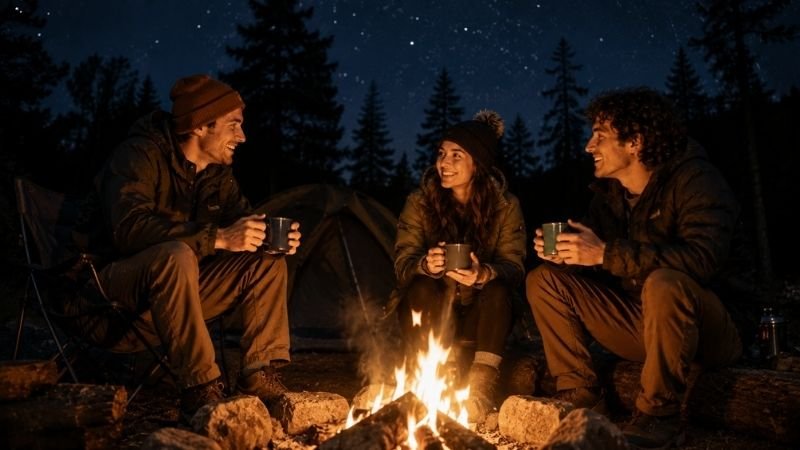
First evening: Genuinely wonderful, usually. Cooking dinner outdoors, sitting around the fire, watching the sky get dark without light pollution — this is the part people fall in love with.
First night: Variable. Sleep quality varies widely for first-timers. You might sleep deeply and wake up feeling incredible. You might be awake at 3am listening to unfamiliar sounds and wondering what they are (it’s almost certainly a raccoon). Both are normal. This is why night two is usually better than night one.
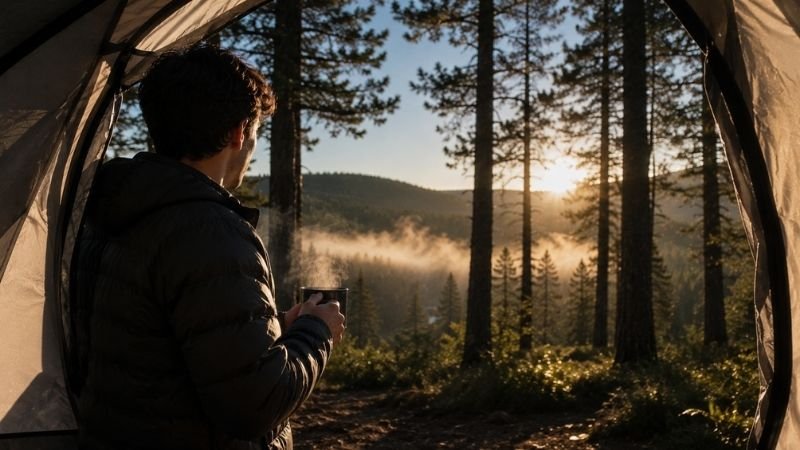
Morning: Almost universally good. There’s something about waking up outside, making coffee on a camp stove, and sitting in the morning light that converts most people to camping. This is the moment most first-time campers decide they’re doing this again.
Coming home: Tired, a little dirty, and probably already thinking about where to go next.
Your First Camping Trip Checklist: The Quick Version
Everything you need covered before you leave:
- [ ] Campsite reserved and confirmed
- [ ] Weather checked for your specific location
- [ ] Tent practiced at home at least once
- [ ] All tent components present (poles, stakes, rainfly, footprint)
- [ ] Sleeping bag and sleeping pad packed
- [ ] Water plan confirmed (bring 1 gallon/person/day minimum)
- [ ] Meals planned and food packed
- [ ] Camp stove and fuel (with lighter)
- [ ] Headlamp with fresh batteries (one per person)
- [ ] Appropriate clothing layers including rain jacket
- [ ] First aid kit
- [ ] Someone knows your plan and expected return
For the full detailed packing list, see our complete camping packing list for beginners.
Common First-Timer Questions Answered
How much does a first camping trip cost? At a basic level: $20–45 for a campsite, plus food costs. Gear ranges from $0 (if you borrow everything) to $150–300 for a basic purchased kit. Car camping is genuinely one of the most affordable overnight travel options available.
Is camping safe for beginners? At established campgrounds with facilities, yes — camping is very safe for beginners. The most common issues are discomfort (cold, poor sleep, unfamiliar sounds) rather than actual danger. Basic preparation — good sleeping system, weather check, telling someone your plan — handles most of what can go wrong.
Do I need to be physically fit to go camping? For car camping: no. You’re walking from your car to your campsite, which is usually a short distance. Day hikes from camp are optional. Car camping is accessible to people of all fitness levels.
What do I do if I can’t sleep in the tent? This happens to almost every first-timer at some point. Options: earplugs help with noise, a sleep mask helps with early light, adding more layers helps with cold. If you’re genuinely too uncomfortable, you can always sleep in the car — there’s no shame in it, and it usually only happens once.
What if it rains? A properly set up tent with a tensioned rainfly will keep you dry in moderate rain. Get inside before the rain starts if possible. Your biggest concern is keeping gear dry during the transition — a large trash bag or rain cover for your pack helps. If severe weather (lightning, heavy sustained rain) is forecast, reconsider your timing.
Ready to Go
Camping for beginners comes down to a few simple things done well: the right campsite, a practiced tent setup, enough warm layers, good food, and realistic expectations for your first night.
Everything else — the campfire stories, the morning coffee ritual, the stars you can actually see away from city lights, the way two days outside can reset your mind more effectively than a week of Netflix — you have to experience to understand.
Book your site. Pack the list. Go.
Explore More Camping Guides
- The Complete Camping Packing List for Beginners
- How to Set Up a Tent for the First Time
- Sleeping Bag Temperature Ratings Explained
- Easy Camping Meals for Beginners
- How to Choose a Campsite
- Outdoor Safety for Beginners
- Hiking First Aid Kit: What to Pack
References
- American Camping Association. Camping Industry Overview and Participation Data. acacamps.org
- National Park Service. Camping Guidelines and Water Safety. nps.gov
- REI Co-op. Camping for Beginners — Expert Advice. rei.com/learn/expert-advice/camping-for-beginners.html
- Leave No Trace Center for Outdoor Ethics. The 7 Principles. lnt.org
- Recreation.gov. Ten Tips for First-Time Tent Campers. recreation.gov