
Everything you need to know before your first hike, camping trip, or day outdoors — from the habits that matter most to the situations nobody plans for.
Key Takeaways
- Telling someone your plan before every outdoor outing is the single most effective safety habit you can build — it costs nothing and can save your life
- The CDC reports that most outdoor recreation injuries are preventable with basic preparation and awareness
- Weather checking should happen for your specific trail or campsite location, not your home — conditions can be radically different within a few miles
- A fully charged phone with an offline trail map is more valuable than any survival gadget for most beginner day hikers
- Outdoor safety isn’t about fear — it’s about preparation that gives you the freedom to actually enjoy being outside
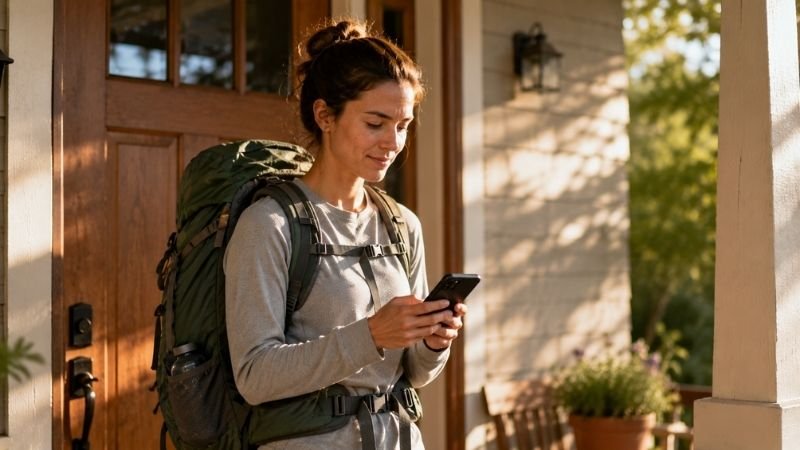
There’s a particular kind of anxiety that hits right before your first real solo outdoor adventure. You’ve got your pack ready, your trail picked, your snacks sorted. And then, somewhere between locking the door and starting the car, a voice in your head starts cataloguing everything that could go wrong.
What if you get turned around? What if the weather changes? What if something happens and you’re out there alone?
This feeling is completely normal — and honestly, it’s useful. It means you’re taking the outdoors seriously, which is the first step toward being genuinely safe out there. The problem is that most people respond to this anxiety in one of two ways: they either overthink it into paralysis, or they ignore it entirely and head out underprepared. Neither works well.
This guide is for the middle path: practical outdoor safety knowledge that gives you real confidence, not just a checklist of rules. Whether you’re planning your first hike, your first camping trip, or just a day in a park you’ve never visited, here’s what you need to know to do it safely.
The 5 Core Outdoor Safety Principles Every Beginner Needs
Before the specifics, there are five foundational habits that underlie almost every other piece of outdoor safety advice. Get these right, and you’ve handled the majority of what can go wrong.
1. Always Tell Someone Your Plan
This is the single most important outdoor safety habit, and it’s completely free. Before every outdoor outing — every single one — text or call someone and tell them:
- Where you’re going (specific trail name or campsite)
- Which trailhead or parking area you’re starting from
- When you expect to be back
- What to do if they haven’t heard from you by that time
This isn’t being overly cautious. It’s the difference between someone knowing where to look for you if something goes wrong and rescuers searching a vast area with no starting point. The National Park Service reports that most successful wilderness rescues involve someone who knew the hiker’s plan.
Make this non-negotiable. Even for “quick” hikes. Even on familiar trails. Even when you have your phone fully charged.
The 30-second plan text template:
“Hiking [trail name] at [trailhead/park name] today. Starting around [time], back by [time]. If you don’t hear from me by [time + 2 hours], call [local ranger station or 911].”
2. Check the Weather for Your Destination, Not Your House
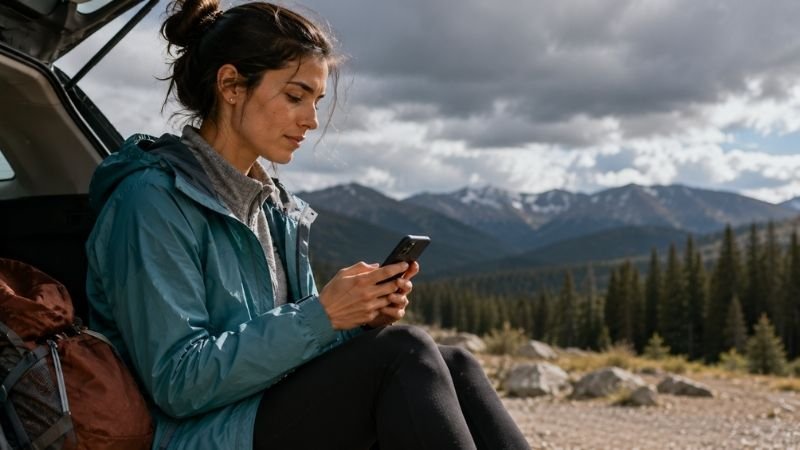
Weather at a trailhead — especially at elevation — can be completely different from what’s happening at home. A sunny morning in the parking lot can become an afternoon thunderstorm at the summit two hours later.
Always check:
- Hourly forecast for your specific location (Weather Underground or Mountain Forecast are more accurate for elevation than standard apps)
- Afternoon thunderstorm probability — start and finish early if storms are possible
- Wind speed at elevation (wind chill makes temperature feel significantly colder)
- Precipitation probability for the entire day, not just when you plan to start
The practical rule: If you see a >30% afternoon thunderstorm chance for mountain or exposed terrain, either start significantly earlier to be off exposed ground before noon, or choose a lower-elevation alternative.
3. Know Your Limits Honestly
The most common cause of outdoor rescues isn’t equipment failure or freak weather — it’s hikers who overestimated what they were capable of and underestimated what the trail demanded.
Before committing to any outdoor activity, be honest about:
- Your current fitness level (not your aspirational fitness level)
- Your experience with this type of terrain
- Your group’s fitness level — you move at the pace of the slowest person
- The actual difficulty rating and recent reviews, not just the distance
The outdoors rewards honesty about your limits and punishes wishful thinking. A 5-mile hike with 2,000 feet of elevation gain is not the same as a flat 5-mile walk. Read recent trail reviews before you go.
4. Carry the Essentials, Even on Short Outings
The Ten Essentials framework — developed by The Mountaineers in the 1930s — exists because the most common emergencies happen on outings that weren’t supposed to need much preparation. A “quick 2-hour hike” that becomes a 5-hour hike in changing weather is not a hypothetical; it’s a regular occurrence.
At minimum, carry on every outing:
- Water (more than you think you need)
- Food (something calorie-dense)
- Extra layer (weather changes fast)
- Headlamp (even on day trips — things take longer than expected)
- Phone (charged, with trail downloaded offline)
- Basic first aid (blister pads at minimum)
- Emergency blanket (weighs almost nothing, could matter enormously)
5. Turn Around When Something Feels Wrong
The summit, the waterfall, the campsite — none of it is worth compromising your safety. Experienced outdoors people internalize one rule above all others: you can always come back.
If the weather turns, if someone in your group is struggling, if you’ve underestimated the time and daylight is fading, if something feels off — turn around. There is no outdoor achievement that justifies pushing through warning signs you’re ignoring.
This mindset is actually what makes experienced hikers more adventurous, not less. They can take on bigger challenges because they trust themselves to make the right call when conditions change.
Hiking Safety: Before, During, and After the Trail

Before You Go
Plan your route and know your trail. Use AllTrails or a similar app to read recent reviews — not just the official trail description. Other hikers will mention current conditions, confusing junctions, parking issues, and seasonal hazards that don’t appear on any official map.
Download your trail map offline. Cell service disappears on most trails, sometimes within the first mile. Download your route before you leave home so your navigation works without signal.
Tell someone your plan. (See above — this is worth repeating.)
Check the forecast for your trailhead. Not your home. Your actual destination.
Start early. Morning hiking means cooler temperatures, fewer crowds, more daylight buffer, and you’ll be off exposed ridges before afternoon thunderstorms develop. For summer hikes, aim to be on trail by 7-8am.
On the Trail
Stick to marked trails. Off-trail navigation is a skill that takes years to develop. As a beginner, staying on marked trails is the single most effective way to not get lost.
Watch your pace on the ascent. The most common beginner mistake is going out too fast and running out of energy before the return. A pace you can maintain while holding a conversation is your aerobic sweet spot for sustained hiking.
Drink water before you’re thirsty. By the time thirst hits, you’re already mildly dehydrated. Drink on a schedule — a few sips every 15-20 minutes — rather than waiting until you need it.
Monitor the weather actively. Don’t just check the forecast and forget about it. Watch the sky. If you see clouds building over mountains or hear distant thunder, don’t wait to see what happens — start moving to lower ground immediately.
Use the turnaround rule. Plan to turn around when you’ve used one-third of your time, water, and energy — not halfway. You need reserves for the return.
If You Get Disoriented
Stop moving immediately. Continuing to walk when you’re not sure of your direction almost always makes things worse.
Check your offline map — even without signal, your GPS location may still show on a downloaded map. Look for trail markers. Listen for sounds of water (streams often run parallel to trails) or other hikers.
If you genuinely cannot find your way back and have cell service: call 911 and stay where you are. If you don’t have service and have a personal locator beacon: activate it. If neither: stay put, make yourself visible (bright clothing, whistle), and conserve energy and water while waiting for help.
This is exactly why telling someone your plan matters so much — someone will know to start looking for you, and they’ll know where to start.
Camping Safety: Setting Up, Staying Safe, and Handling the Night
Choosing and Setting Up Your Campsite
Follow Leave No Trace principles for campsite selection. Camp at least 200 feet from water sources, trails, and other campers. Choose established campsites when available — they’re established for a reason.
Check for hazards before settling in. Look up: dead trees or large branches overhead (called “widow-makers”) are a genuine risk in windy conditions. Look around: avoid low-lying areas that could flood in rain, and areas with heavy animal activity signs.
Store food properly. Food smell attracts animals — in bear country, use a bear canister or hang food at least 100 feet from your sleeping area. Even in areas without bears, improper food storage attracts raccoons, mice, and other wildlife that can damage gear and create problems. Check local regulations before your trip.
Campfire Safety
Build fires only in designated fire rings or areas where campfires are permitted. Check for current fire restrictions before any camping trip — conditions change seasonally and vary by location.
The campfire rules that matter:
- Never leave a fire unattended
- Keep fires small and manageable
- Have water nearby before you light
- Extinguish completely — drown, stir, drown again until the ashes are cold to the touch
- “Cold to the touch” is the actual standard, not “looks out”
Night Safety at Camp
- Keep a headlamp within reach of your sleeping area at all times
- Know where your shoes are before you sleep (you may need them quickly)
- Keep your phone charged or carry a backup battery
- If you hear unusual sounds outside your tent, use your headlamp before getting up — most wildlife will move away from light
Weather Safety: Hot Days, Cold Days, and Everything in Between
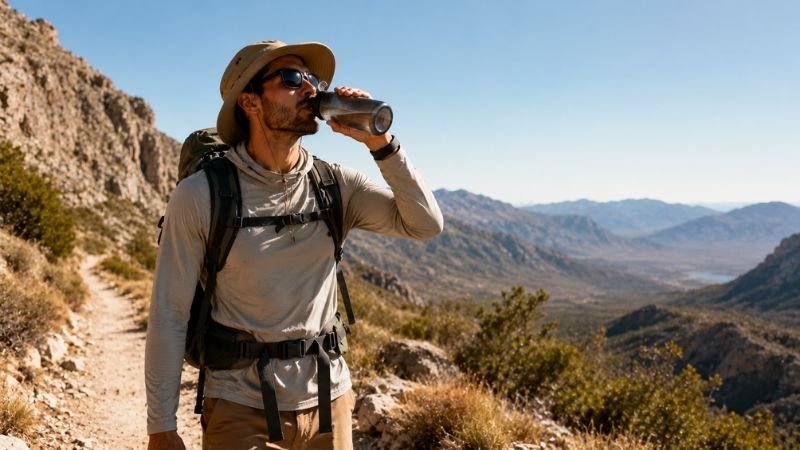
Outdoor Safety in Hot Weather
Heat-related illness is one of the most preventable outdoor emergencies — and one of the most commonly underestimated. The CDC reports that heat stroke is fatal without rapid treatment, yet most cases develop gradually from ignored warning signs.
Staying safe in heat:
- Drink 500ml (16oz) of water per hour of hiking, more in direct sun
- Add electrolytes on hot days — plain water doesn’t replace what you lose through sweat
- Wear light-colored, loose, moisture-wicking clothing
- Schedule strenuous activity for early morning before peak heat (typically 11am-3pm)
- Take shade breaks proactively, not just when you feel bad
Early warning signs of heat exhaustion (stop activity, rest in shade, hydrate): Heavy sweating, weakness, cool pale skin, fast weak pulse, nausea, headache
Heat stroke warning signs (this is a medical emergency — call 911): Hot dry skin (no longer sweating), confusion, rapid strong pulse, loss of consciousness
Outdoor Safety in Cold Weather
Cold weather mistakes are the mirror image of heat mistakes — people underestimate how quickly conditions deteriorate and how fast hypothermia can develop when wet and cold.
Staying safe in cold:
- Layer with moisture-wicking base, insulating mid-layer, and wind/water-resistant outer layer
- Avoid cotton in any layer — wet cotton loses all insulating ability
- Dress slightly cooler than comfortable at the trailhead; you’ll warm up fast on the ascent
- Pack more warm layers than you think you need — you can always not use them
Early hypothermia warning signs (get the person warm and dry immediately): Uncontrollable shivering, slurred speech, clumsiness, confusion
If someone stops shivering but is still cold and confused: this indicates severe hypothermia — seek emergency help immediately. Paradoxically, stopping shivering can mean the body no longer has the energy to regulate temperature.
Rain and Storm Safety
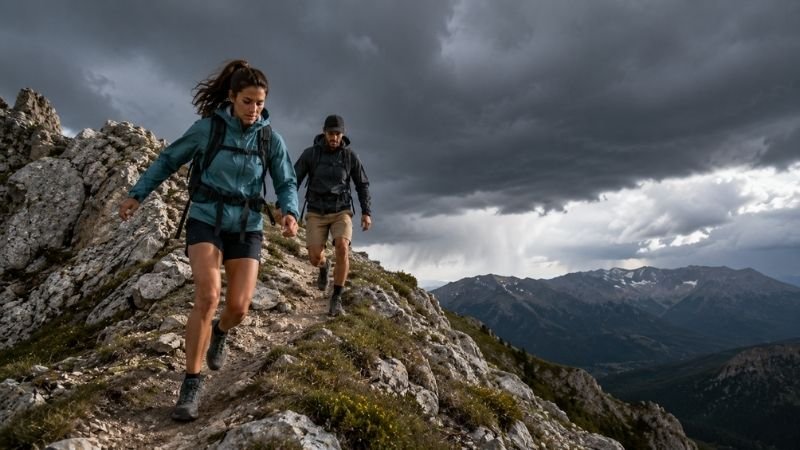
Lightning is the most dangerous acute weather hazard in the outdoors. It can develop quickly and strike without direct overhead clouds.
Lightning safety rules:
- If you hear thunder, you’re within striking distance — seek shelter immediately
- Descend from exposed ridges, summits, and open areas
- Avoid tall isolated trees, metal structures, and open water
- If caught in the open with no shelter available: crouch low on your feet (not lying flat), minimize your contact with the ground, and stay away from other people by at least 50 feet
Outdoor Safety When You’re Alone
Solo outdoor adventures are genuinely wonderful — there’s a clarity of experience that group outings can’t quite replicate. But they require an extra layer of intentional preparation.
Additional precautions for solo hiking or camping:
- Tell someone your specific plan, not just “I’m going hiking” (see the template above)
- Choose well-trafficked trails for your first solo outings — other hikers are a resource
- Share your live location with a trusted contact via your phone’s built-in feature
- Consider a personal locator beacon (PLB) for remote or backcountry solo trips
- Know the location of the nearest ranger station for your area
- Carry a whistle — three blasts is the universal distress signal
Editor’s note: Going solo doesn’t mean going unsupported. The best solo hikers are also the most thorough planners. The freedom of solo hiking is built on a foundation of preparation.
Wildlife Safety Basics
For most beginner trails in well-trafficked areas, wildlife encounters are limited to birds, squirrels, and deer. But basic wildlife awareness is worth having regardless of where you’re hiking.
Universal wildlife principles:
- Never feed wildlife, even seemingly harmless animals — human food habituates animals to humans and can be harmful to their health
- Observe from a distance and never approach
- Keep food stored properly and away from sleeping areas
- Make noise on the trail in areas with limited visibility — most wildlife actively avoids humans
In bear country specifically: Check local guidelines before your trip. Carry bear spray if recommended for your area (know how to use it before you need it). Hike in groups when possible. Make noise on the trail. Know the difference between black bear and grizzly bear response protocols — they’re different, and getting them confused is dangerous.
When to Call for Help
Most outdoor situations resolve with basic preparation and calm decision-making. But there are circumstances that require immediate emergency assistance:
Call emergency services (911) or activate a PLB immediately if:
- Someone has a suspected heart attack, stroke, or severe allergic reaction
- Someone has a significant head injury from a fall
- Someone shows signs of heat stroke or severe hypothermia
- There’s a serious injury (fracture, deep wound, inability to walk)
- Someone is missing and hasn’t been found within 30 minutes of an organized search
- Any situation where someone cannot move to safety independently
Do not attempt to manage true emergencies alone. Get help, then provide whatever first aid you can while waiting.
If You Only Have 10 Minutes Before Your First Outing
No time for a full safety review? Do these five things right now:
- Text someone your plan (trail, trailhead, expected return time, what to do if you don’t check in)
- Download your trail map offline on AllTrails or Gaia GPS
- Check the hourly weather forecast for your destination
- Confirm your phone is fully charged
- Put a headlamp, emergency blanket, and blister pads in your pack
That’s it. Ten minutes, five actions, and you’ve handled the most critical preparation for most beginner day hikes.
FAQ: Real Questions About Outdoor Safety
Q: Is it safe to hike alone as a beginner? Yes, on popular, well-trafficked trails with good cell service. Tell someone your plan, download your route offline, stay on marked trails, and bring adequate water and food. Start with shorter, well-reviewed trails and build confidence gradually before attempting remote or technical terrain solo.
Q: What should I do if I encounter a wild animal on the trail? For most wildlife: stop, observe calmly, give the animal space to move away on its own, and back away slowly without turning your back. For bears: make yourself look large, speak calmly, do not run. For mountain lions: maintain eye contact, make yourself appear large, back away slowly. Check local guidelines for your specific region before hiking in known wildlife areas.
Q: How do I know if a storm is coming while I’m hiking? Watch for building cumulus clouds over mountains or darkening skies in the afternoon. Listen for distant thunder — if you can hear it, you’re within striking distance. Check your weather app at the trailhead and at any point you have signal during the hike. When in doubt, descend.
Q: What’s the most important thing to have for outdoor safety? A charged phone with a downloaded offline map and someone who knows your plan. No single piece of gear matters more than these two things for most beginner outdoor situations.
Q: How do I stay safe camping alone for the first time? Choose an established, well-reviewed campsite. Tell someone your exact location and expected return date. Keep your phone charged. Store food properly. Bring a headlamp, emergency blanket, and basic first aid. And remember: you are almost certainly safer on a campground than in an urban environment — the anxiety of “first night alone outdoors” is mostly psychological, not statistical.
Safety Is What Makes Adventure Possible
Outdoor safety isn’t the opposite of adventure — it’s what makes adventure sustainable. The hikers who go the furthest, the campers who tackle the most remote spots, the people who seem most at home in wild places — they’re not careless. They’re prepared. They’ve built the habits that let them move confidently through uncertain terrain because they’ve thought through the uncertainties in advance.
Start with the basics. Tell someone your plan. Check the weather. Carry the essentials. Know your limits. These four habits cover most of what keeps people safe outdoors, and they take minutes to execute.
The trail is there. The outdoors is there. So is the version of you that feels completely at home in it — and preparation is the shortest path to becoming that person.
Keep building your outdoor knowledge:
- Hiking First Aid Kit: What to Pack and How to Use It
- Best Hiking Apps for Beginners: Navigate Safely
- The Complete Hiking Packing List for Beginners
- Average Hiking Speed: How to Plan Your Time on Trail
References
- Centers for Disease Control and Prevention (CDC). Heat Stress — Heat Related Illness. cdc.gov
- National Institutes of Health / National Institute on Aging. Safety Tips for Exercising Outdoors. nia.nih.gov
- National Park Service. Wilderness Safety and Leave No Trace. nps.gov
- The Mountaineers. Ten Essentials Framework for Outdoor Safety. mountaineers.org
- American Meteorological Society. Lightning Safety Guidelines for Outdoor Recreation. ametsoc.org
- Leave No Trace Center for Outdoor Ethics. The 7 Principles. lnt.org