
What to look for, what to skip, and the waterproof picnic blanket options that actually deliver — written for people who just want to sit on the grass without getting damp.
Key Takeaways
- The most important feature on any picnic blanket is the bottom layer, not the top — a quality waterproof backing is what keeps you dry; the fabric on top is mostly about comfort and aesthetics
- For 2 people: a 60″ x 60″ blanket is the minimum comfortable size. For 4 people: aim for 79″ x 79″ or larger
- Machine washable is a non-negotiable feature if you have children, dogs, or plan to use the blanket frequently
- A solid waterproof picnic blanket can be found for $20–40 — spending more gets you better durability and packability, not necessarily better waterproofing
- Corner loops or anchor pockets are worth having — wind is a genuine issue that most first-time buyers don’t think about until their blanket becomes a sail
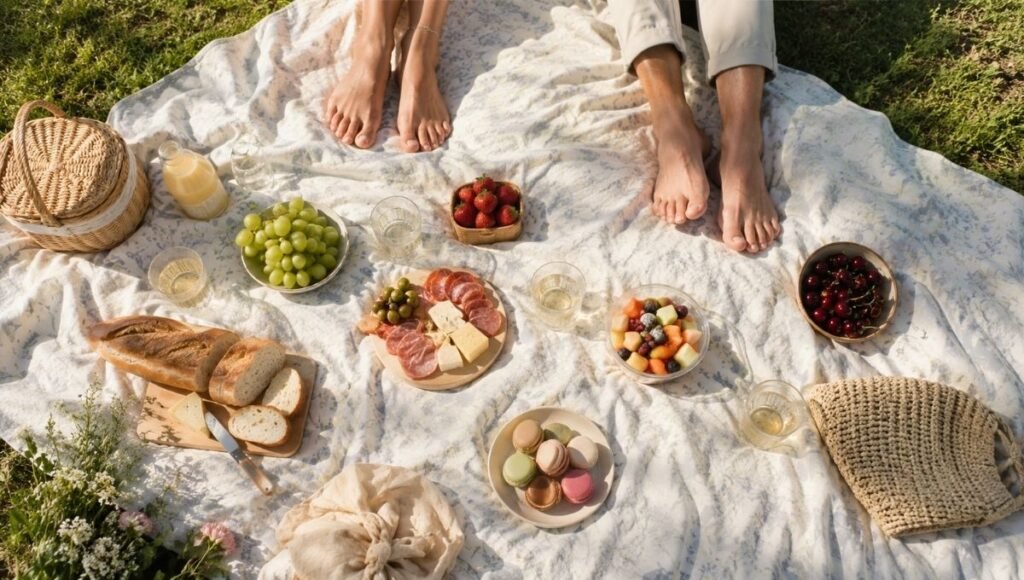
You brought a regular blanket from home. It seemed perfectly fine when you left. By the time you’d been sitting for 20 minutes, you started to notice that uncomfortable dampness working its way up from the grass — not soaking wet, but that unmistakable feeling of ground moisture transferring through the fabric and into your afternoon.
That experience is so universal among first-time picnickers that it might as well be a rite of passage. And it’s entirely preventable with the right waterproof picnic blanket.
The problem is that shopping for a picnic blanket feels deceptively simple until you’re actually doing it. There are hundreds of options on Amazon alone, most of them claiming to be “completely waterproof,” “sand-proof,” and “suitable for 4–6 people” regardless of their actual dimensions. Prices range from $12 to $200 for what is, functionally, a mat you sit on outside.
This guide gives you a clear framework for making the right choice: what features actually matter, which ones are marketing language, specific picks at every price point, and how to match your blanket to your actual use case — whether that’s a quick park lunch or a full-day beach outing.
Before You Buy: 4 Questions That Shape Your Decision
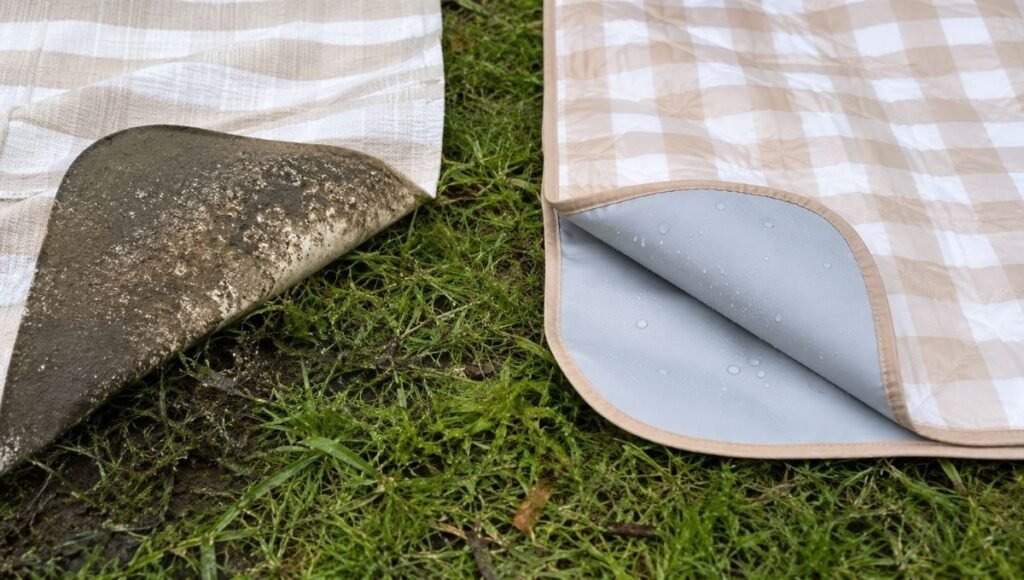
The right picnic blanket depends on how you’ll actually use it. Answer these four questions before looking at any specific product.
1. How many people need to fit on it? Blanket size ratings (“fits 4–6 people”) are consistently optimistic. A better rule: plan for roughly 15–20 square feet per 2 people for comfortable seating. A 60″x60″ blanket (25 sq ft) works for 2 people comfortably, 3 at a squeeze. A 79″x79″ (43 sq ft) comfortably fits 4 adults. If you’re frequently hosting groups of 5+, look for blankets over 80″ in any dimension.
2. Where will you use it most? Grassy park: any waterproof blanket works. Beach: smooth-topped blanket (fleece catches sand), ideally with corner stakes or loops. Hiking and carrying in: weight and pack size become critical — look for under 1.5 lbs and something that packs down to roughly paperback-book size.
3. How easy does it need to be to clean? If you have children, dogs, or a tendency toward food spills: machine washable is not optional. Many cheaper blankets claim to be waterproof but aren’t machine washable — which creates an ironic situation where the thing designed for outdoor mess can’t actually be washed properly.
4. How important is portability? For car picnics where you’re walking 50 feet from the parking lot: weight and pack size barely matter. For hiking to a picnic spot, carrying on public transport, or fitting into a day bag: a blanket that weighs under 1 lb and packs to the size of a water bottle is genuinely worth paying more for.
What Actually Matters in a Waterproof Picnic Blanket
Most picnic blanket marketing focuses on the top fabric — the soft fleece, the stylish plaid, the “premium feel.” Here’s the industry reality: the bottom layer determines your waterproofing experience, not the top.
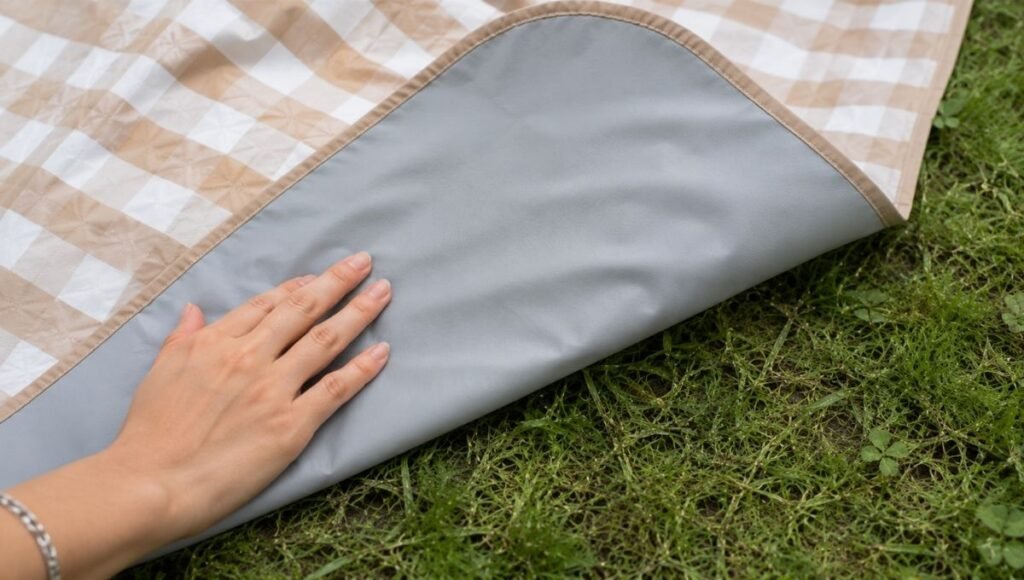
The Bottom Layer: What Makes a Blanket Actually Waterproof
There are three main bottom-layer materials you’ll encounter:
PEVA (polyethylene vinyl acetate): The most common material in budget picnic blankets ($15–35). Genuinely waterproof, easy to wipe clean, but tends to be crinkly, less durable with heavy use, and may degrade faster over time. Fine for occasional use.
Oxford cloth with PVC coating: A step up in durability — the Oxford weave holds up better to abrasion, and PVC provides reliable waterproofing. This is the sweet spot for most regular picnickers. Found in the $25–50 range.
Premium polyester with DWR treatment: Found on higher-end blankets like Nomadix. More durable than either of the above, packs smaller, and maintains waterproofing even after repeated washing. Worth it if you use a blanket regularly.
How to Tell If a Blanket Is Actually Waterproof
Before trusting any claim, check for three things:
- The backing material is explicitly listed (PEVA, PVC, Oxford with coating)
- The product has verified reviews mentioning real-world waterproofing performance (not just “feels soft”)
- The blanket is listed as machine washable — because if it can’t be washed without losing waterproofing, it’s not built to last
The Top Layer and Comfort
Soft fleece top: most comfortable, warmest, but catches sand and pet hair. Best for grass. Smooth polyester or pongee top: easier to shake clean, better for sand and casual use, less cozy. Oxford cloth top: most durable, easiest to wipe clean, slightly less comfortable than fleece.
Size: The Most Common Mistake
Most picnic blankets look larger in the product photo than they are in real life. Standard sizes you’ll see and what they actually accommodate:
- 60″x60″ (25 sq ft): 2 adults comfortably, 3 tightly
- 79″x59″ (32 sq ft): 3 adults comfortably, 4 closely
- 79″x79″ (43 sq ft): 4 adults with space to spread out
- 80″x80″+ (44+ sq ft): 5-6 adults or 4 with room for food and gear
Editor’s note: If you’re picnicking with more than 2 people and you’re on the fence about size — go bigger. You will always use the space.
Best Waterproof Picnic Blanket Picks by Budget

Best Under $25: Budget-Friendly and Gets the Job Done
For occasional picnickers who want reliable waterproofing without commitment, the 3-layer PEVA-backed blankets available from multiple Amazon and Walmart sellers in the $18–25 range are genuinely adequate. Look for:
- Oxford polyester top (more durable than fleece at this price point)
- PEVA or PVC backing explicitly listed
- At least 79″x59″ size for 2–3 people
- Machine washable or at minimum wipe-clean
What you’re getting: A blanket that works well for 1–2 seasons of regular use. The seams and backing may start to degrade after that, but at this price, replacing it isn’t painful.
What to watch for: Avoid blankets with no explicit backing material listed — “waterproof” as a blanket claim with no technical detail usually means the backing is minimal and won’t hold up.
Best for: First-time picnickers, occasional use, people who want to try picnicking before investing in something nicer.
Best $25–50: The Sweet Spot for Most Picnickers
This is where the quality-to-price ratio gets genuinely good. At this price point, you can find:
- Oxford cloth with PVC backing (significantly more durable than PEVA)
- Machine washable construction that maintains waterproofing
- Better corner reinforcement and carrying systems (straps, stuff pockets)
- More accurate size — blankets at this price point tend to be closer to their stated dimensions
Specific features to prioritize at this price:
Corner loops or anchor pockets: A set of corner loops that you can stake into the ground prevents the wind-sail problem. Some blankets in this range include small sand pockets in the corners (fill with sand or rocks to anchor). This feature costs nothing to include and makes a real difference on windy days.
Carry system: A blanket that rolls and straps into its own carry handle is significantly more convenient than one that just folds flat and needs to be carried under your arm. Look for integrated straps or a small stuff bag.
Large size: At this price point, 79″x79″ or larger is achievable without cutting corners on material quality. This is the size to buy if you regularly picnic with more than 2 people.
Best for: Regular picnickers, families, anyone who wants a blanket that lasts multiple seasons without babying it.
Best $50–80: When Packability and Longevity Matter
Once you cross $50, you’re primarily paying for:
Packability: Blankets at this price point compress to significantly smaller sizes — often fitting in a stuff sack the size of a large grapefruit. If you want to carry a picnic blanket in a day bag or hiking pack, this matters enormously.
Weight: Premium waterproof picnic blankets in this range often weigh under 1 lb, compared to 1.5–2 lbs for budget options. The difference is negligible for car picnics and significant for anything involving carrying.
Durability: Materials like recycled ripstop polyester with DWR treatment maintain waterproofing through more wash cycles than PEVA or PVC-backed options.
The Nomadix Festival Blanket is consistently cited across outdoor gear communities as the benchmark in this category — it’s so waterproof, it never wetted out in over 3 hours of testing, it’s generously sized and fits in its own pocket, and it’s made of a durable material that doesn’t stretch or warp over time. It’s the kind of blanket people buy once and use for years.
Best for: Hikers who bring a blanket to trails, frequent picnickers who want something that lasts, anyone who needs a blanket that fits in a day pack.
Best Large Picnic Blanket: When Size Is the Priority
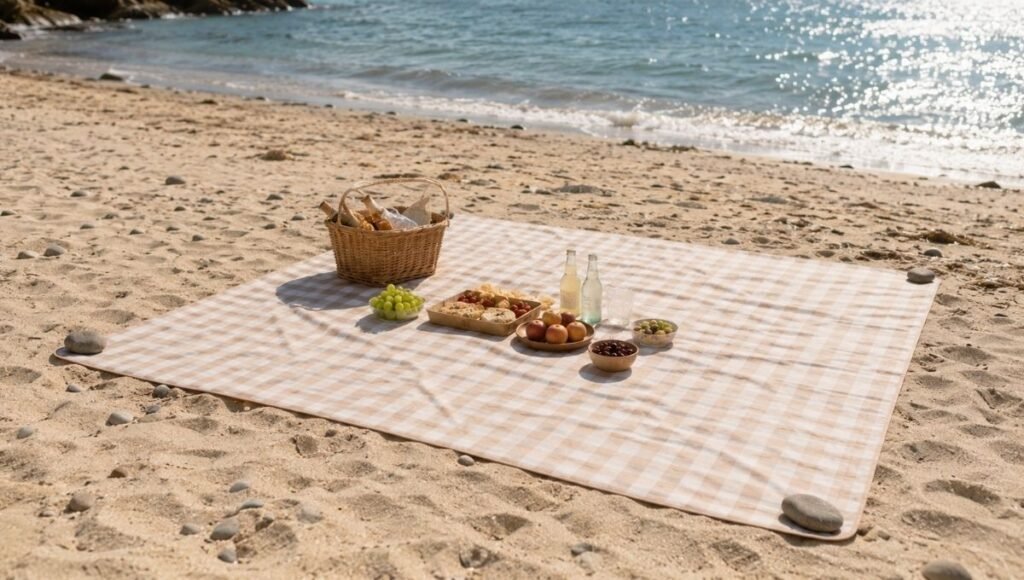
If you’re regularly hosting groups of 5+ or want plenty of room to spread out, the standard 79″x79″ size starts to feel limiting. Here’s what to look for in an oversized picnic blanket:
Size guidelines for groups:
- 5–6 adults: look for 80″x80″ minimum, ideally 90″+ in one dimension
- Family with children: a 79″x79″ handles 2 adults + 2–3 children comfortably
The trade-off: Larger blankets weigh more and pack less compactly. For car picnics where you’re not carrying far, this is irrelevant. For hike-in picnics, prioritize a smaller, lighter blanket and accept that space will be tighter.
Material recommendation for large blankets: Oxford cloth top with PVC backing — it holds up better to the wear and tear of more people moving around on it, and handles heavier loads without the backing cracking as quickly as PEVA.
Best Compact and Foldable Picnic Blanket: When Portability Is Everything
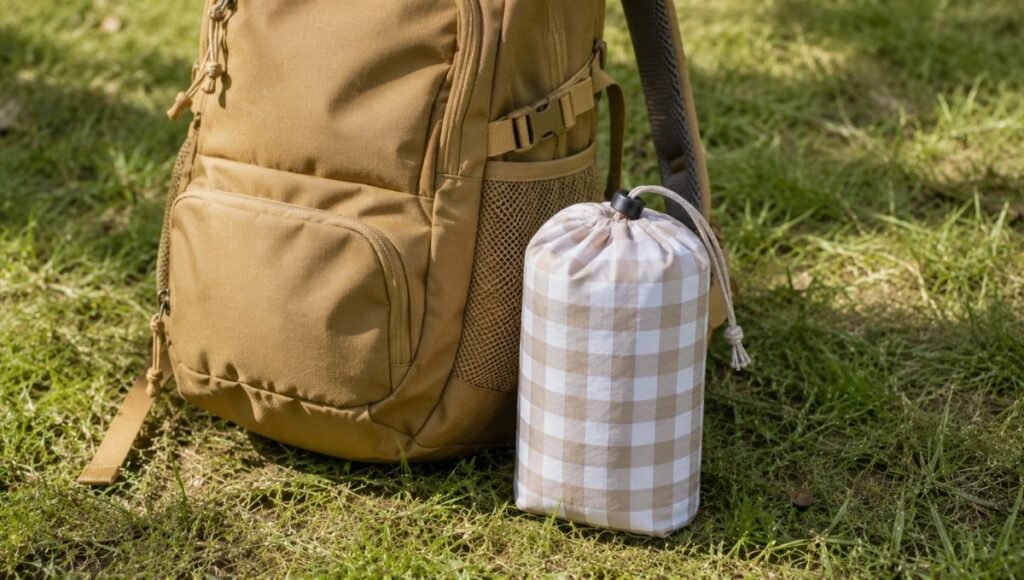
If you want to always have a picnic blanket available — in your bag, in your car, in your hiking pack — the priority shifts from size to packability.
What to look for in a compact picnic blanket:
- Weight under 1 lb (ideally under 0.75 lb)
- Packs to roughly the size of a large water bottle or small book
- Built-in stuff sack or pockets into itself (prevents losing the carrying case)
- DWR-treated material rather than PVC/PEVA backing (compresses better, maintains waterproofing through more washes)
The trade-off: Highly packable blankets are usually smaller — expect a maximum of 60″x72″ at under 1 lb. For solo or duo use this is fine; for groups, you’ll need to compromise on portability or size.
Picnic Blanket by Use Case: Matching the Blanket to Your Situation

Best Picnic Blanket for Grass (Park Use)
Almost any waterproof picnic blanket works on grass, which makes this the most forgiving scenario. Priorities:
- Waterproof bottom (the ground is often damper than it looks)
- Soft top for comfort (fleece or padded options are great on grass)
- Any carrying system works — you’re probably not going far
Avoid: Blankets with very thin PEVA backing if you’ll be sitting for multiple hours — the backing can get uncomfortably cool when it’s directly on cold ground.
Best Picnic Blanket for the Beach
Sand changes everything. Two specific requirements:
Smooth top: Fleece catches sand like velcro. A smooth polyester or oxford top allows sand to shake off rather than embedding in the fibers.
Corner anchoring: Wind at the beach is guaranteed. Blankets with corner loops (for stakes), corner sand pockets, or enough weight to stay flat are significantly more pleasant to use than ones that flap constantly.
Sand-proof claims are mostly marketing — no blanket completely prevents sand from getting under it. What you can control is whether sand embeds in the top fabric (fleece = yes, smooth polyester = mostly no).
Best Picnic Blanket for Hiking and Outdoor Adventures
Weight and packability above all else. A blanket you’ll actually carry to a trail picnic spot needs to:
- Weigh under 1 lb
- Compress to day-pack size
- Be genuinely waterproof (you’re further from your car)
- Have some kind of integrated carrying system
At this priority level, you’re looking at the $50+ range — the budget for packability tends to be higher.
How to Care for Your Picnic Blanket
Proper care extends the life of the waterproofing significantly — especially for blankets with DWR treatment or PVC backing.
For most blankets with PEVA or PVC backing:
- Shake off debris immediately after use
- Wipe the bottom with a damp cloth for dirt or light stains
- Machine wash on cold, gentle cycle if labeled machine washable
- Air dry completely before storing — folding a damp blanket leads to mildew and can degrade PVC backing
- Never put in a dryer — heat degrades most waterproof backing materials
For premium blankets with DWR treatment:
- Wash on cold, gentle cycle
- Tumble dry on LOW heat — low heat actually reactivates DWR coating, maintaining waterproofing
- If the blanket starts to wet out (water soaks in rather than beading up), a low-heat dryer cycle often restores performance
Storage: Store loosely rather than compressed. Keeping a blanket compressed for months at a time can crease the backing and reduce waterproofing over time. A mesh bag or loose roll is better than tightly stuffed.
If You Only Have 5 Minutes to Decide
Short on time? Three questions:
Q: Do you need to carry it far? No → get the $25–40 range, Oxford/PVC, 79″x79″. Yes → spend $50+ on a packable blanket under 1 lb.
Q: Will you use it on the beach? Yes → smooth top, corner loops/anchors, avoid fleece. No → any soft top works.
Q: How many people? 2 → 60″x60″ minimum. 4 → 79″x79″. 5+ → 80″x80″ or larger.
That’s the decision. Everything else is a preference.
FAQ: Real Questions About Picnic Blankets
Q: Are waterproof picnic blankets actually waterproof? The honest answer: most are water-resistant rather than truly waterproof in the way a rain jacket is. For sitting on damp grass or getting caught in a light drizzle, the waterproofing works well. For sitting in standing water or sustained heavy rain, most blankets will eventually wet through. The quality of the backing material determines how long they hold up — PVC and DWR treatments perform better than thin PEVA over extended exposure.
Q: What size picnic blanket do I need for 4 people? For 4 adults sitting comfortably (not elbow-to-elbow), a 79″x79″ blanket is the practical minimum. If you want space for a food spread between people, or if anyone in your group is larger, look for 80″x80″ or larger. Product descriptions consistently overstate how many people fit.
Q: What’s the difference between a picnic blanket and a picnic mat? Largely marketing terminology — both refer to ground covers designed for outdoor sitting. “Blanket” tends to imply a softer top layer (fleece, fabric); “mat” sometimes implies a stiffer, more utilitarian construction. In practice, the terms are used interchangeably and the distinction isn’t meaningful when shopping.
Q: Can I use a regular blanket for a picnic? Yes, but it will absorb ground moisture and likely end up damp. For occasional use on dry days, a regular blanket is fine. For regular picnicking, grass that’s even slightly damp (which it usually is), or any surface other than perfectly dry pavement, a waterproof-backed blanket makes a meaningful difference in comfort.
Q: How do I keep my picnic blanket from blowing away? Look for blankets with corner loops (stake them with tent pegs), corner sand/rock pockets (fill with heavy material), or use smooth rocks from the environment to weight the corners. Blankets with fleece tops grip grass slightly better than smooth-topped blankets. In strong wind, staking or weighting corners is the only reliable solution.
The Right Blanket Makes Every Picnic Better
The best picnic blanket is the one that fits your actual situation — your group size, where you go, how far you carry it, and how much you’ll use it. A $25 Oxford-backed blanket from a reputable brand handles 90% of park picnic scenarios without issue. A packable DWR blanket is worth the investment if you’re regularly hiking to picnic spots or want something that fits in a day bag.
Either way: get the waterproof bottom. Everything else is a preference.
Plan your complete picnic setup:
- Picnic Essentials Checklist: Everything You Need
- Picnic Food Ideas: 40+ Easy Options That Travel Well
- Outdoor Safety for Beginners
References
- Treeline Review. 9 Best Outdoor and Camping Blankets — Tested and Reviewed. treelinereview.com
- Consumer Reports. How to Evaluate Waterproof Ratings on Outdoor Products. consumerreports.org
- ASTM International. Standard Test Methods for Water Resistance of Textile Fabrics. astm.org
- Leave No Trace Center for Outdoor Ethics. Outdoor Recreation and Leave No Trace Principles. lnt.org