
Everything you need to bring to a picnic — organized, honest about priorities, and built around the things first-timers always forget.
Key Takeaways
- The most important picnic essentials come down to four categories: blanket/seating, food and drinks, utensils and serving, and sun/comfort protection
- According to the USDA, perishable food left in temperatures above 40°F should not be kept longer than 2 hours — in hot weather above 90°F, that window shrinks to 1 hour
- A waterproof, foldable blanket is the single item that makes the biggest difference in picnic comfort — it’s worth buying before anything else
- What to bring to a picnic depends on three things: how many people, how long you’ll stay, and how far you’ll carry it
- The best picnic food travels well at room temperature, doesn’t require refrigeration for short periods, and doesn’t need utensils to eat — think sandwiches, cheese boards, fruit, and finger foods

You decided to have a picnic. The idea seemed simple enough — grab some food, find a nice spot, enjoy the afternoon. But now you’re standing in your kitchen the morning of, suddenly unsure whether you have everything. Does food need to stay cold? Should you bring plates or just eat from containers? Is the blanket you have waterproof? Will you need bug spray?
First-time picnic anxiety is real, and it’s usually not about big things — it’s the accumulation of small forgotten details that turn what should be a relaxed afternoon into a slightly stressful logistics exercise. The person who forgot a bottle opener. The food that sat in the sun too long. The beautiful spot that turned out to be windier than expected, with no way to weigh down the napkins.
This guide gives you the complete picture: a full picnic essentials checklist organized by category, honest guidance on which items actually matter, the food safety basics that nobody explains, and practical adjustments for different types of picnics — from a casual park lunch to a proper sunset date spread. By the end, you’ll be able to pack for any outdoor meal in under 20 minutes without leaving anything critical behind.
Before You Pack: 4 Questions That Shape Your Picnic List
The most common picnic mistake isn’t forgetting something specific — it’s packing for the wrong situation. Before you grab anything, answer these four questions. They determine everything else.
1. How many people are coming? Two people require a very different setup than eight. Scale your blanket, utensils, and food quantities accordingly. For groups over six, a portable folding table becomes genuinely useful rather than just nice to have.
2. Where is your picnic spot? A maintained city park with benches and trash cans is different from a meadow you have to hike to. Distance from your car determines how much you can realistically carry. Proximity to facilities determines whether you need to pack out all your trash and whether bathrooms will be available.
3. How long will you stay? A 90-minute lunch picnic and a full-day park day have completely different needs — particularly for food quantity, sun protection, and what happens to perishable food after the first two hours.
4. What’s the weather doing? Sun, wind, heat, and potential afternoon showers each require specific additions to your kit. Check the forecast for your specific location (not just your home neighborhood) before you finalize your bag.
The Complete Picnic Essentials Checklist
Category 1: The Foundation — Blanket and Seating
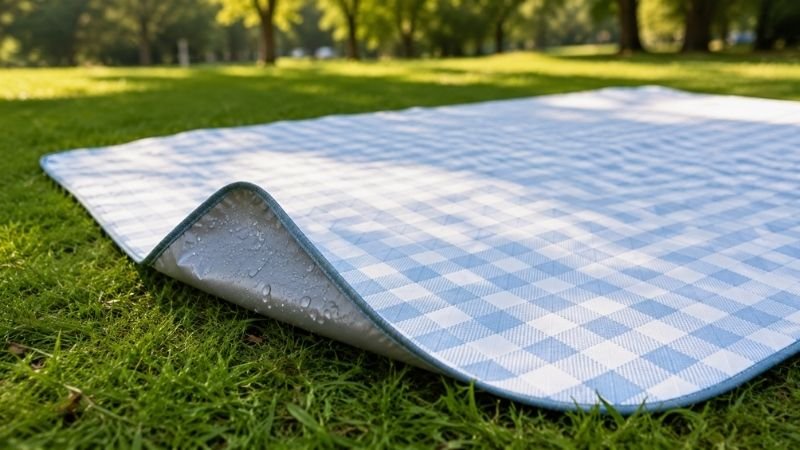
Everything else happens on top of this layer. Getting it right makes the entire picnic more comfortable.
The picnic blanket: Your blanket is arguably the most important item on this list. What makes a good picnic blanket:
- Waterproof bottom layer — grass is often damp even on sunny days, and a non-waterproof blanket soaks through in minutes
- Large enough for your group — plan for roughly 4 square feet per person as a minimum comfortable seating area
- Folds/rolls compactly — you’ll be carrying this, so it needs to be manageable
A dedicated waterproof picnic blanket ($25–50) is the single most worth-it picnic purchase for anyone who goes on outdoor outings regularly. If you’re improvising, a yoga mat works surprisingly well for solo or duo picnics — waterproof on the bottom, cushioned on top.
Beyond the blanket: For longer stays or older knees: a foldable camp chair or a portable stadium seat adds significant comfort. For groups: a small folding table keeps food off the ground and at a usable height.
Category 2: Food and Drinks
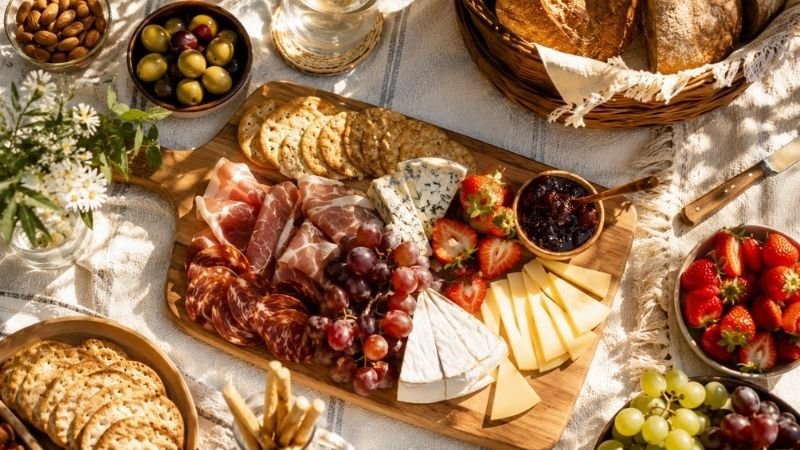
The golden rule of picnic food: choose items that taste good at room temperature, don’t require refrigeration for short periods, and don’t need complex assembly outdoors.
Best picnic food that travels well:
No refrigeration needed (up to 4–6 hours at mild temperatures):
- Hard cheeses (cheddar, parmesan, manchego) paired with crackers or sliced baguette
- Cured meats (salami, prosciutto, chorizo)
- Whole fruit (grapes, strawberries, cherries, apple slices with lemon juice to prevent browning)
- Olives, pickles, sun-dried tomatoes
- Nuts and trail mix
- Store-bought or homemade energy bars
- Hummus with vegetables and pita (keep hummus in a cool bag if staying more than 2 hours)
- Cookies, brownies, or other baked goods
Needs a cool bag or cooler:
- Sandwiches with meat, cheese, or egg-based fillings
- Pasta salad or grain salads with dressing
- Yogurt parfaits
- Anything with mayonnaise (potato salad, egg salad, coleslaw)
- Cold drinks
The picnic food idea that works every time: Build around a “grazing board” structure: cured meats, two types of cheese, crackers or bread, olives, fruit, and something sweet. Everything can be eaten with fingers, nothing requires plates, and it looks genuinely impressive with almost no preparation.
Drinks:
- Water (more than you think — being outside in the sun increases how much you drink)
- Ice in a ziplock bag for keeping drinks cold
- A corkscrew or bottle opener if you’re bringing wine or beer
- Reusable water bottles or cups
Category 3: Utensils, Serving, and Cleanup
Essential serving items:
- Cutting board (a small bamboo or lightweight plastic one — invaluable for cheese, bread, and fruit)
- Knife with a cover or in a case (never a bare blade in a picnic bag)
- Reusable or compostable plates — one per person
- Cups or mugs — one per person plus one extra
- Fork, spoon, knife per person (reusable camp utensils pack flat and last forever)
- Napkins — bring more than you think you need; cloth napkins are great for cleanup
Cleanup essentials:
- Trash bags — at least two (one for food waste, one for recyclables)
- Wet wipes or a small hand towel — sticky hands and spills are inevitable
- Hand sanitizer — especially before eating in a spot without hand-washing access
- Small container for food scraps (leave no trace principle: don’t leave food waste in nature)
Editor’s note: The single most commonly forgotten picnic item is a trash bag. You remember to bring the food, you forget you need somewhere for the packaging. Pack two bags — one for general waste, one for any food scraps — and tuck them at the bottom of your bag before you start packing anything else.
Category 4: Comfort and Protection
Sun protection:
- Sunscreen (SPF 30+, applied before you leave, with a travel-size for reapplication)
- Sunglasses
- Wide-brim hat or baseball cap
- A pop-up sun shade or small umbrella if you’re planning a long, exposed outdoor stay
Bug protection:
- Insect repellent (DEET or picaridin-based for effectiveness; apply after sunscreen)
- Citronella candles if you’re staying into evening hours and fires are permitted
Wind management: Wind is the underrated picnic nemesis. It sends napkins flying, tips over cups, and makes light foods unpredictable. Solutions:
- Small rocks or smooth stones gathered at the site work perfectly as paperweights
- Clip-style napkin weights ($8–12) are tiny and reusable
- Serving food in deeper bowls rather than flat plates reduces wind vulnerability
Temperature management:
- A light blanket or cardigan for late afternoon temperature drops
- Extra layers for anyone in the group who runs cold
Category 5: The Easy-to-Forget Extras
These are the items that separate a “pretty good picnic” from a “that was perfect” picnic.
- A bottle opener and corkscrew — absolutely essential if you’re bringing anything with a cap or cork, and something almost everyone forgets until they’re at the park
- A small first aid kit — blister pads, bandages, antihistamine tablets, pain reliever. Especially important if your picnic involves any walking or unfamiliar terrain
- A portable Bluetooth speaker — ambient music at a picnic is a small detail that significantly improves the atmosphere
- Wax paper or food storage containers — for any leftovers you want to take home
- A reusable tote or basket — something to carry everything in that can also serve as extra storage at the site
- Wet wipes or a small spray bottle — for sticky children, messy food, and impromptu cleanup
Picnic Food Safety: How Long Can Food Actually Sit Out?
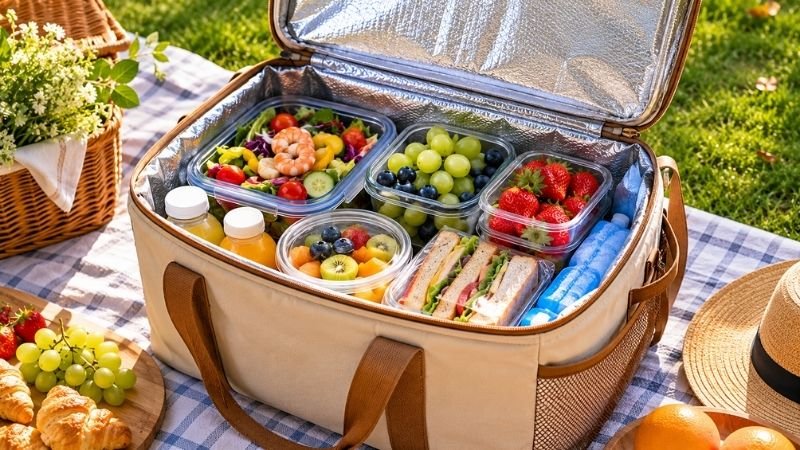
This is the question almost nobody answers clearly in picnic guides, and it’s the one that matters most for keeping your picnic group healthy.
The USDA Food Safety and Inspection Service is clear on this: perishable foods left at temperatures between 40°F and 140°F should be discarded after 2 hours. In hot weather above 90°F, that window shortens to 1 hour.
This applies to: sandwiches with meat or egg fillings, pasta salads with dressing, anything with mayonnaise, cut fruit, cheese (to a lesser extent), and most prepared foods.
Practical food safety at a picnic:
Keep perishables in a cool bag with ice packs until you’re ready to eat. Serve portions rather than putting out entire quantities at once — what’s in the cool bag stays cold. Use a food thermometer if you’re unsure about temperature (food above 40°F is in the danger zone). When in doubt, throw it out — the consequences of foodborne illness aren’t worth the leftover sandwich.
Foods that are genuinely safe for extended outdoor time: Whole unwashed fruit, hard cheeses in rind, crackers, bread, most packaged shelf-stable items, nuts, and chocolate. These can comfortably sit out for the duration of a picnic without safety concerns.
Research published in the Journal of Food Protection confirms that bacterial growth rates in high-risk foods (particularly egg- and meat-based salads) increase exponentially above 40°F, with potentially dangerous bacteria levels reached within 2–4 hours at typical outdoor summer temperatures. The 2-hour rule exists for a real scientific reason.
Picnic Essentials by Type: Adjust for Your Situation
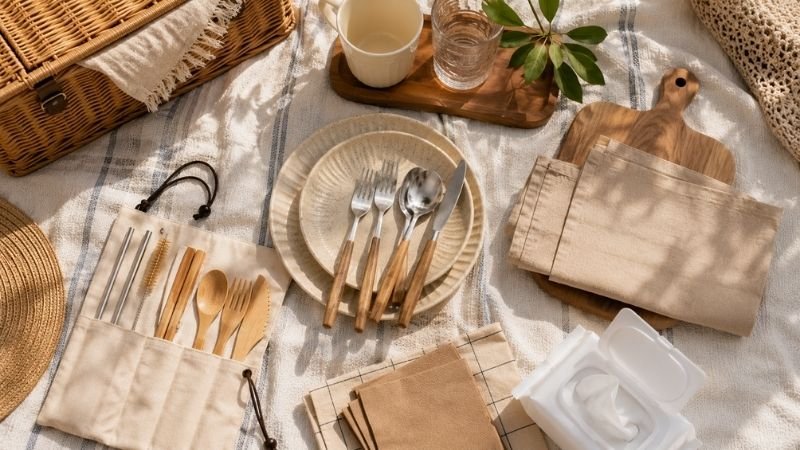
Park Lunch Picnic (Casual, 1–2 Hours)
Minimum viable kit — no cooler needed if you stick to room-temperature-safe foods:
- Waterproof blanket
- No-cook food (cheese board style, sandwiches if eating within 2 hours)
- Reusable water bottles
- Basic utensils + napkins
- Trash bag
- Sunscreen + sunglasses
Beach Day Picnic (Full Day, 4–8 Hours)
Requires more planning because of heat, sand, and extended duration:
- Waterproof blanket (essential — damp sand)
- Cool bag with ice packs for perishables
- Stick to foods that are safe at room temperature for extended periods
- Extra water (sun and salt air increase dehydration)
- Strong containers (sand gets into everything open)
- Beach umbrella or pop-up shade
- More sunscreen than you think you need
Sunset/Date Picnic (Atmosphere-Focused)
The logistics are similar to a park lunch, but the experience is the priority:
- A proper blanket with cushioning (comfort matters for a 3-hour sunset sit)
- Wine or cocktails with appropriate openers
- Candles or a battery-powered lantern for after-dark ambiance
- Thoughtful food presentation (a proper charcuterie arrangement rather than food in containers)
- An extra layer each for the post-sunset temperature drop
Hiking Picnic (Pack-In, Distance Matters)
Weight and packability become critical — every item needs to earn its place:
- Lightweight packable blanket (under 1 lb)
- No glass containers — too heavy and breakable
- Room-temperature-safe foods only (no cooler to carry)
- Reusable utensils that pack flat
- Everything in a daypack or light tote
- Extra water (more than a park picnic requires — you’ll be active before sitting)
If You Only Have 10 Minutes to Pack
No time to think? Here’s the minimum viable picnic kit:
- Blanket (grab the largest one accessible — improvised is fine)
- Water (at least 1L per person)
- Food (cheese, crackers, fruit, and something sweet — assemble this in 5 minutes)
- Trash bag (tuck one in first, it’s the easiest to forget)
- Sunscreen (apply before you leave)
- A knife and cutting board if you have cheese or bread
That’s a functional picnic. Everything else is an upgrade.
Picnic Food Ideas: What Actually Works Outdoors
Since you’re planning what to bring, here’s a quick reference for foods that hold up well and taste great at a picnic:
Travel well and require no refrigeration: Charcuterie components (hard cheese, salami, crackers, olives, dried fruit), whole fruit, nuts, hummus and vegetable sticks (keep it cool), baguette, homemade or store-bought cookies and brownies, energy bars, dark chocolate
Travel well with a cool bag: Sandwiches (all types), pasta salad, grain bowls, fruit salad, gazpacho in a thermos, deviled eggs, anything with mayo-based dressing
Avoid for outdoor eating: Anything that melts rapidly (ice cream, soft chocolate), foods with very strong smells, anything requiring complex assembly or a heat source, heavily dressed salads that wilt quickly

When Food Issues Become a Health Concern
Most picnic food issues resolve themselves — a wilted salad, a slightly warm sandwich — without any health consequence. But there are situations worth knowing about:
Signs of potential foodborne illness (nausea, vomiting, diarrhea, stomach cramps) typically appear 2–6 hours after eating contaminated food. If symptoms are severe or accompanied by fever, seek medical attention.
Allergic reactions to insect stings can be serious: if someone shows signs of anaphylaxis (throat swelling, difficulty breathing, widespread hives), call emergency services immediately. This is why carrying antihistamines and knowing whether anyone in your group has a known severe allergy is important preparation.
Heat-related issues — if anyone shows signs of heat exhaustion (heavy sweating, weakness, pale skin, dizziness) after extended time outdoors: move to shade, apply cool water to skin, hydrate slowly. If symptoms worsen or someone loses consciousness, call emergency services.
FAQ: Real Questions About Picnic Essentials
Q: What are the most important things to bring to a picnic? A waterproof blanket, enough water, food that’s appropriate for your duration (with a cool bag for anything perishable), a trash bag, and sunscreen. Everything else is an optional upgrade.
Q: How long can picnic food sit out? Perishable food (anything with meat, eggs, dairy, or dressing) should be consumed or refrigerated within 2 hours at temperatures above 40°F, or within 1 hour if it’s above 90°F. Room-temperature-safe foods (hard cheese, crackers, whole fruit, bread, nuts) can sit out for the full duration of a picnic without safety concerns.
Q: What’s the best picnic blanket? Any blanket with a waterproof bottom layer is significantly better than a regular blanket for outdoor use. Look for something that folds or rolls compactly, is large enough for your group (minimum 4 sq ft per person), and is machine washable. Dedicated outdoor picnic blankets in the $25–50 range are widely available and genuinely worth the investment.
Q: What food is easiest to bring to a picnic? A charcuterie-style spread: hard cheese, crackers, cured meat, olives, and fruit. Everything travels well, nothing requires cooking or utensils, and it looks put-together with minimal effort. Add a baguette and some sparkling water and you have a genuinely impressive outdoor spread.
Q: Do you need a cooler for a picnic? For picnics lasting under 2 hours where you’re sticking to room-temperature-safe foods: no. For anything longer, or if you’re bringing sandwiches with meat, egg salad, or other perishables: yes, a cool bag with ice packs is necessary for food safety.
Your Picnic Is Ready
The perfect picnic isn’t about having every item on this list — it’s about having the right items for your specific situation. Start with the foundation (blanket + water + food), add safety (sunscreen + trash bag + food safety awareness), and customize from there based on how long you’re staying and what kind of experience you want.
The blanket is down. The food is out. The afternoon is yours.
Plan your next outdoor adventure:
- Best Picnic Food Ideas That Travel Well
- Best Picnic Blankets: Waterproof and Budget-Friendly Picks
- How to Plan a Scenic Day Trip as a Beginner
- Outdoor Safety for Beginners
References
- USDA Food Safety and Inspection Service. The Danger Zone — Keeping Food Safe During the Summer. fsis.usda.gov
- Centers for Disease Control and Prevention (CDC). Food Safety at Outdoor Events. cdc.gov/foodsafety
- Juneja, V.K., et al. (2009). Modeling the effect of temperature on growth of Salmonella in chicken. Journal of Food Protection, 72(6), 1202–1209.
- National Park Service. Leave No Trace — Disposing of Waste Properly. nps.gov