
The practical guide to what to bring — organized by prep time, covering every category from zero-effort snack boards to make-ahead meals that taste better after sitting.
Key Takeaways
- The best picnic food meets three criteria: tastes good at room temperature, travels without falling apart, and doesn’t require utensils or complicated assembly
- The easiest picnic spread requires zero cooking: hard cheese, cured meats, crackers, olives, and fresh fruit — assembled in under 5 minutes from grocery store items
- Foods with mayonnaise (egg salad, potato salad, pasta salad with creamy dressing) should be kept below 40°F until serving — plan your cooler accordingly
- Pasta salad and grain salads are among the few picnic foods that actually improve with time — make them the night before for the best flavor
- “Picnic finger foods” that require no utensils tend to be the most popular outdoors — easier to eat, less to pack, more relaxed to serve
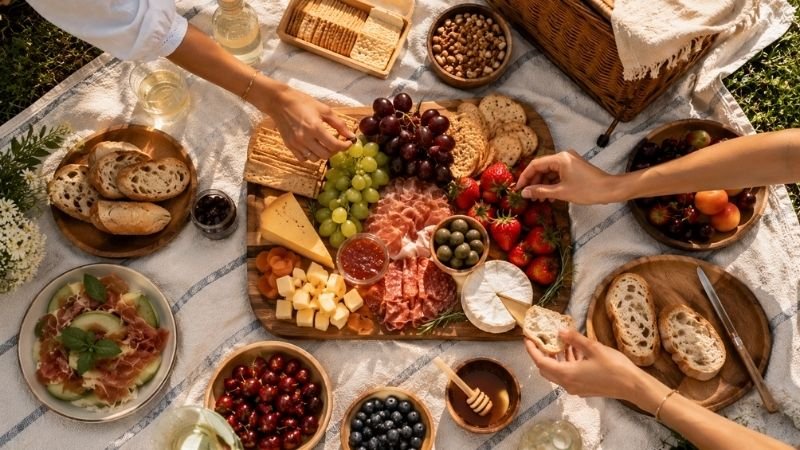
You’ve committed to the picnic. The blanket is sorted, the spot is chosen. Now comes the food question — and suddenly you’re standing in the grocery store at 9am, completely unsure whether you’re buying the right things. The sandwiches you’re imagining might be soggy by noon. The pasta salad sounds great but you’re not sure how it holds up in the heat. And there’s that voice in the back of your head remembering the childhood picnic where everything tasted vaguely of warm plastic.
Here’s the thing: picnic food is actually one of the easiest categories of food once you know the rules. There are genuinely great options at every level of effort — from zero preparation to impressive make-ahead spreads — and knowing which foods work and which don’t makes the whole planning process much less stressful.
This guide gives you the complete picture: a judgment framework for choosing picnic foods, organized suggestions at every level of prep time, the absolute best easy picnic food ideas that travel well, and the foods that sound like good ideas but consistently disappoint outdoors.
What Makes a Perfect Picnic Food? The 4-Question Framework
Before we get into specific picnic food ideas, here’s the filter that experienced picnickers use — consciously or not — when deciding what to bring.
Question 1: Does it taste good at room temperature? This is the most important question. Food that’s meant to be eaten hot (most hot dishes, melted cheese dishes) or very cold (ice cream, frozen desserts) loses a lot in the outdoors. Food that’s genuinely enjoyable at ambient temperature is your picnic sweet spot: hard cheese, charcuterie, bread, most fruit, room-temperature pasta salads, grain salads, and cookies.
Question 2: Does it travel without falling apart? Leafy green salads dressed in advance will be wilted mush by the time you arrive. Heavily layered sandwiches with wet toppings (fresh tomatoes, lots of dressing) will soak through the bread. Delicate foods that require careful handling add stress to what should be a relaxed outing. Sturdy foods — wraps, grain salads, whole fruit, firm cheeses, dense baked goods — travel significantly better.
Question 3: Can you eat it without much equipment? Food that requires plates, forks, napkins, serving spoons, and complex assembly at the picnic site is inconvenient in ways that feel minor at home and major when you’re sitting cross-legged on a blanket with wind blowing. Finger foods, foods served in their own containers, and foods that can be eaten directly from a container are the ones that actually get enjoyed rather than fumbled with.
Question 4: Will it be safe after 1–2 hours outdoors? The USDA’s 2-hour rule: perishable foods (anything with meat, eggs, dairy, or dressing) should not sit at temperatures above 40°F for more than 2 hours. In heat above 90°F, that window shrinks to 1 hour. This doesn’t mean avoiding perishables — it means having a cooler bag with ice packs and a plan for when you’ll eat.
Zero-Prep Picnic Food Ideas: Buy It, Pack It, Go
These require no cooking, minimal assembly, and can be pulled together in under 10 minutes at a grocery store. They’re not “settling” — they’re often the best picnic food.
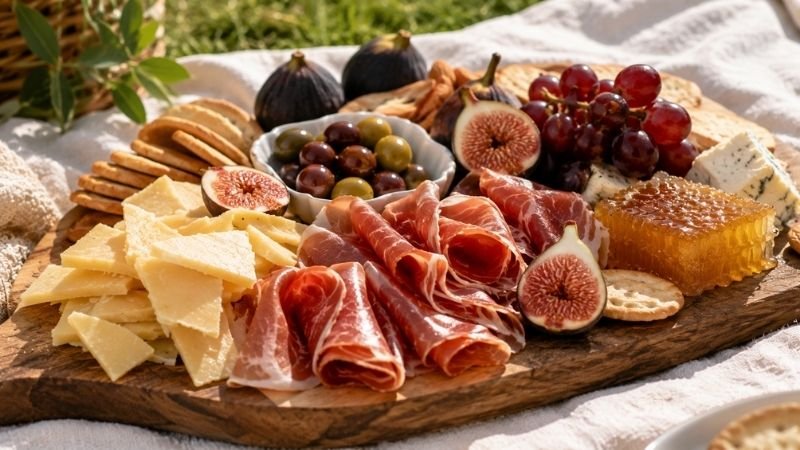
The Charcuterie Board Approach
This is the most universally praised picnic food format across every community that discusses outdoor eating, and for good reason: it requires no cooking, improves as it sits and comes to room temperature, can be scaled for any group size, and looks genuinely impressive on a blanket.
The components:
- Hard cheese: Aged cheddar, manchego, gouda, parmesan wedge. Hard cheeses are safe at room temperature for 2–4 hours and taste better slightly warmer than refrigerator cold.
- Cured meat: Salami, prosciutto, soppressata, pepperoni. Pre-sliced from the deli counter is easiest.
- Crackers or bread: Sturdy crackers (water crackers, seedy crackers), sliced baguette, or breadsticks. Crackers in a sealed bag travel better than sliced bread.
- Olives: Pre-packaged olives in oil, or from a deli olive bar in a container.
- Something sweet: Honeycomb, dried fruit (apricots, figs, dates), or fruit preserves.
- Fresh fruit: Grapes, strawberries, or cherry tomatoes travel well and add color and freshness.
The magic of this format: every element travels well independently, nothing needs to stay cold urgently (olives and hard cheese are fine for 2+ hours), and assembly at the picnic is just opening containers and arranging things on the blanket or a cutting board.
Editor’s note: This is genuinely the format that people bring to picnics over and over because it always works. Once you’ve done it once, you’ll understand why.
Zero-Prep Finger Foods
Whole fruit: Grapes, cherries, strawberries, blueberries — wash at home, pack in a container. Watermelon pre-cut into triangles at home. Apples and pears whole (eat around the core). Stone fruit: peaches, plums, nectarines.
Store-bought hummus with vegetables: Pre-portioned hummus cups from the grocery store + baby carrots, celery sticks, snap peas, cucumber rounds. No prep required if you buy the pre-cut vegetables.
Nuts and trail mix: Calorie-dense, no refrigeration required, no plates needed. Buy pre-made or mix your own (significantly cheaper).
String cheese or baby bell cheeses: Individual packaging, no cutting required, stable for hours.
Chips, pretzels, and crackers: Opened bag travels fine in a tote. Useful for dipping into hummus or eating alongside other items.
15-Minute Picnic Food Ideas: Simple Prep, Big Payoff
These require minimal cooking or assembly — mostly combining store-bought elements with minimal preparation.
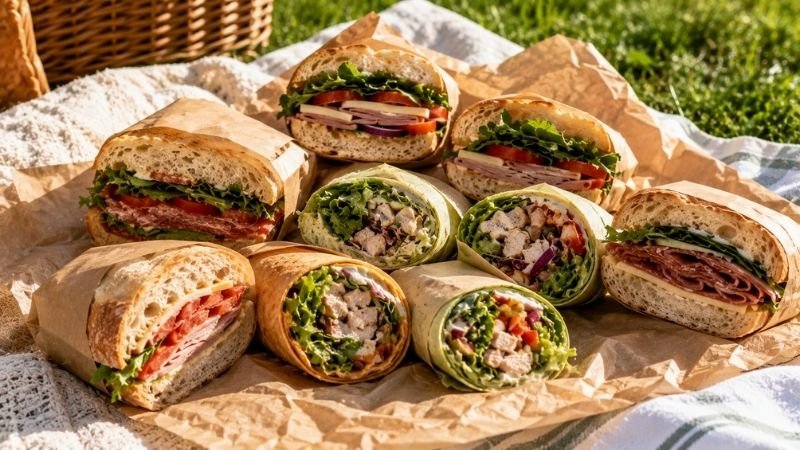
The Sandwich and Wrap Category
What makes a picnic sandwich work: The enemy of a picnic sandwich is moisture. Wet tomatoes, too much dressing, watery vegetables — these soak through bread in transit and produce the soggy sandwich experience everyone remembers from childhood.
Solutions that actually work:
- Use wraps or sturdy rolls instead of sliced bread — they hold up significantly better
- Pack wet toppings separately and add at the picnic
- Use spreads that create a moisture barrier (good butter, cream cheese, hummus) on both sides before adding fillings
- Keep the filling simple: the best picnic sandwiches aren’t overloaded
Simple picnic sandwich ideas:
- Caprese wrap: mozzarella, basil, tomato, balsamic (pack tomato separately)
- Turkey, avocado, and mustard on a roll
- Peanut butter with honey or jam — underrated, wildly practical
- Italian sub: salami, provolone, banana peppers, olive oil on a baguette
- BLT wrap with the tomato in a separate container
Deviled Eggs
Deviled eggs appear on almost every “favorite picnic foods” list from experienced picnickers, and they’re worth the 20 minutes of effort. Make them the night before, transport in a container with a tight lid. They need to stay cold, so they go in the cooler bag. At the picnic, they’re ready to eat immediately — no utensils needed — and they’re genuinely satisfying in a way that lighter snacks aren’t.
Cheese Quesadillas (Made at Home and Served Cold)
Cook quesadillas at home, cut into triangles, let cool, pack in a container. Serve at room temperature or slightly warm on a sunny day. They travel surprisingly well and are universally popular.
Make-Ahead Picnic Food Ideas: Better After Sitting
These are the foods that genuinely improve with time — making them ideal for preparing the evening before and letting them develop overnight.
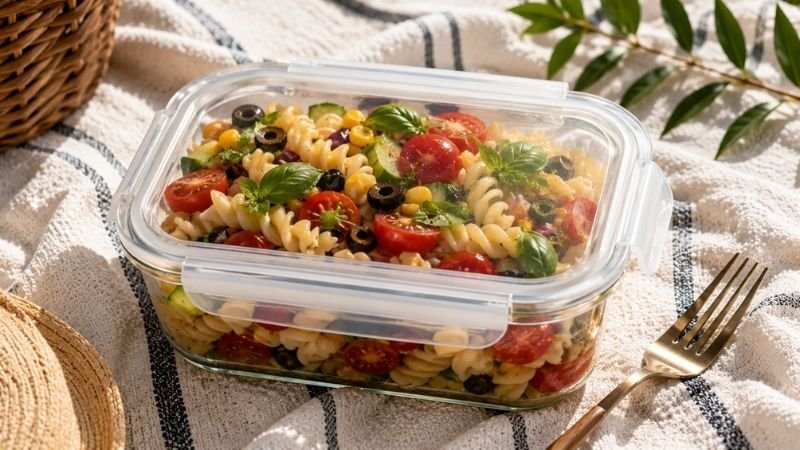
Pasta Salad: The Make-Ahead Champion
Pasta salad made the day before, marinating in its dressing, is one of the great picnic foods precisely because the pasta absorbs flavor and becomes more cohesive as it sits. The key is using a vinaigrette-based dressing (not mayo-based) if you’re concerned about temperature, or a mayo-based dressing if you have a proper cooler.
Simple pasta salad formula: Short pasta (rotini, farfalle, penne) + protein (salami, mozzarella balls, chickpeas, olives) + vegetables (cherry tomatoes, cucumber, bell peppers, sun-dried tomatoes) + dressing (Italian vinaigrette, pesto, or lemon-olive oil)
Toss everything together, refrigerate overnight, adjust seasoning before serving (pasta absorbs salt, so you’ll likely need more).
What to avoid in pasta salad: Delicate greens (they wilt), heavily creamy dressings unless you have reliable cold storage, ingredients that release a lot of water as they sit (fresh tomatoes can be added at serving time instead).
Grain Salads and Bean Salads
Quinoa, farro, or barley-based salads behave like pasta salads — they get better as the grains absorb the dressing. Bean-based salads (black bean and corn, white bean with herbs, chickpea with lemon) are genuinely excellent picnic food: no refrigeration concerns, high protein, travels perfectly.
Cowboy caviar (black-eyed peas or black beans + corn + tomato + bell pepper + vinaigrette) has achieved near-legendary status in picnic food communities because it hits every criterion: tastes great at room temperature, gets better as it sits, requires no utensils if you have chips, and feeds a crowd cheaply.
Frittata or Spanish Tortilla
A frittata or Spanish tortilla (egg and potato dish) made the night before and served at room temperature is one of the most satisfying picnic main dishes. Cut into wedges, pack in a container, serve directly. It holds up well, travels easily, and feels like a genuinely special picnic food rather than a grab-and-go assembly.
Easy Picnic Finger Foods: The No-Utensils Category
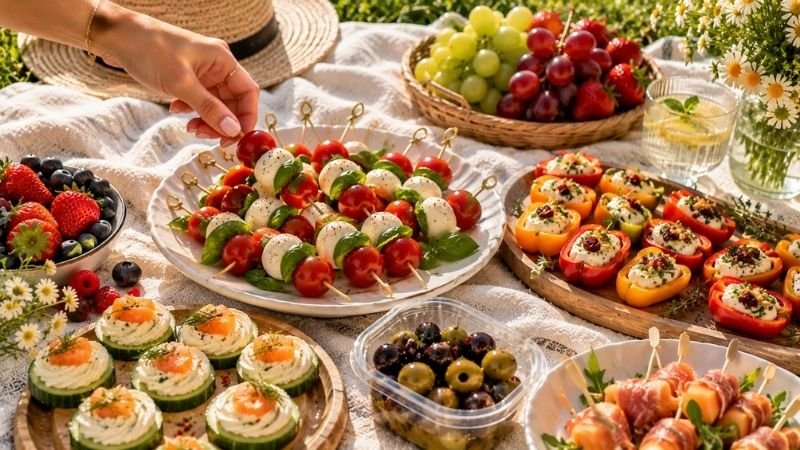
Finger foods are the category that most reliably makes a picnic feel effortless — everyone can grab what they want, there’s no serving choreography, and everything gets eaten standing, sitting, or lying down with equal ease.
The best picnic finger foods:
Bruschetta components: Bring sliced baguette toasted or plain + toppings in separate containers (diced tomato-basil mix, olive tapenade, or ricotta with honey). Assemble at the picnic — it takes 30 seconds and lets everyone build their own.
Stuffed mini peppers: Cream cheese or herbed ricotta piped or spooned into mini sweet peppers. Make at home, transport in a container, eat directly with fingers. Genuinely impressive-looking with very little effort.
Caprese skewers: Cherry tomatoes + fresh mozzarella balls + basil leaves on toothpicks or small skewers, drizzled with olive oil and salt. Everything stays separate until serving (no sogginess), presentation is beautiful, and they’re eaten in one bite.
Cucumber rounds with toppings: Thick cucumber slices as a base for cream cheese + smoked salmon, or hummus + roasted red pepper. Stable, no utensils, refreshing in heat.
Spring rolls or rice paper wraps: Make-ahead friendly, travel well if wrapped individually in plastic wrap, no utensils needed. Fill with whatever you like — vegetables, protein, vermicelli.
Picnic Snack Ideas: The Between-Meal Layer
Nuts and seeds: The most practical picnic snack — shelf stable, calorie-dense, no prep or refrigeration, and something almost everyone is happy to eat. Make a custom mix: cashews, almonds, walnuts, pumpkin seeds, dried cranberries, dark chocolate chips.
Energy bars and granola bars: Not exciting, but genuinely useful when you’ve been exploring and someone needs a quick energy boost.
Chips and dips: A bag of good chips (kettle chips, pita chips, tortilla chips) with pre-packed hummus, guacamole, or salsa goes a long way. Requires no cooking and minimal transport coordination.
Fresh fruit as a snack: Beyond the charcuterie board, a container of fresh berries or sliced mango is one of the most refreshing picnic snacks, particularly in warm weather. Drizzle with a little honey or lime juice at home.
Popcorn: Underrated picnic food. Lightweight, easy to share, and something about eating popcorn outside in the sun feels inexplicably right.
Healthy Picnic Food Ideas: Light Without Feeling Like You’re Trying
The best healthy picnic foods don’t announce themselves as “healthy” — they’re just genuinely good food that happens to be nourishing.
Vegetable-forward options that actually work:
- Gazpacho in a thermos: cold, hydrating, and genuinely impressive when you pour it into cups at the picnic
- Grain bowl components: quinoa + roasted vegetables + tahini dressing + herbs, assembled in a jar or container
- Raw vegetable platter with various dips: the classic, for good reason
- Watermelon and feta salad: chunks of watermelon, crumbled feta, mint leaves, lime juice — one of the most refreshing summer picnic dishes
Protein-forward without meat:
- Hard-boiled eggs (transport in their shells, peel at the picnic)
- Edamame in pods with salt
- Chickpea or white bean salad
- Greek yogurt with granola and fruit in separate containers, assembled at the picnic
Picnic Drinks: What to Bring and How to Keep It Cold
The basics:
- Water — more than you think. Being outdoors in the sun increases hydration needs significantly.
- A favorite beverage in a can or bottle
For a more intentional picnic experience:
- Sparkling water in cans (less spillage risk than bottles once opened)
- Lemonade in a sealed container or thermos
- Iced tea prepared at home and poured into a thermos
- Wine or beer in cans (lighter than bottles, no corkscrew needed)
Keeping drinks cold: Place drinks in a separate smaller bag with ice — drink bags get opened constantly, which drains ice faster than food storage. Frozen water bottles double as ice packs and then become cold water as the day progresses.
Picnic Food Dessert Ideas: The Finishing Touch
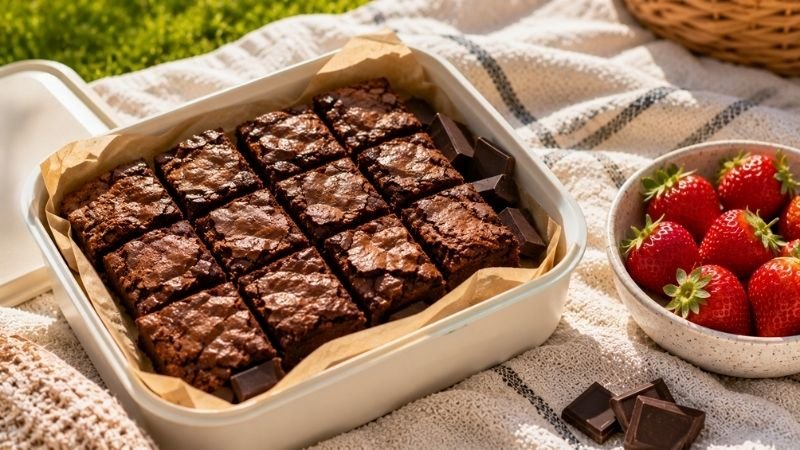
What travels well:
- Brownies cut into squares (dense, no frosting to smear, travel perfectly in a container)
- Shortbread cookies (durable, not fragile, won’t crumble)
- Dark chocolate (travels better than milk chocolate in heat; break into pieces and pack)
- Fresh berries with a small container of cream or yogurt for dipping
- Store-bought macarons (impressive, hold up well in a box, conversation starters)
- Banana bread or zucchini bread slices
What doesn’t travel well:
- Anything with whipped cream or fresh frosting (melts, collapses, becomes a mess)
- Meringue (humidity destroys it)
- Ice cream (unless you’re eating it within 20 minutes of leaving home)
- Layer cakes (structural integrity becomes a problem)
What NOT to Bring to a Picnic: The Common Mistakes
This is what the experienced picnic community has learned through trial and error — and what shows up repeatedly in every honest discussion of what doesn’t work outdoors.
Dressed leafy salads: The greens wilt within 20–30 minutes of being dressed. If you want a leafy salad, bring the dressing separately and dress just before eating.
Mayo-heavy dishes in hot weather without a real cooler: Egg salad, potato salad with mayo, and similar dishes are genuinely risky in heat above 90°F without reliable cold storage. Research published in the Journal of Food Protection confirms exponential bacterial growth in mayo-based salads above 40°F. Either bring a proper cooler with ice, or choose a vinaigrette-based alternative.
Foods that require complex assembly at the picnic: The simpler your on-site requirements, the better. If you’re building elaborate dishes from components while sitting on a blanket, something will tip over or get into the grass.
Too much food: The most common picnic mistake from first-timers. Outdoor eating tends to be more grazing than sitting-down-to-a-meal. Bring slightly less than you think you need — you’ll be surprised by how little gets eaten compared to your estimate.
Foods that melt rapidly in sun: Soft cheese, milk chocolate, anything with butter frosting. These transform into unpleasant versions of themselves very quickly.
If You Only Have 10 Minutes to Plan
Zero planning required, 10 minutes at a grocery store:
- Hard cheese (pre-sliced or a small wedge)
- Salami or prosciutto (from the deli counter)
- Crackers or a baguette
- Grapes or strawberries
- Olives (small container)
- Dark chocolate (a bar broken into pieces)
- Water (more than you think)
That’s a genuinely complete picnic spread. Nothing needs cooking, nothing needs refrigeration urgently, everything tastes good at outdoor temperatures.

FAQ: Real Questions About Picnic Food
Q: What are the easiest picnic foods to bring? A charcuterie-style spread: hard cheese, cured meats, crackers, olives, and fresh fruit. No cooking, minimal preparation, scales for any group size, and travels well without refrigeration for 2–3 hours. This is the format that experienced picnickers return to repeatedly because it reliably works.
Q: What picnic food doesn’t need refrigeration? Hard cheeses, cured meats (salami, prosciutto), crackers, bread, whole fruit, olives, nuts, trail mix, most baked goods, dark chocolate, and any vinaigrette-dressed grain salads or bean salads. These can safely sit at outdoor temperatures for a full picnic duration.
Q: What foods travel well for a picnic? Foods that travel best: wraps and sturdy rolls (rather than sliced bread), grain salads and pasta salads in sealed containers, whole fruit, firm cheeses, charcuterie components individually wrapped, dense baked goods (brownies, shortbread), and pre-assembled finger foods like deviled eggs or caprese skewers.
Q: What is the best picnic lunch idea? A combination of a make-ahead pasta or grain salad + charcuterie components + fresh fruit covers all the bases: something substantial, something to graze on, and something refreshing. Add some crackers and a sweet treat and you have a complete outdoor lunch that requires minimal effort.
Q: How do you keep picnic food fresh? Use a cooler bag with ice packs for any perishables. Pre-chill containers before packing. Keep the cooler bag in shade rather than direct sun. Bring food out of the cooler only when you’re ready to eat it, rather than spreading everything out at once. Hard cheeses, charcuterie, and vinaigrette-dressed salads don’t need refrigeration for 2–3 hours in mild weather.
Good Food, Good Afternoon
The best picnic food ideas have one thing in common: they let you spend more time enjoying the outdoors and less time managing the logistics of eating. A well-chosen spread — even a simple one — means you’re not constantly fussing with dishes, worried about food sitting too long, or wishing you’d brought something else.
Keep it simple. Bring a little more variety than quantity. And don’t underestimate what a baguette, some good cheese, and a sunny afternoon can do.
Plan your complete picnic:
- Picnic Essentials Checklist: Everything You Need
- Best Picnic Blankets: Waterproof & Budget-Friendly Picks
- How to Plan a Scenic Day Trip as a Beginner
- Outdoor Safety for Beginners
References
- USDA Food Safety and Inspection Service. Safe Food Handling — The Danger Zone (40°F to 140°F). fsis.usda.gov
- Centers for Disease Control and Prevention (CDC). Food Safety for Outdoor Events. cdc.gov/foodsafety
- Juneja, V.K., et al. (2009). Modeling the growth of Listeria monocytogenes in ready-to-eat salads. Journal of Food Protection, 72(9), 1973–1980.
- National Park Service. Leave No Trace — Food Waste and Wildlife Interaction. nps.gov