
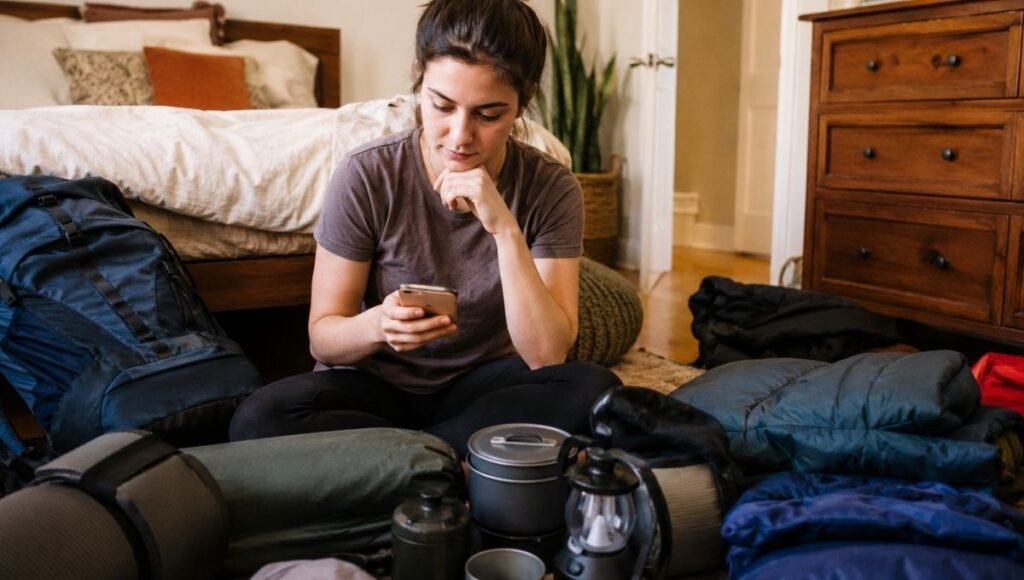
The complete camping packing list organized by category — with the items people actually forget, a quick-pack version for last-minute trips, and separate lists for overnight, weekend, and multi-day camping.
Key Takeaways
- The most commonly forgotten camping items aren’t dramatic — they’re a can opener, trash bags, and camp sandals: small things that create big problems when missing
- A complete camping checklist breaks into six categories: shelter & sleep, kitchen & food, clothing, hygiene, safety, and campsite comfort
- For a first-time car camping trip, the non-negotiable minimum is: tent, sleeping bag, sleeping pad, headlamp, water, food, and a way to store it all safely
- Sleeping pad is consistently cited as the most impactful comfort item — more so than the sleeping bag itself, because ground cold is harder to manage than air cold
- The National Park Service recommends campers arrive with at least one gallon of water per person per day — most beginners bring half that
You’ve booked the campsite. Departure is tomorrow morning, or maybe Saturday, or next weekend. And now you’re standing in your bedroom looking at an empty bag thinking: what actually goes in here? You know the obvious stuff — tent, sleeping bag — but beyond that it gets fuzzy. You’ve read three different packing lists online and they all include things you’ve never heard of and skip things you’re pretty sure you need.
This is the camping checklist designed to solve that exact problem. It’s organized so you can move through it category by category, it distinguishes between what you absolutely need and what’s just nice to have, and it includes the section that most packing lists skip entirely: the things people actually forget. Not the dramatic stuff. The small things — the can opener, the trash bag, the sandals for camp — that quietly ruin an otherwise good trip.
Work through it once before you pack. Check things off. Then check again before you leave the driveway. Everything else is a detail.
Camping Checklist: Shelter & Sleep
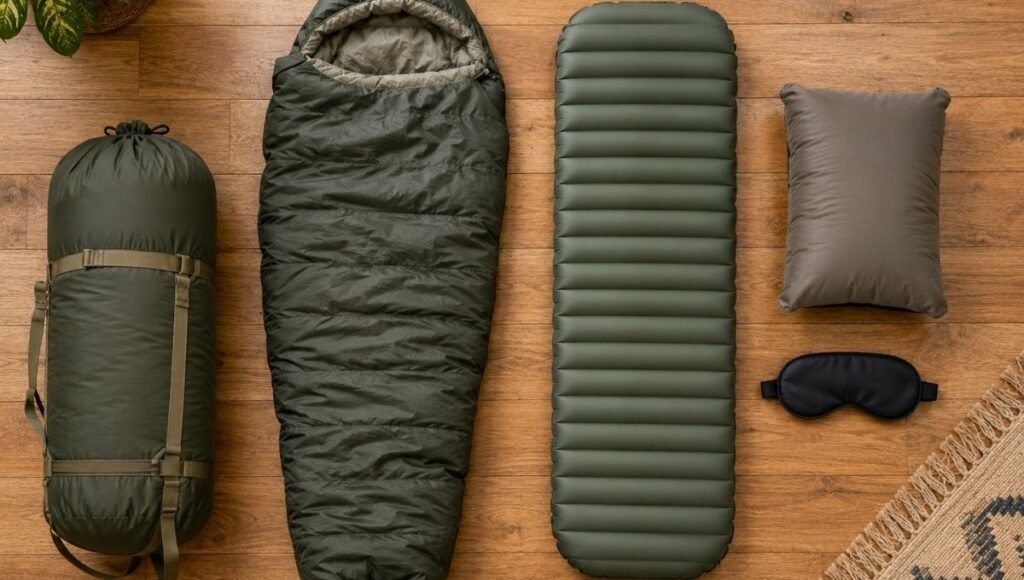
This is the category where getting it wrong matters most. A bad night’s sleep at camp — cold, uncomfortable, or damp — is the thing that most often turns first-timers into never-agains.
Must-Have
- [ ] Tent — with all poles, stakes, and rainfly confirmed before you leave home
- [ ] Sleeping bag — temperature rated for at least 10–15°F below your expected overnight low
- [ ] Sleeping pad — not optional; ground cold conducts heat away from your body faster than cold air does
- [ ] Tent footprint or ground tarp — protects tent floor from moisture and abrasion
- [ ] Extra blanket or quilt — one more layer than you think you’ll need
Strongly Recommended
- [ ] Camp pillow or packable pillow
- [ ] Tent repair tape (for small tears or pole issues)
- [ ] Eye mask (it gets light earlier outside than most people expect)
- [ ] Earplugs (campgrounds are louder than expected — other campers, wildlife, early morning birds)
Good to Have
- [ ] Sleeping bag liner (adds warmth, keeps sleeping bag cleaner)
- [ ] Cot (for those who strongly prefer to be off the ground)
Editor’s note: The sleeping pad is the item most first-timers either skip or underinvest in. If your pad is thin, old, or borrowed with unknown R-value — cold will find you through the floor regardless of your sleeping bag’s rating. This is the item most worth spending on.
Camping Checklist: Kitchen & Food
Camp cooking is one of the genuine pleasures of camping — and one of the most common sources of first-trip frustration when something gets left behind.
Must-Have
- [ ] Camp stove
- [ ] Fuel canisters (more than you think you need)
- [ ] Lighter or matches — bring two sources
- [ ] Pot and pan
- [ ] Camp utensils: spatula, long spoon, tongs
- [ ] Plates, bowls, mugs (one set per person)
- [ ] Fork, knife, spoon per person
- [ ] Can opener ← the most forgotten item in camping history
- [ ] Cutting board
- [ ] Sharp knife with a protective cover
- [ ] Cooler with ice or ice packs
- [ ] Water (minimum 1 gallon/person/day per National Park Service guidelines)
- [ ] Water bottles or hydration system
- [ ] Food for all meals — planned out in advance
- [ ] Biodegradable dish soap
- [ ] Small sponge or camp scrubber
- [ ] Trash bags ← second most forgotten item; bring at least two
- [ ] Aluminum foil (multi-purpose at camp)
- [ ] Paper towels
Strongly Recommended
- [ ] Small wash basin or collapsible sink for dishes
- [ ] Dish drying towel
- [ ] Reusable ziplock bags in multiple sizes
- [ ] Spice kit (pre-packed with salt, pepper, and whatever you’ll actually use)
- [ ] Cutting board
- [ ] Camp tablecloth or mat
- [ ] Bear canister or hang bag (required in some areas — check campground rules)
Good to Have
- [ ] Camp coffee setup (French press, pour-over, or instant — your preference)
- [ ] Folding camp table
- [ ] Collapsible water container for carrying from spigot to site
- [ ] Cooler lock or strap (if camping in bear country)
Camping Checklist: Clothing
The consistent mistake across all camping communities: not enough warm layers. Daytime temperatures and nighttime temperatures at camp can differ by 20–30°F, especially at elevation or in shoulder seasons.
Must-Have
- [ ] Moisture-wicking base layer (top and bottom)
- [ ] Insulating mid-layer (fleece jacket or down jacket)
- [ ] Waterproof outer layer (rain jacket)
- [ ] Quick-dry pants or hiking pants
- [ ] Shorts (if weather allows)
- [ ] Socks — at least one pair per day plus extras (wool or synthetic, never cotton)
- [ ] Sturdy closed-toe shoes for hiking and camp tasks
- [ ] Camp sandals or Crocs ← consistently cited as the most underrated comfort item
- [ ] Warm hat or beanie
- [ ] Sunglasses
- [ ] Underwear — one more day’s worth than you’re camping
Strongly Recommended
- [ ] Sun hat with brim
- [ ] Gloves (even in summer — nights can surprise you)
- [ ] Gaiters (for dusty or wet terrain)
- [ ] Swimwear (if near water)
The camp sandals note: this appears in virtually every “what I wish I’d brought” camping thread. After hiking in boots all day, changing into sandals around the campsite is one of those small things that turns a decent evening into a genuinely comfortable one.
Camping Checklist: Hygiene & Personal Care
Camping doesn’t mean abandoning hygiene — it means adapting it. The goal is staying clean enough to be comfortable without access to a full bathroom.
Must-Have
- [ ] Toothbrush and toothpaste
- [ ] Biodegradable soap (body + hair + dishes)
- [ ] Toilet paper (your own supply — campground dispensers run out)
- [ ] Hand sanitizer
- [ ] Small quick-dry towel or microfiber towel
- [ ] Deodorant
- [ ] Lip balm with SPF
- [ ] Sunscreen (SPF 30+)
- [ ] Insect repellent
Strongly Recommended
- [ ] Baby wipes or wet wipes ← the camping community’s most underrated hygiene item; invaluable without shower access
- [ ] Feminine hygiene products if needed (plus a small sealed bag for waste)
- [ ] Small mirror
- [ ] Nail clippers
- [ ] Any prescription medications plus extras
- [ ] EpiPen if you have known severe allergies
Good to Have
- [ ] Dry shampoo
- [ ] Camp shower bag (for longer trips)
- [ ] Small broom or brush (for sweeping out tent — sounds unnecessary until you’re sleeping on pine needles)
Camping Checklist: Safety & Navigation
Safety at a developed campground is lower-stakes than backcountry camping — but basic preparation is always worth it.
Must-Have
- [ ] Headlamp per person — not one to share, one each; hands-free lighting is essential
- [ ] Extra batteries or backup charger for headlamps
- [ ] First aid kit (see our complete hiking first aid kit guide for what to include)
- [ ] Phone, fully charged
- [ ] Car charger or portable power bank
- [ ] Emergency contact information left with someone at home
- [ ] Downloaded offline maps for your area
Strongly Recommended
- [ ] Whistle
- [ ] Emergency blanket
- [ ] Knife or multi-tool
- [ ] Duct tape (this appears in more “what should I always bring” lists than almost any other item — repair uses are nearly endless)
- [ ] Extra headlamp batteries even for rechargeable models
Good to Have
- [ ] Satellite communicator (for remote or backcountry trips)
- [ ] Bear spray (in areas where recommended — know how to use it)
- [ ] Paracord (camp repairs, hanging food, dozens of other uses)
Camping Checklist: Campsite Comfort
These items aren’t survival necessities, but they’re what separates “we survived the night” from “let’s do this again next month.”
Must-Have
- [ ] Camp chairs (one per person — sitting on the ground all evening loses its appeal quickly)
- [ ] Camp lantern for ambient site light
- [ ] Campfire supplies (check local fire regulations first — many areas restrict outside firewood)
Strongly Recommended
- [ ] Folding table
- [ ] Tarp for shade or rain cover
- [ ] Clothesline and clothespins
- [ ] Small broom or brush
- [ ] Ground cloth for sitting area outside tent
- [ ] Ziplock bags in multiple sizes (for wet clothes, leftover food, trash)
Good to Have
- [ ] Hammock (if you’ve used one before)
- [ ] Portable speaker (keep volume considerate of neighbors)
- [ ] Card games or small camp entertainment
- [ ] Journal or book
The Items People Actually Forget: The Camping Checklist Most Lists Skip
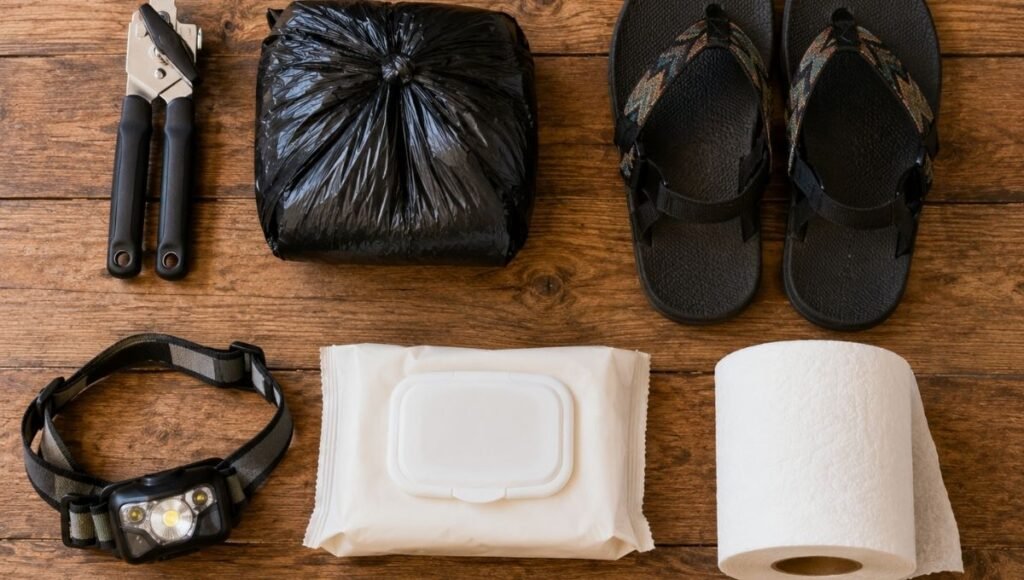
This section exists because of years of collective camping community experience — the small things that don’t seem important until you’re at the campsite realizing you don’t have them.
The top 12 most commonly forgotten camping items:
1. Can opener. If you’re bringing any canned food at all. Check. Then check again.
2. Trash bags. You’ll need more than one. Pack two minimum. They serve as rain covers, wet clothing bags, and everything else.
3. Camp sandals. Your feet need a break from hiking boots. After-dinner campsite walking is miserable in wet or muddy boots.
4. Headlamp batteries. Or discovering your headlamp died in your pack because there’s no lock mode. Check the batteries. Know the lock mode.
5. Toilet paper. Campground dispensers are not reliable. Bring your own. Pack more than you think you need.
6. Baby wipes. You won’t have a shower. Baby wipes before bed is the difference between feeling disgusting and feeling acceptable.
7. A warm enough layer for night. The campfire feels warm. When it dies and you go back to the tent at midnight, that light jacket stops being enough.
8. Camp shoes. (Yes, this is separate from camp sandals — both appear repeatedly because they’re that commonly forgotten.)
9. Medications. Including everyday ones you take for granted at home. Ibuprofen. Antihistamines. Whatever is part of your normal routine.
10. Charger and power bank. Specifically the cable. The phone charger cable that’s plugged into the wall at home right now.
11. Tent stakes — all of them. Small and loose in a bag, they stay behind regularly. Count them before you leave.
12. Duct tape. Can’t explain it. Just bring it. Everyone who camps regularly has a story where duct tape solved something.
Camping Checklist by Trip Length
Not every trip requires the same preparation. Here’s how the list adjusts by duration:
Overnight Camping Checklist (1 Night)
Focus on sleep and safety. Skip anything that requires setup or adds complexity. Keep food simple (no-cook or one-pot).
Core items: Tent + sleeping bag + sleeping pad + headlamp + water (1 gallon/person) + food for all meals + first aid basics + extra layer + trash bags + can opener (if using canned food)
Weekend Camping Checklist (2–3 Nights)
Add: full kitchen setup (stove + cookware + dishes), camp chairs, lantern, more clothing layers, hygiene kit, camp table if you have one.
Multi-Day Camping Checklist (4+ Nights)
Add: sleeping bag liner for comfort and cleanliness, camp shower or wet wipes protocol, more careful meal planning, water filter for backup, entertainment for down time, repair kit (duct tape, tent repair tape, extra stakes).
Family Camping Checklist: What Changes With Kids
The core list stays the same, but several additions become essential:
Additional for family camping:
- [ ] Kid-specific headlamps (they lose them — bring extras)
- [ ] Child-size layers and rain gear
- [ ] Kids’ sunscreen (formulation matters)
- [ ] Extra snacks (more than you think)
- [ ] First aid additions: children’s pain reliever, age-appropriate antihistamines
- [ ] Entertainment: frisbee, ball, nature scavenger hunt cards
- [ ] Extra change of clothes per child per day plus two extra
- [ ] Small backpack for each child (they love having their own)
- [ ] Potty training considerations for young children
- [ ] Glow sticks (makes night camp walks with kids significantly easier)
The 10-Minute Last-Minute Camping Checklist
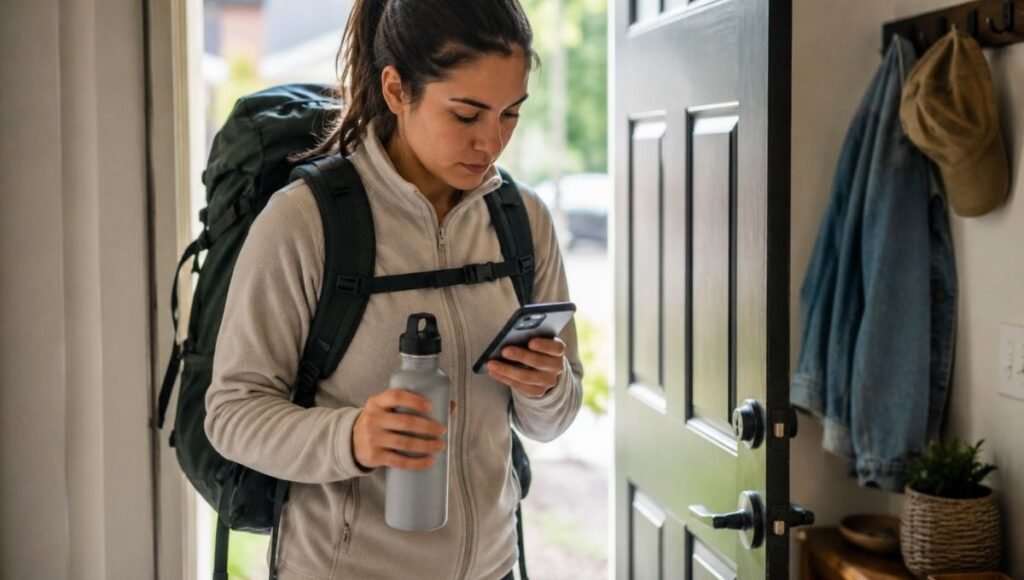
No time to research? Here’s the absolute minimum you need for a one-night car camping trip, assembled in 10 minutes from what you already own:
- [ ] Tent (confirm stakes and poles)
- [ ] Sleeping bag
- [ ] Sleeping pad
- [ ] Headlamp
- [ ] Water (at least 1 gallon per person)
- [ ] Food for all meals (plan this out — don’t just grab random things)
- [ ] Rain jacket
- [ ] Extra warm layer
- [ ] Toilet paper and hand sanitizer
- [ ] Trash bag
- [ ] Phone, charger, power bank
Everything else can wait for your next trip. This gets you through one night safely and reasonably comfortably.
What to Do If You Forget Something Important
Most forgotten items can be worked around or purchased en route. Here’s the practical hierarchy:
Can buy at any gas station or convenience store near most campgrounds: Toilet paper, matches, basic food, trash bags, basic first aid, batteries
Can often borrow from campground neighbors: Can opener, basic tools, extra stake
Cannot easily improvise: Tent (if you forgot it — go home or check into alternative accommodation) Prescription medications (this is the one category where forgetting has real consequences) Adequate cold protection (if temperature drops significantly below what your sleeping bag handles)
When to actually leave camp and seek help: Any medical emergency, any situation where someone cannot be kept warm, any injury that won’t stop bleeding or requires medical attention. Campground hosts can often assist with minor issues and direct you to the nearest emergency services when needed.
FAQ: Real Camping Checklist Questions
Q: What is the most important thing to bring camping? Shelter (tent, sleeping bag, sleeping pad) and water. Everything else is secondary to these two categories. If you have adequate shelter and enough water, you can manage almost any other gap.
Q: What do people most often forget when camping? Based on consistent camping community experience: a can opener, trash bags, camp sandals, and a warm enough layer for nighttime. The small things that don’t feel important until you’re at the campsite and don’t have them.
Q: How much food should I bring camping? Plan every meal before you pack — write out breakfast, lunch, and dinner for each day and pack accordingly. Bring 20% more than you think you’ll need. Outdoor activity increases appetite, and running out of food on day two is significantly less fun than carrying home a few extra granola bars.
Q: Do I need a sleeping pad for camping? Yes. Ground cold conducts heat away from your body much faster than cold air does. A sleeping bag rated to 30°F on bare ground will still produce an uncomfortably cold night. The sleeping pad is the item most experienced campers cite as the biggest improvement to beginner camping comfort.
Q: What should I pack for a one-night camping trip? The minimum viable kit: tent (with stakes and poles), sleeping bag, sleeping pad, headlamp, water (1 gallon per person), food for all meals, rain jacket, extra warm layer, toilet paper, hand sanitizer, and a trash bag. Everything else is an upgrade for future trips.
Use This List, Then Adapt It
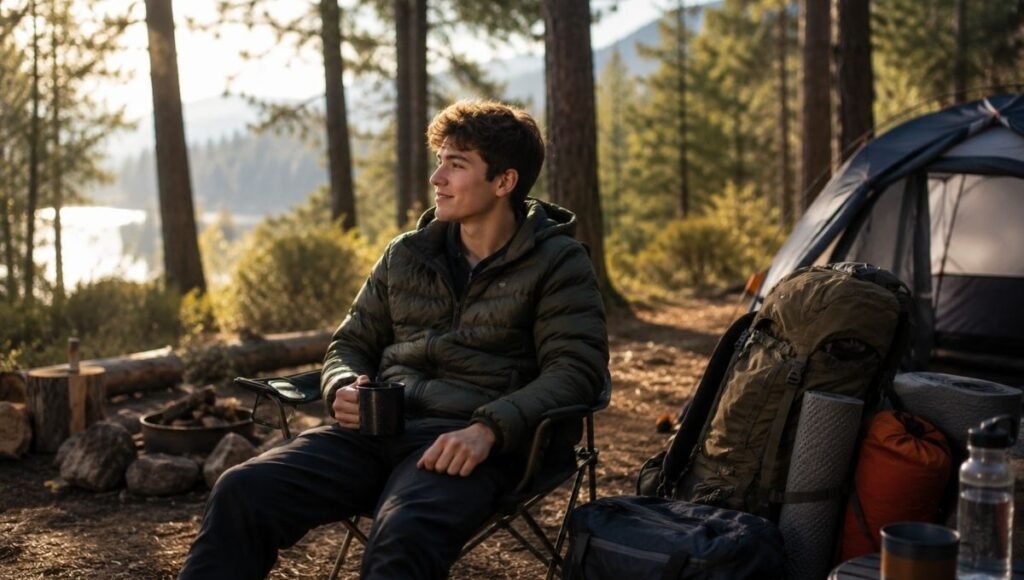
The camping checklist that works best is the one you’ve refined over a few trips — the one with notes in the margin that say “never again” next to things you brought but didn’t use, and “add this” next to things you needed and didn’t have.
Start with this list. Check it twice before you leave. And update it every time you come home from a trip. That’s how experienced campers build their system — not by memorizing a perfect list, but by iterating on a working one.
Continue building your camping knowledge:
- The Complete Camping Packing List for Beginners
- Camping for Beginners: The Complete Guide
- How to Set Up a Tent for the First Time
- Easy Camping Meals for Beginners
- Car Camping for Beginners
References
- National Park Service. Camping Essentials and Water Requirements — 1 Gallon Per Person Per Day. nps.gov
- American Red Cross. Emergency Preparedness and First Aid Kit Recommendations. redcross.org
- Leave No Trace Center for Outdoor Ethics. Leave No Trace Principles — Dispose of Waste Properly. lnt.org
- Recreation.gov. Campground Guidelines and Bear Safety Requirements. recreation.gov