
A practical guide to finding the right daypack for day hiking — covering size, features, budget, and whether you even need to buy one right now.
Key Takeaways
- For most beginner day hikes, a 20–30L daypack is the ideal range — 20L for short hikes under 3 hours, 30L for full-day outings with more gear
- Your pack should weigh no more than 10–15% of your body weight when fully loaded — the American Physical Therapy Association recommends this as the safe limit for sustained carry
- A hip belt is worth having on hikes over 2 hours — it transfers weight from shoulders to hips and meaningfully reduces fatigue
- You don’t need to spend $150+ for a good beginner pack — the $60–100 range has solid options from reputable brands
- Before buying anything, check if a pack you already own works: if it fits your back, has padded straps, and holds 20+ liters, it probably does
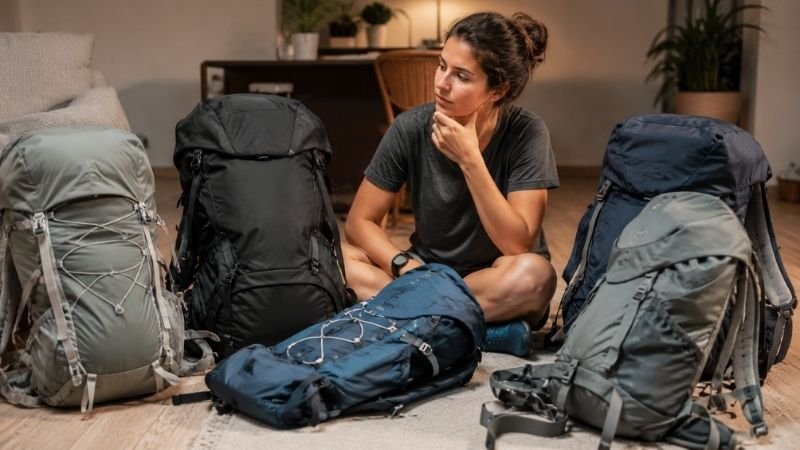
You’ve decided to start hiking. You open a browser tab, type “hiking backpack,” and suddenly you’re staring at forty options with specs like “28L, AirSpeed suspension, LightWire frame, integrated raincover” — and you have absolutely no idea what any of it means or which one you actually need.
This is one of the most common early-hiker experiences, and it’s completely understandable. Outdoor gear marketing is dense, options are endless, and it can feel like you need to become an expert before you can even choose a bag to put your water bottle in.
Here’s what nobody says clearly enough: for your first several hikes, the right backpack is probably simpler — and cheaper — than you think. This guide will walk you through exactly what matters, what doesn’t, which size to get, and which specific lightweight hiking backpacks are worth your money at different budgets. By the end, you’ll know exactly what to buy, or whether you even need to buy anything at all.
Do You Actually Need to Buy a New Hiking Backpack Right Now?
Before we get into recommendations, here’s the honest answer to the question most people don’t think to ask: you might not need to buy anything yet.
If you already own a daypack, school bag, or any backpack with padded shoulder straps and 15–25 liters of capacity, it can probably carry you through your first several hikes. The backpack you use to commute or travel isn’t ideal, but it’s functional for well-maintained trails under 3–4 hours.
Your current bag is fine if:
- It has padded, adjustable shoulder straps
- It holds at least 15 liters of gear
- It doesn’t have sharp internal frames that dig into your back
- It has at least one exterior pocket for quick-access items like your phone or snacks
Your current bag is not working if:
- Your shoulders ache after 30 minutes with a loaded pack
- There’s no way to carry a water bottle without opening the main compartment
- The straps aren’t adjustable and the bag swings around when you move
- It’s a single large compartment with no organization whatsoever
If your current bag passes that check, hike in it. Use your first few outings to figure out what you actually wish you had — then buy something specific to those needs. This approach saves money and results in a much smarter eventual purchase.
Editor’s note: “Don’t buy a $150 pack before you know if you even like hiking” is genuinely the most common advice in hiking communities — and it’s right. Start with what you have, upgrade with intention.
What Size Lightweight Hiking Backpack Do You Actually Need?
This is the question that causes the most confusion, and the answer is more straightforward than the gear industry wants you to think.
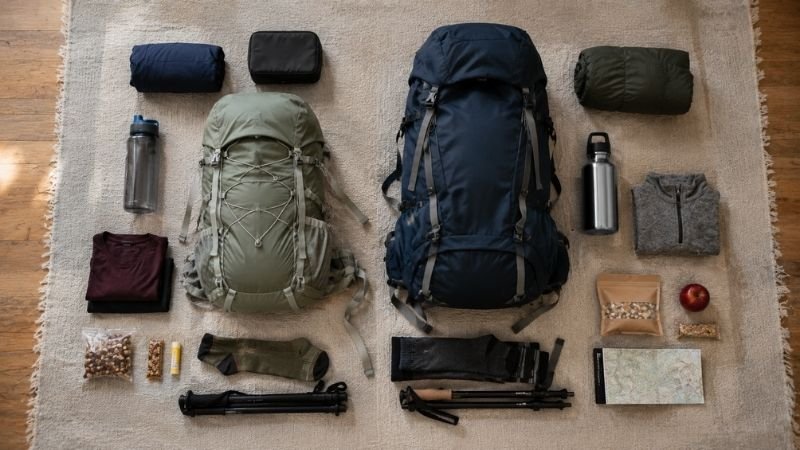
20L Hiking Backpack: Best for Short Day Hikes
A 20-liter pack fits comfortably for hikes under 3–4 hours where you’re carrying the essentials: water (1–2L), snacks, a light extra layer, sunscreen, and your phone. It sits closer to your body, moves naturally with you, and doesn’t feel bulky on narrower trails.
20L is right for you if: You’re doing mostly short-to-moderate day hikes, you pack light by nature, and you want something that feels agile rather than substantial on your back.
30L Hiking Backpack: Best for Full-Day Hikes
A 30-liter pack gives you room for a proper meal, 2–3 liters of water, a rain jacket, a fleece layer, a first aid kit, and everything else a full-day hike demands. The extra capacity also means you can use a proper hydration bladder instead of juggling water bottles.
30L is right for you if: You tend to pack thoroughly, you’re planning full-day outings (4+ hours), or you run cold/hot and need to carry multiple layers.
The honest recommendation for most beginners: Start with 20–25L. It forces you to pack efficiently, keeps your load light, and handles 90% of what beginner hikers actually do. You can always upgrade to 30L when longer hikes become your norm.
Hiking Backpack Features: What’s Actually Worth It
The outdoor gear industry adds features to justify price points. Here’s a candid breakdown of what actually matters for beginner day hiking.
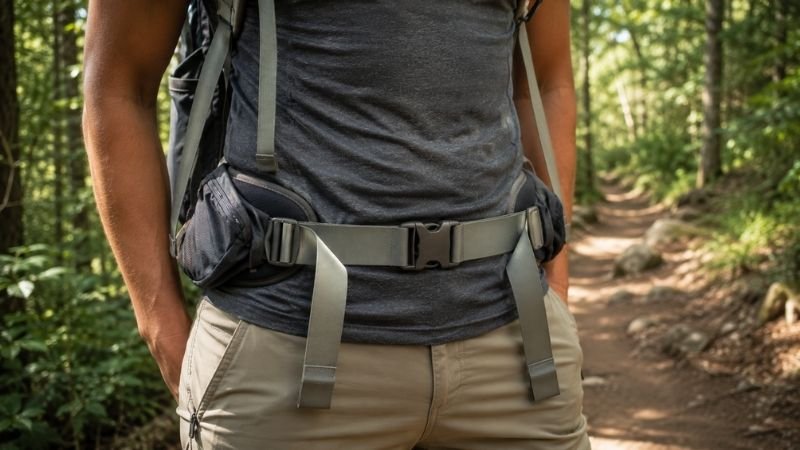
Hip Belt: Worth It After 2 Hours
A padded hip belt transfers weight from your shoulders to your hips — which are built for load-bearing in a way your shoulder joints aren’t. On short hikes under 2 hours with a light load, you probably won’t notice the difference. On anything longer, a proper hip belt is the single feature that most reduces fatigue.
If you’re buying a pack for regular day hiking, get one with a padded hip belt. If you’re buying a pack for occasional short walks, a basic webbing strap is fine.
Hydration Bladder Sleeve: More Useful Than It Sounds
A dedicated sleeve for a hydration bladder (the water bag with a drinking tube) means you can sip water without stopping to take your pack off. On long, warm hikes this convenience translates directly into better hydration — which translates into more energy and fewer headaches.
The bladder sleeve itself is a standard feature on most hiking-specific packs in the $60+ range. If you tend to forget to drink water regularly (common on first hikes when you’re distracted by everything around you), this feature is genuinely worth having.
Side Water Bottle Pockets: Non-Negotiable
Exterior mesh side pockets for water bottles seem basic, but their absence is genuinely annoying on trail. Having to open your main compartment every time you want a drink sounds like a minor inconvenience until you’ve done it twenty times in two hours.
Any pack you buy for hiking should have at least one accessible side pocket for a water bottle. This is a hard requirement, not a nice-to-have.
Ventilated Back Panel: Nice If You Run Hot
Some packs (notably Osprey’s AirSpeed and Deuter’s Aircomfort systems) create a gap between your back and the pack for airflow, which dramatically reduces the sweaty-back experience. It’s a genuinely useful feature for summer hiking or anyone who runs warm.
That said, ventilated back panels add cost and slightly reduce stability on steeper terrain. For most beginners on moderate trails, it’s a comfort upgrade rather than an essential.
Integrated Rain Cover: Convenient but Skippable
A built-in rain cover that stows in a bottom compartment is convenient for unpredictable weather. But a separate pack rain cover costs $15–20 and does the same job. Don’t let the presence or absence of an integrated rain cover make or break your purchase decision.
Trekking Pole Attachments: Ignore for Now
Loops and bungees for attaching trekking poles are a standard hiking pack feature that most beginners never use. Don’t factor this into your decision.
How Heavy Should a Loaded Hiking Backpack Be?
This matters more than most beginners realize, and it’s where the “lightweight” in lightweight hiking backpack actually becomes important.
The American Physical Therapy Association recommends that a loaded backpack should not exceed 10% of the carrier’s body weight for recreational hikers — with 15% as an upper limit for fit adults on short distances. Research published in the journal Ergonomics found that loads exceeding 20% of body weight significantly increase lumbar spine compression and alter gait mechanics, increasing injury risk over time.
In practical terms for a 150-lb beginner hiker: your fully loaded day pack should ideally weigh under 15 lbs. Most well-packed beginner day packs come in at 8–12 lbs including water — which is well within the safe range.
Where this affects your pack choice: A lightweight hiking backpack (one that weighs 1–2 lbs empty) gives you more of that weight budget for actual gear. A heavier pack (3–4 lbs empty) eats into your budget before you’ve packed a single item.
Look for packs under 2 lbs (ideally under 1.5 lbs) for a lightweight hiking backpack that won’t penalize you on the trail.
Best Lightweight Hiking Backpacks for Beginners by Budget
These picks cover the real range of what beginners need, with honest assessments at each price point.
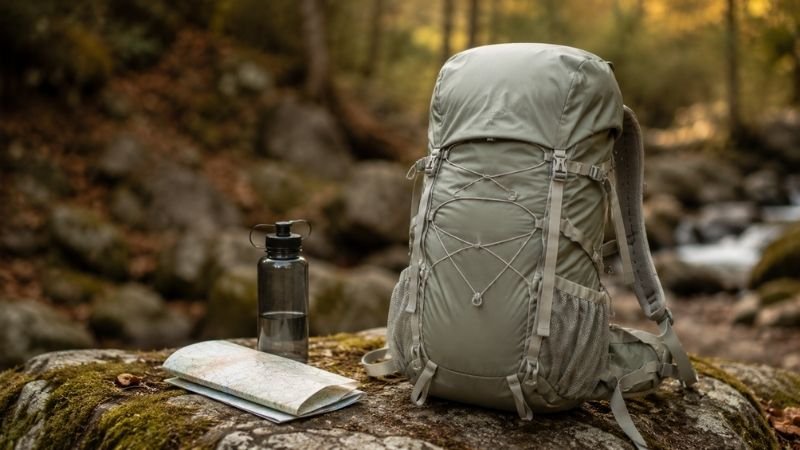
Best Under $60: REI Co-op Flash 18 or Deuter Speed Lite 17
Price range: $40–60 Best for: Short day hikes, beginners testing the waters, hikers who already own gear and just need a pack
At this price point, you’re getting functional packs from reputable brands — not the most feature-rich, but reliable enough for beginner trails. The REI Flash 18 is consistently recommended as an honest entry point: lightweight (under 1 lb), simple organization, and durable enough for regular use.
What you give up: Significant hip belt padding, ventilated back panels, and integrated rain covers are absent or minimal at this price.
Bottom line: If you’re not sure hiking will stick as a habit, spend here first. Upgrade when you know what you actually want.
Best $60–100: Osprey Daylite Plus 20L or Gregory Nano 20
Price range: $65–95 Best for: Beginners committed to regular hiking, versatile enough for trail and travel
This is the sweet spot for most beginners. The Osprey Daylite Plus is arguably the most recommended beginner hiking daypack across hiking communities — it’s lightweight (about 1 lb), has a hydration sleeve, side water bottle pockets, a front organization pocket, and Osprey’s legendary “All Mighty Guarantee” warranty that covers the pack for its lifetime regardless of what happens to it.
The Gregory Nano 20 is a comparable alternative with slightly better back ventilation, worth considering if you run warm.
What you give up at this price: Substantial hip belt padding (both have basic webbing belts), advanced suspension systems, and integrated rain covers.
Bottom line: Buy the Osprey Daylite Plus if you want a reliable, lightweight hiking backpack that will last years without drama. It’s the safe, proven choice for most beginners.
Best $100+: Osprey Talon 22 or Deuter Speed Lite 23
Price range: $110–160 Best for: Hikers who’ve confirmed they love hiking and want a pack that grows with them
At this price point, you’re getting a proper hip belt with padding, a ventilated back panel, and a more sophisticated suspension system. The Osprey Talon 22 is a step up from the Daylite in every measurable way — more comfortable on longer days, better weight distribution, and more trail-specific features.
The Deuter Speed Lite 23 is lighter and more minimalist, worth considering if weight is a priority over features.
Bottom line: Don’t start here. Buy this after you’ve done 10+ hikes in a cheaper pack and know exactly what’s missing. The upgrade will mean something specific to you rather than being a general assumption.
If You Only Have 10 Minutes to Choose
No time to research? Three questions, then buy:
Q1: Are you hiking under 3 hours? → Get a 20L pack under $70. Osprey Daylite or REI Flash.
Q2: Are you hiking a full day (4+ hours)? → Get a 20–30L pack with a real hip belt. Osprey Talon 22 or Deuter Speed Lite 23.
Q3: Are you not sure if you’ll like hiking? → Use whatever bag you already own. Seriously.
How to Tell If a Hiking Backpack Actually Fits You
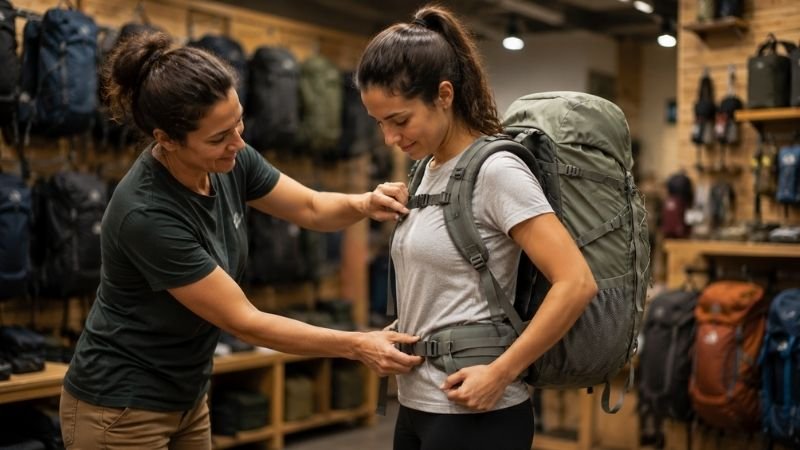
A pack that doesn’t fit your torso length is uncomfortable regardless of how much it costs. Here’s how to check fit before committing:
Load the pack with 10–15 lbs (use water bottles or books to simulate a realistic load) and put it on.
Hip belt: Buckle it so the padded sections sit on your hip bones, not your waist. The hip belt should carry 60–80% of the load on longer hikes — if it’s sitting too high or too low, it won’t help.
Shoulder straps: Should conform to your shoulders without gaps. You shouldn’t feel pressure points or have the pack pulling away from your back.
Sternum strap: Should sit an inch or two below your collarbone and prevent the shoulder straps from spreading apart.
The lean test: Lean forward, left, and right. The pack should move with you, not independently. If it sways or pulls, the torso length isn’t right.
Many hiking-specific packs (Osprey, Deuter, Gregory) come in multiple torso lengths or have adjustable suspension systems. If buying online, measure your torso length from the C7 vertebra (the bony bump at the base of your neck) to your iliac crest (the top of your hip bone) and match it to the manufacturer’s sizing chart.
Backpack Mistakes Beginners Make (And How to Skip Them)
Buying too big. A 40L pack for day hikes is like driving a truck to get groceries. You’ll fill the space with things you don’t need, carry more than necessary, and end up tired and frustrated. Match the pack to the hike.
Ignoring pack weight. A 4-lb empty pack is a problem before you’ve added a single item. For day hiking, empty pack weight should be under 2 lbs — ideally under 1.5 lbs.
Buying based on looks alone. The color doesn’t matter on trail. The fit does. A pack that looks great but sits wrong on your back will ruin a hike faster than any other gear failure.
Skipping the fit test. If you’re buying in person, always load the pack before deciding. If buying online, read reviews specifically about fit and torso length — not just “great pack” generalities.
Overspending before you’re committed. There’s genuine wisdom in the Reddit consensus: don’t spend $180 on a pack before you’ve done five hikes and know what you actually want. Start reasonable, upgrade intentionally.
FAQ: What Beginners Actually Ask About Hiking Backpacks
Q: Can I use a regular backpack for hiking? Yes, for easy beginner trails under 2–3 hours. Any padded, adjustable backpack with 15+ liters of capacity can handle your first few hikes. Upgrade to a hiking-specific pack once you know what you want from the experience.
Q: What size backpack do I need for a day hike? For most day hikes, 20–30 liters is the right range. Under 3 hours: 20L. Full day: 25–30L. Going much bigger than 30L for a day hike usually means you’re carrying things you don’t need.
Q: Is Osprey worth the price for beginners? The Osprey Daylite Plus at $65–75 is genuinely excellent value — it’s lightweight, well-made, and backed by a lifetime warranty. You’re not overpaying for brand prestige at that price point. The more expensive Osprey models ($130–180) are worth it for experienced hikers who know what they need, but beginners should start with the Daylite.
Q: Do I need a hip belt on my hiking backpack? For hikes under 2 hours with a light load: not really. For anything longer: yes, a padded hip belt makes a meaningful difference in shoulder and back comfort. Most hiking-specific packs in the $80+ range include proper padded hip belts.
Q: How much should I spend on a first hiking backpack? $60–100 is the sweet spot for most beginners. You get a durable, well-designed pack from a reputable brand without overspending on features you don’t need yet. Under $60 is workable; over $120 is usually more pack than a beginner requires.
Your Pack Is Ready — Now Fill It Right
Once you have your lightweight hiking backpack sorted, the next step is knowing what to put inside it. A great pack paired with the wrong gear (or too much of it) doesn’t make for a better hike.
The goal is always the same: carry what you actually need, nothing more, nothing your back will notice mile after mile.
Continue building your beginner hiking setup:
- The Complete Hiking Packing List for Beginners
- Hiking Boots for Beginners: How to Choose Without Wasting Money
- What to Wear Hiking: The Beginner’s Clothing Guide
References
- American Physical Therapy Association (APTA). Backpack Safety and Load Recommendations for Physical Activity. moveforwardpt.com
- Brackley, H.M., & Stevenson, J.M. (2004). Are children’s backpack weight limits enough? A critical review of the relevant literature. Spine, 29(19), 2184–2190.
- Ergonomics Journal. Lumbar load and gait alteration under varying backpack loads in recreational hikers. Taylor & Francis Group.
- Osprey Packs. All Mighty Guarantee — Lifetime Warranty Policy. osprey.com
- REI Co-op. How to Choose a Daypack. rei.com/learn/expert-advice/day-packs.html