
A practical, no-fluff guide to finding your first hiking boots or trail shoes — covering fit, budget, trail type, and the mistakes most beginners make before they even hit the trail.
Key Takeaways
- Hiking boots for beginners don’t need to be expensive — a solid first pair costs $60–100 and will last 2–3 years of regular use
- Most beginners size up half a size in hiking footwear to account for foot swelling on longer trails
- Hiking boots vs trail runners isn’t a gear debate — it’s a terrain question; the answer depends on where and how you hike
- Waterproof ratings don’t mean your feet stay dry if water goes over the top of the boot — understanding this saves a lot of disappointment
- Breaking in new hiking footwear before your first hike is non-negotiable — new shoes on a long trail almost guarantees blisters
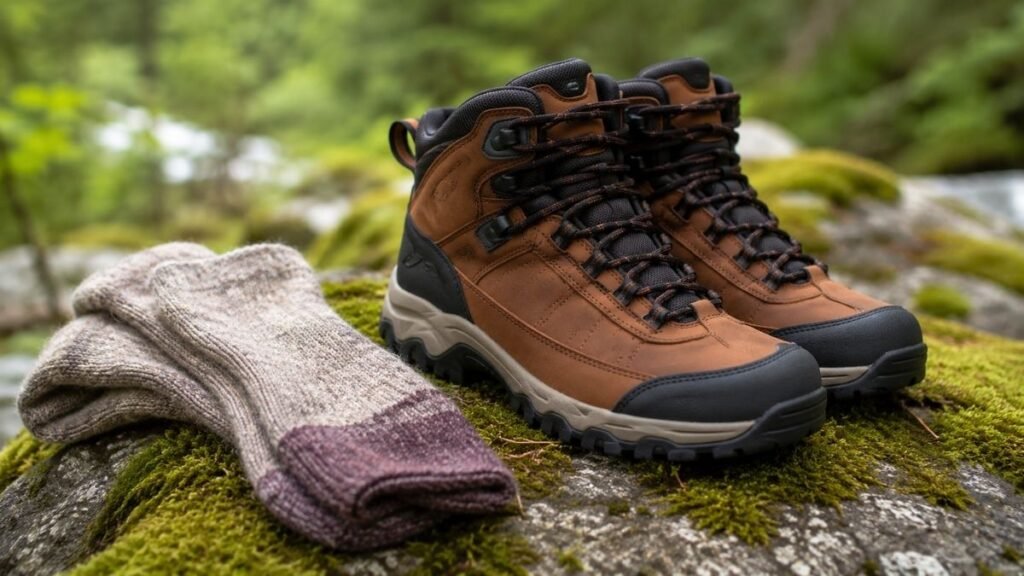
Picture this: you’ve decided to start hiking. You’re genuinely excited. You go to an outdoor gear store or open a browser tab, and suddenly you’re staring at forty pairs of boots with names like “Moab 3 Mid GTX Waterproof” and price tags ranging from $65 to $280. Nobody tells you what any of it means. You click around for twenty minutes, feel completely overwhelmed, and either close the tab or buy something at random and hope for the best.
That experience is almost universal for new hikers — and it’s completely unnecessary. Choosing hiking boots for beginners isn’t complicated once you understand what actually matters versus what’s just marketing. The right pair of hiking footwear doesn’t have to cost a fortune, doesn’t require a degree in materials science to choose, and doesn’t need to be perfect — it just needs to fit well and match the trails you’re planning to hike.
This guide will walk you through everything: the boots vs trail runners debate, how to figure out what you actually need, what to spend at different budget levels, which specific options are worth considering, and how to break in new footwear so your first hike doesn’t end in a blister disaster.
Hiking Boots vs Trail Runners: Which Should Beginners Choose?
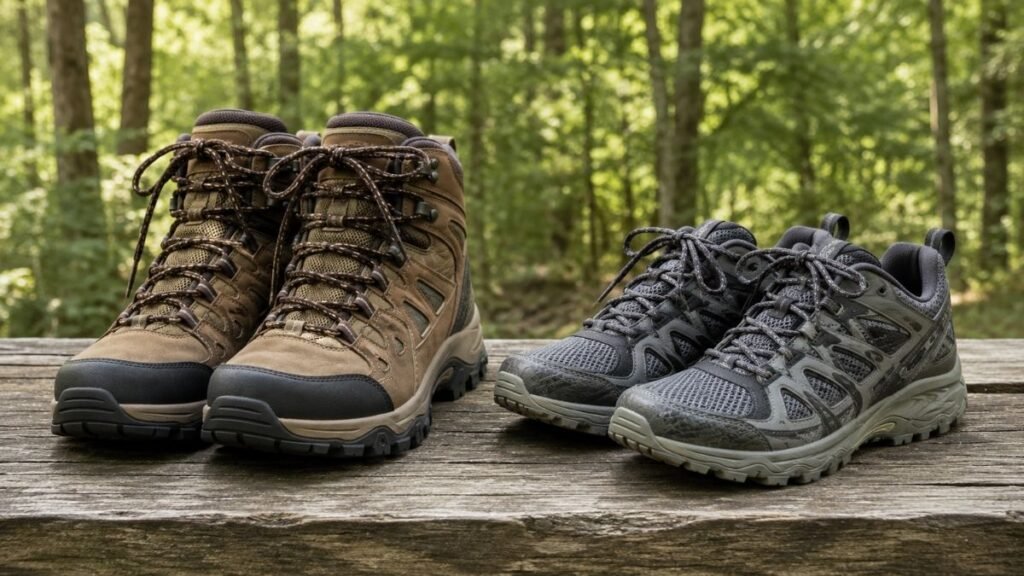
This is the first question most new hikers ask, and it’s a genuinely good one. The short answer: it depends on where you hike, not how “serious” you are.
Hiking boots (the traditional mid-cut or high-cut option) offer:
- More ankle support, especially on rocky or uneven terrain
- Better protection from roots, rocks, and wet mud
- Generally more durable over time
- Warmer in cold conditions
Trail runners (lightweight shoes built for off-road running) offer:
- Significantly less weight — your feet fatigue less on long days
- Much faster drying time if they get wet
- More natural foot movement
- Often more comfortable right out of the box
The honest verdict for most beginners: start with a lightweight hiking shoe or low-cut hiking boot. Full mid-cut boots are great for rugged, remote terrain — but for well-maintained beginner trails, they’re often more boot than you need. A lighter shoe lets you move more naturally, builds your trail legs faster, and doesn’t punish you with blisters from stiff leather during the break-in process.
That said, if you know you’ll be hiking on muddy, root-covered, or consistently wet terrain — think Great Lakes trails, Pacific Northwest forests, or anything with significant elevation on loose rock — the ankle support and grip of a proper hiking boot is genuinely worth it.
Editor’s note: The hiking boots vs trail runners debate is one of those topics where experienced hikers have very strong opinions. Ignore most of them. Pick footwear that matches your specific trails and your specific feet.
4 Questions to Ask Before You Buy Your First Hiking Boots
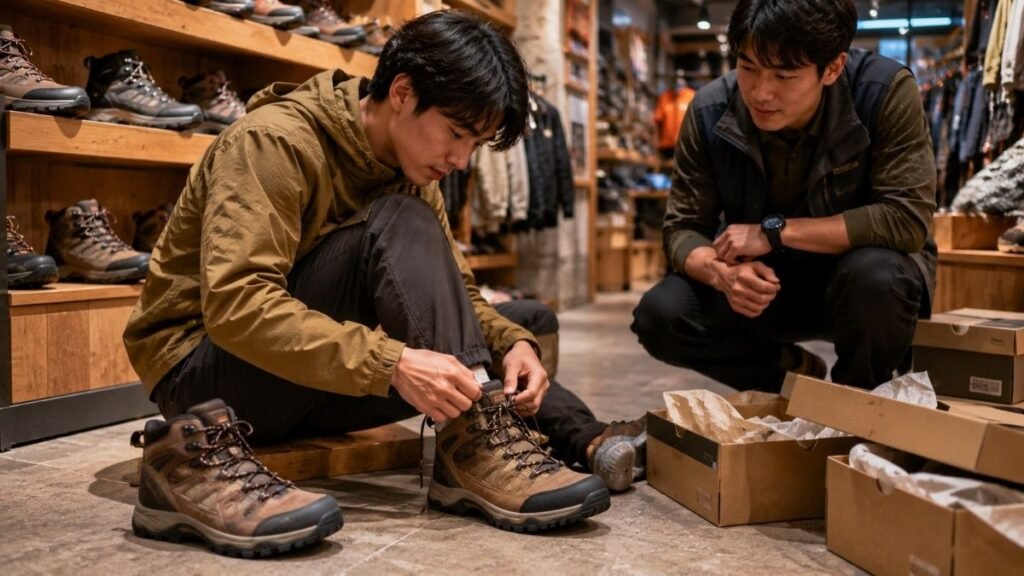
Before looking at any specific product, get clear on these four things. They narrow down your options from forty pairs to five.
1. What terrain will you actually hike? Well-maintained day trails with dirt paths → lightweight hiking shoes or trail runners are fine. Rocky, rooted, muddy, or consistently wet trails → mid-cut hiking boots with proper grip. Mostly flat nature walks and beginner loops → even a supportive athletic shoe can work for your first few hikes.
2. What’s your honest budget? $50–80: entry-level options that work for beginner trails. Don’t expect them to last more than a season or two of heavy use. $80–130: the sweet spot for beginners. You get meaningful quality improvements in fit, grip, and durability without overspending on features you don’t need yet. $130+: worth it if you’re already sure hiking will be a regular habit, or if you have specific foot issues (wide feet, high arch, pronation) that require more specialized fit.
3. Do you have any foot issues? Wide feet → look for brands like Oboz or Keen, which are known for roomier toe boxes. High arches → consider adding aftermarket insoles (brands like Superfeet are popular and genuinely help). Flat feet or overpronation → look for shoes with stability features; a sports medicine podiatrist can give you specific guidance if foot pain is a recurring issue.
4. What time of year will you mostly hike? Summer/warm weather → breathability matters more than waterproofing. Lightweight and quick-drying wins. Year-round/cold and wet → waterproofing and insulation become relevant. But understand what waterproofing actually means (more on this below).
What “Waterproof” Actually Means on Hiking Boots (And Why It’s Often Oversold)
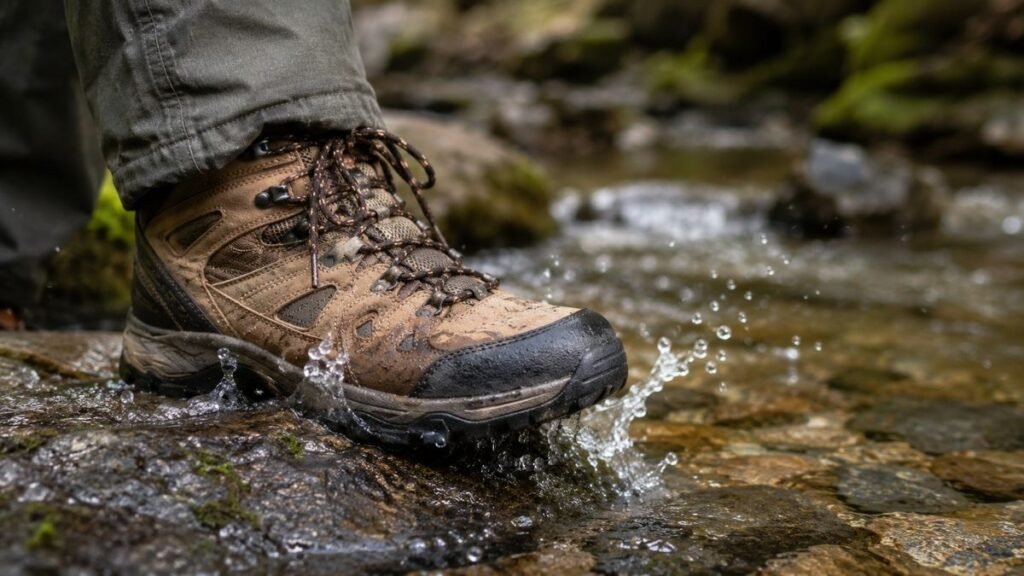
This is one of the most misunderstood features in hiking footwear — and it costs people money and disappointment.
Waterproofing on hiking boots (usually indicated by “GTX” for Gore-Tex, or similar treatments) means the boot’s upper material is treated to resist water penetration from the outside. This works well for: light rain, dew on grass, shallow puddles, and brief exposure to moisture.
It does NOT work for: stepping into a stream over the ankle, sustained heavy rain that runs down your leg into the boot, or sweaty feet on hot days. In any of these scenarios, the interior of the boot gets wet regardless of the waterproof rating.
Here’s the practical trade-off most gear reviews don’t mention clearly: waterproof materials dry significantly more slowly than non-waterproof ones. So a waterproof boot that gets soaked takes all day to dry out, while a non-waterproof trail runner might be dry within an hour.
For most beginner hikers on day trails: Non-waterproof is often the better choice in warm months. Waterproofing is genuinely useful in cold, consistently wet conditions where wet feet become a hypothermia risk rather than just a discomfort.
Beginner Hiking Boots & Shoes Worth Considering
These picks cover the range of needs most beginners have, across different budgets and terrain types. All are available through major retailers and have consistent track records with new hikers.
Best All-Around Hiking Boot for Beginners: Merrell Moab 3 Mid
Price range: $110–130 Best for: Well-maintained trails, day hikes, four-season use
The Merrell Moab is arguably the most popular beginner hiking boot in the US for good reason — it’s comfortable almost immediately out of the box, has excellent grip, and fits a wide range of foot shapes. The mid-cut version offers enough ankle support for beginners on variable terrain without the stiffness of heavier boots.
The Moab 3 is available in both waterproof (GTX) and non-waterproof versions. For summer hiking, the non-waterproof breathes significantly better. For fall and shoulder-season use, the waterproof version is worth the small price difference.
What beginners love: The comfort break-in is genuinely fast compared to stiffer competitors. Watch out for: Durability has been a mixed point in reviews — some users report the sole separating after 1–2 years of heavy use. For moderate hiking use, they hold up well.
Best Budget Hiking Shoe for Beginners: Merrell Moab Speed or Keen Targhee Low
Price range: $80–110 Best for: Easy to moderate trails, warm-weather day hiking
For beginners who want to spend under $110 without sacrificing too much quality, the low-cut versions of established hiking shoe lines hit the sweet spot. They’re lighter than mid-cut boots, more versatile (wearable off-trail), and comfortable enough for hikes up to 8–10 miles.
Keen shoes are particularly worth noting for anyone with wider feet — the brand consistently runs wider in the toe box than most competitors, which matters a lot on longer descents when feet swell.
Best Lightweight Option: Trail Runners (Brooks Cascadia, Salomon Speedcross, or Altra Lone Peak)
Price range: $120–160 Best for: Well-maintained trails, hikers prioritizing comfort and speed
If you’re planning to hike frequently, don’t have ankle issues, and will mostly stay on established trails, trail runners are worth serious consideration. The weight difference is meaningful — a pair of trail runners might weigh 600g total, while a mid-cut boot weighs 900–1,100g. Over 10 miles, that difference in foot fatigue is noticeable.
Trail runners also tend to have faster break-in times than boots, and the running shoe industry has invested heavily in cushioning technology that benefits hikers too.
The trade-off: trail runners wear through faster than boots. A pair of hiking boots might last 800–1,000 miles; trail runners often start degrading in the 300–500 mile range.
Best Budget Entry-Level Option (Under $80): Columbia Newton Ridge or Timberland White Ledge
Price range: $60–80 Best for: Occasional hiking, easy trails, beginners not ready to commit
If you’re not sure whether hiking will stick as a habit, spending $60–80 on a reputable entry-level boot is a perfectly sensible starting point. These boots won’t perform like a $130 Merrell, but on easy, well-maintained trails they’re more than adequate for getting started.
Columbia Newton Ridge gets consistent positive reviews from new hikers — comfortable, decent grip, and genuinely affordable.
How to Get the Right Size in Hiking Boots
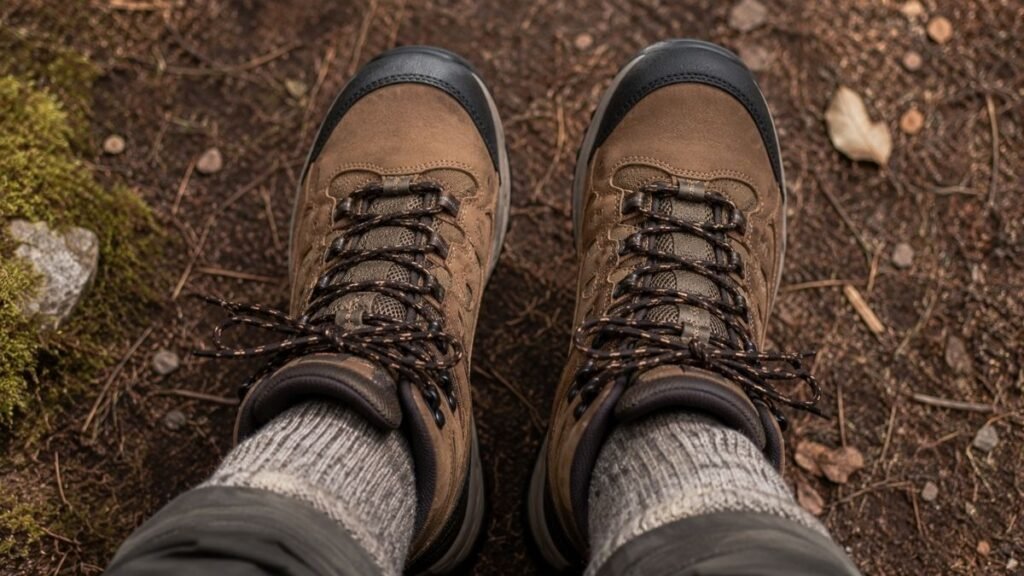
This is where a surprising number of beginners go wrong, because hiking footwear sizing works differently from everyday shoes.
The half-size up rule: Most experienced hikers size up 0.5 to 1 full size in hiking footwear. Why? Feet swell during activity — especially on longer or hotter hikes. A boot that fits perfectly in the store can feel uncomfortably tight at mile 5. The extra space also prevents your toes from pressing against the front of the boot on downhill sections, which causes black toenails (yes, that’s a real and unpleasant thing).
The wiggle test: When trying on hiking footwear, you should be able to wiggle all your toes freely. Your heel should feel locked in with minimal lift when you walk. If your heel is slipping, try a different model rather than going smaller — heel slip causes blisters.
The thick sock test: Always try on hiking footwear with the socks you’ll actually wear on trail — which should be merino wool or synthetic hiking socks, not thin cotton. The sock thickness affects fit significantly.
If buying online: Check the brand’s specific sizing notes. Many hiking brands (Keen, Salomon) have model-specific quirks — some run long, some run narrow. Read recent reviews specifically about sizing before ordering.
How to Break In New Hiking Boots (And Avoid Blisters on Your First Hike)

New hiking boots — especially full leather or stiff mid-cut models — need to be broken in before you take them on a long trail. Skipping this step is the single most common cause of first-hike blister disasters.
A simple break-in plan:
Week 1: Wear your new boots around the house for 30–60 minutes per day. Yes, around the house. This lets the materials start flexing to your foot shape without putting you miles from your car.
Week 2: Take two or three short walks (20–30 minutes) on varied surfaces — sidewalks, grass, light gravel. Pay attention to any hot spots (areas of friction that haven’t become blisters yet, but will if ignored).
Week 3: Do a short hike of 2–3 miles. This is your trial run. Bring blister pads and address any hot spots immediately when you feel them forming — don’t push through.
After 3 weeks: Your boots should be adequately broken in for most beginner hikes. Stiffer boots (full leather, high-cut) may need another week or two.
Research in the Journal of Science and Medicine in Sport has found that new footwear dramatically increases blister incidence in the first several uses, with friction-related skin damage reducing significantly as materials conform to the wearer’s foot shape. This isn’t just anecdotal — the break-in period has a real physiological basis.
Blister prevention during break-in:
- Moisture-wicking socks (merino wool or synthetic) dramatically reduce friction compared to cotton
- Anti-blister balm or Body Glide applied to known hot spots before hiking
- Blister pads at the first sign of friction — don’t wait for a blister to form
If You Only Have 10 Minutes to Choose: The Fast-Track Decision
No time to research? Here’s a 3-question shortcut:
Q: Are you hiking easy, well-maintained trails in warm weather? → Buy any low-cut hiking shoe or trail runner in your budget. Merrell, Keen, or Columbia are reliable starting points.
Q: Are you hiking muddy, rocky, or hilly terrain? → Get a mid-cut hiking boot with a Vibram or Contagrip sole. The Merrell Moab 3 Mid is the safest choice for most beginners.
Q: Are you not sure yet and want to spend as little as possible? → Columbia Newton Ridge under $80. Start hiking. Upgrade once you know what terrain you prefer.
When to Seek Professional Fitting Help
If you experience any of the following, a visit to a specialty outdoor retailer (REI, local gear shop) for a professional fitting is worth it:
- Chronic foot pain during or after hiking that doesn’t resolve with rest
- Recurring blisters in the same spots despite proper socks and break-in
- Known conditions like plantar fasciitis, significant pronation, or post-injury foot changes
- Wide or narrow feet that make standard sizing consistently uncomfortable
A good gear shop fitting costs nothing and can save you from multiple wrong purchases. Many experienced staff have the same level of product knowledge as the outdoor guides writing boot reviews — use them.
The American Podiatric Medical Association recommends choosing footwear with proper arch support and adequate toe box space for any sustained walking activity, noting that ill-fitting footwear is a primary cause of preventable foot injuries in recreational athletes.
FAQ: Real Questions Beginners Ask About Hiking Boots
Q: Do I really need hiking boots, or can I hike in regular sneakers? For easy, well-maintained trails under 3–4 miles, a supportive athletic shoe with decent tread works fine. As terrain gets rougher or distances get longer, proper hiking footwear makes a meaningful difference in grip, support, and blister prevention. Don’t buy boots just for a first short hike — but do invest in them once hiking becomes a regular habit.
Q: Are expensive hiking boots worth it for beginners? Not necessarily at the start. A $90–110 pair from a reputable brand will serve most beginners well for 1–2 years. Save the $200+ investment for when you know which terrain you prefer and what features matter to you personally.
Q: How long do hiking boots last? With moderate use (1–2 hikes per month), a quality pair of hiking boots typically lasts 3–5 years. Trail runners wear faster — expect 1–2 years with similar use. The sole is usually what goes first; once it starts delaminating or losing tread, it’s time to replace.
Q: Should I buy waterproof hiking boots as a beginner? Only if you’ll regularly hike in wet, cold conditions where wet feet are a comfort or safety issue. For warm-weather hiking, non-waterproof versions breathe better and dry faster. Don’t pay extra for waterproofing if you mostly hike on dry summer trails.
Q: Can I hike in trail running shoes? Absolutely. Many experienced hikers — including long-distance thru-hikers — prefer trail runners. They’re lighter, dry faster, and are often more comfortable on well-maintained trails. The trade-offs are less ankle support and faster wear.
Q: How do I know if my hiking boots fit correctly? Your toes should wiggle freely. Your heel should feel secure with minimal slip. There should be no pressure points anywhere on the foot. Try them on with hiking socks, walk on an inclined surface if available, and spend at least 10 minutes moving around before deciding.
Q: What socks should I wear with hiking boots? Merino wool or synthetic hiking socks. Never cotton — cotton holds moisture and dramatically increases blister risk. Brands like Darn Tough and Smartwool are popular among regular hikers and genuinely worth the investment.
Your First Pair Doesn’t Have to Be Perfect
Here’s the thing about hiking boots for beginners that nobody says directly enough: your first pair is a learning tool, not a lifetime commitment. Every hiker eventually figures out what they actually need through experience — which terrain they prefer, whether their feet run wide or narrow, how much ankle support actually helps them versus slows them down.
Pick something in your budget from a reputable brand. Get the sizing right. Break them in before your first hike. And go.
The trail doesn’t care about your boot brand. It cares that you showed up.
Looking for what else to pack? Explore these guides next:
- The Complete Hiking Packing List for Beginners
- What to Wear Hiking: A Beginner’s Clothing Guide
- Hiking for Beginners: Everything You Need to Know Before Your First Trail
References
- American Podiatric Medical Association (APMA). Proper Footwear for Physical Activity. apma.org
- Phethean, J., & Nester, C. (2009). The influence of shoe sole geometry on the measurement of foot kinematics. Journal of Science and Medicine in Sport. doi:10.1016/j.jsams.2009.01.002
- Mercer, J.A., & Horsch, S. (2005). Heel strike transient during walking: Effects of walking speed and shoe cushioning. Journal of Applied Biomechanics, 21(4), 284–293.
- Leave No Trace Center for Outdoor Ethics. Outdoor Ethics & Trail Access. lnt.org
- Gore-Tex / W.L. Gore & Associates. Understanding GORE-TEX Waterproof Technology. gore-tex.com