
From fabric rules to full outfits by season — everything you actually need to know about hiking clothes, without the gear-store overwhelm.
Key Takeaways
- The single most important hiking clothing rule: no cotton — ever. Cotton holds moisture, dries slowly, and makes a sweaty hike genuinely miserable (and in cold weather, dangerous)
- Your gym clothes are probably 80% of what you need for a beginner hike — you likely don’t need to buy much
- Layering matters more than any single piece of clothing: dress 10–15°F warmer than it feels at the trailhead, because you’ll heat up fast
- Hiking socks are not optional — wool or synthetic socks prevent more blisters than any boot upgrade
- Sun protection is a clothing decision: a long-sleeve UPF shirt often outperforms sunscreen on a long, exposed hike

It’s the morning of your first hike. You’re standing in front of your open closet, half-excited, half-confused, wondering if your usual outfit is going to work or if you’re about to make a mistake you’ll spend six miles regretting.
Can you wear leggings? What about that cotton tee you love? Is it too hot for a jacket or will you need one on the way down? You scroll through a few Reddit threads, get seventeen different opinions, and end up throwing on something that feels approximately right and hoping for the best.
Sound familiar? This is one of the most universal pre-hike experiences — and it’s almost entirely unnecessary. What to wear hiking isn’t complicated once you understand a few core principles. Most of what you already own probably works. And the few things that really matter? They’re simple enough to learn in the next ten minutes.
This guide covers everything: the one rule that changes how you think about hiking clothes, a full head-to-toe breakdown, what to wear hiking in summer versus cooler weather, which specific items in your closet to grab right now, and the things you should absolutely leave at home.
The One Rule That Changes Everything: No Cotton on the Trail

Before anything else, there’s one principle worth understanding deeply, because it explains almost every other clothing decision you’ll make for hiking.
Cotton is the wrong fabric for physical activity outdoors. Here’s why it matters more than it sounds: cotton absorbs sweat and holds onto it. Unlike synthetic fabrics or merino wool that pull moisture away from your skin and dry quickly, cotton stays wet. On a warm hike, that means you’re spending hours in a damp, clingy shirt that chafes. In cooler conditions or on a descent, wet cotton pulls heat away from your body — which is how recreational hikers end up hypothermic on what seemed like a mild day.
Research on thermoregulation during exercise consistently shows that moisture-wicking fabrics maintain more stable skin temperature and reduce the metabolic cost of staying warm compared to moisture-retaining fabrics like cotton. In practical terms: you’ll feel better, hike longer, and recover faster in the right fabric.
This is not just gear-store marketing. It’s the one piece of advice that every experienced hiker, outdoor guide, and sports medicine professional agrees on completely. No cotton. Not your favorite band tee. Not your regular gym socks. Not your jeans.
Editor’s note: This sounds dramatic until the first time you spend four hours in a soaked cotton shirt on a cloudy day. Then it makes complete, obvious sense.
What to Wear Hiking: Head-to-Toe Breakdown
Let’s go from the ground up — which, for hiking, is the most logical direction anyway.
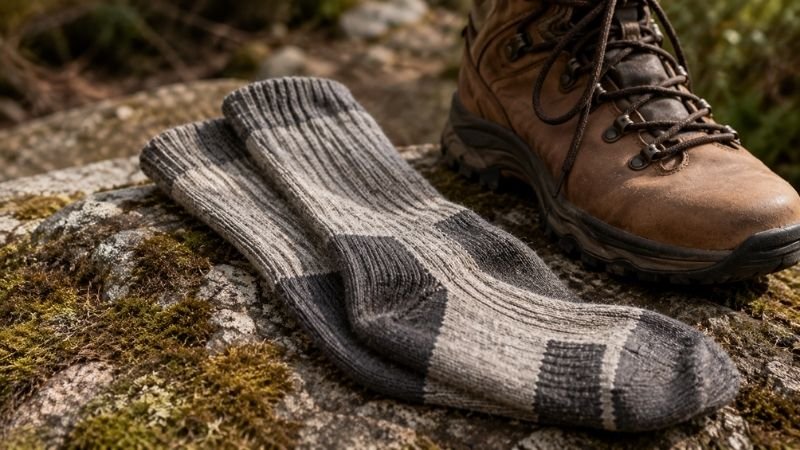
What Socks to Wear Hiking (This Matters More Than You Think)
If there’s one upgrade that makes the biggest difference for beginner hikers, it’s socks. Not boots. Socks.
Wool or synthetic hiking socks — brands like Darn Tough, Smartwool, or Balega — are engineered to wick moisture, cushion your foot in specific high-impact zones, and reduce the friction that causes blisters. Regular athletic socks (especially cotton ones) flatten quickly, bunch up, and leave your feet damp. The blister you get on mile 4 is almost always traceable to the wrong socks, not the wrong shoes.
What to look for:
- Material: Merino wool or synthetic blend (polyester/nylon). Merino is warmer and naturally odor-resistant; synthetics dry slightly faster.
- Height: Crew or quarter-crew for most hikes. Ankle socks leave your boot collar rubbing directly against your skin.
- Thickness: Medium cushion for most day hikes. Thin for summer/warm weather.
Budget note: A quality pair of hiking socks costs $15–25. It’s the single best per-dollar investment in hiking comfort you can make.
Hiking Footwear: What Actually Works for Beginners
We covered this in depth in our Hiking Boots for Beginners guide, but the short version: trail runners or low-cut hiking shoes work for most beginner trails. Mid-cut boots for rocky, muddy, or technical terrain.
What matters most for footwear from a clothing perspective: make sure whatever you’re wearing has been broken in. New footwear — regardless of how good it is — dramatically increases blister risk on the first few uses.
Hiking Pants and Bottoms: What Works and What Doesn’t
The good options:
- Quick-dry hiking pants (nylon or polyester blend) — the standard choice, versatile across seasons
- Athletic leggings (synthetic, not cotton) — completely fine for easy to moderate trails
- Running shorts or athletic shorts — great in warm weather, just watch for sun exposure on longer hikes
- Convertible zip-off pants — useful if you’re not sure about the weather
What to wear hiking women: All of the above work. Many women find athletic leggings the easiest starting point — they already own them, they’re comfortable, and they perform well on trails up to moderate difficulty.
What to avoid:
- Jeans — The single most common beginner clothing mistake. Denim is heavy, has zero moisture management, chafes badly when wet, and restricts movement on elevation. Even experienced hikers who “just wore jeans once” have a story about it.
- Cotton sweatpants — Same moisture problem as jeans, less structural support
- Anything with a loose fit that catches on branches — More of an annoyance than a crisis, but worth considering on overgrown trails
Hiking Shirts: The Base Layer Decision
Your shirt is the layer that touches your skin all day, which makes fabric choice matter most here.
What works:
- Moisture-wicking synthetic t-shirt (polyester or nylon) — the standard hiking shirt
- Merino wool t-shirt — slightly more expensive ($60–100), but extraordinarily comfortable, odor-resistant, and temperature-regulating in ways synthetics can’t fully match
- Long-sleeve UPF (sun-protective) shirt — surprisingly useful for full-sun exposed hikes where sunscreen alone isn’t practical to reapply all day
What you probably already own that works: Most athletic or gym shirts. If your workout t-shirt says “moisture-wicking” or “Dri-FIT” or similar — it’s probably fine for beginner hiking.
What doesn’t work: Regular cotton t-shirts, even soft ones you love. Leave them for after the hike.
Layers: The Hiking Clothing System That Actually Makes Sense
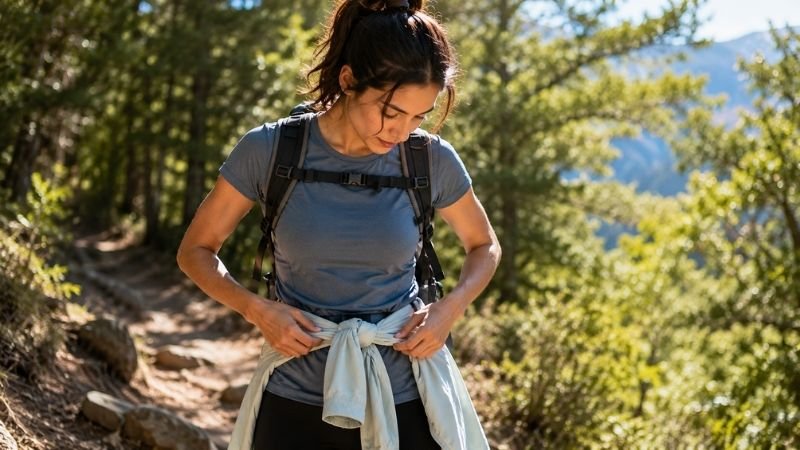
Layering is less complicated than it sounds. The basic logic is this: you start cold, warm up while hiking, cool down when you stop or descend. Clothing that you can add and remove easily lets you manage that cycle without either overheating on the climb or shivering on the summit.
The three-layer system for beginners:
Layer 1 — Base (against your skin): Moisture-wicking shirt or leggings. Job: move sweat away from your body.
Layer 2 — Mid (insulation): Lightweight fleece, softshell jacket, or insulated vest. Job: keep warmth in when temperatures drop. This layer goes in your pack when you don’t need it.
Layer 3 — Outer (weather protection): Packable rain jacket or windbreaker. Job: block wind and rain. Essential even on clear days for anything above 2 hours — weather changes without warning.
For most beginner day hikes, you don’t need all three layers on your body. You need them in your pack, available when conditions change. A packable rain jacket weighs almost nothing and takes up the space of a paperback book. It’s the most-used piece of gear most hikers never think to bring until the day they need it.
The trailhead rule: You should feel slightly cool when you start hiking. If you’re comfortable standing still at the trailhead, you’re going to be sweating within 15 minutes of moving uphill.
Sun Protection: The Clothing Decisions That Protect You
Sun exposure on the trail is more intense than most beginners expect — higher elevation, fewer buildings blocking UV, and hours of cumulative exposure add up. Beyond sunscreen, your clothing choices are your primary sun defense.
Practical sun protection through clothing:
- Wide-brim hat or baseball cap — non-negotiable on exposed trails
- UPF-rated long-sleeve shirt for full-sun hikes (often more practical than reapplying sunscreen every 2 hours)
- Sunglasses with UV protection — not just for comfort, UV damage to eyes is cumulative
The American Cancer Society notes that UV exposure increases approximately 4–5% for every 1,000 feet of elevation gain — meaning a 5,000-foot trail exposes you to significantly more UV than the same distance at sea level. Clothing that covers skin is the most reliable protection.
What’s Already in Your Closet That Works for Hiking
Here’s the genuinely good news for anyone who doesn’t want to buy a lot of new gear: most active people already own most of what they need for beginner hiking.
Grab these from your existing wardrobe:
- Any moisture-wicking athletic shirt (check the tag — polyester or nylon means you’re good)
- Synthetic athletic leggings or running shorts
- A light fleece or zip-up sweatshirt for layering
- A rain jacket if you have one (any packable waterproof jacket works)
- Athletic underwear — synthetic or merino, not cotton
What you probably need to buy:
- Hiking socks (wool or synthetic — this is the most important purchase)
- Possibly hiking shoes or trail runners if you don’t own supportive footwear with grip
- Sunscreen if you don’t already have it
That’s it. A total investment of $20–50 (mostly socks) can fully equip a beginner hiker for easy to moderate trails if they already have athletic clothes.
What NOT to Wear Hiking: The Short List
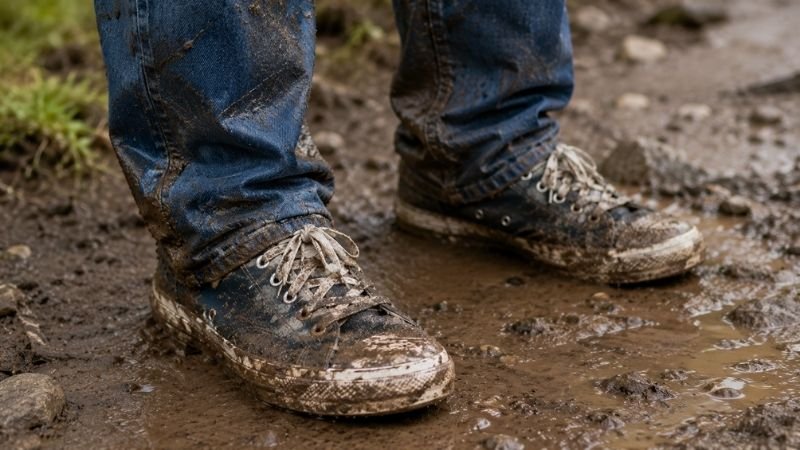
Since Reddit has collectively identified these as the top offenders — here they are, plainly stated:
Jeans or denim of any kind. Heavy, non-wicking, restricts movement, takes forever to dry when wet, chafes on long descents. No exceptions.
Cotton socks. Cotton goes flat, holds sweat, and creates friction. This combination produces blisters with impressive reliability.
New shoes on your first real hike. Breaking in footwear matters. New shoes of any type dramatically increase blister risk on the first several uses.
Flip flops or sandals (on non-beach trails). Unstable, no ankle support, and rocks find their way inside immediately.
A single heavy layer instead of multiple light layers. One bulky hoodie can’t be adjusted. Three lighter layers can be mixed and matched all day.
Brand new hiking clothes that haven’t been washed. Some technical fabrics have a temporary coating from manufacturing that can cause irritation before the first wash. Wash new hiking clothes once before wearing them on a long outing.
What to Wear Hiking by Season
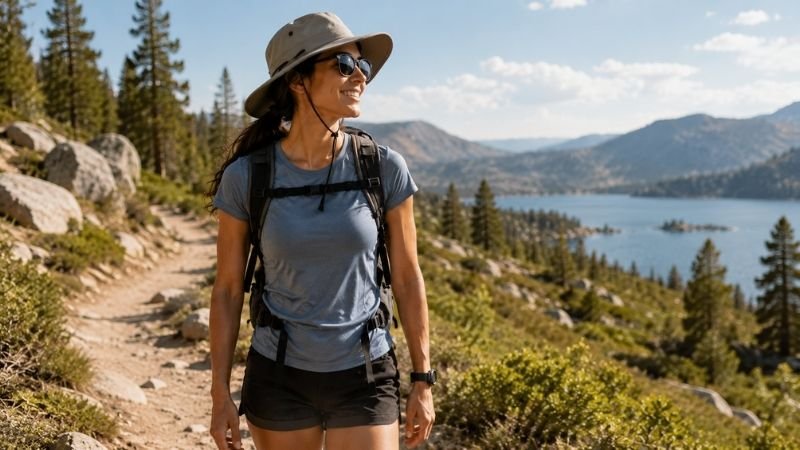
What to Wear Hiking in Summer
Summer hiking is the most forgiving from a clothing perspective — and the most punishing from a sun and heat standpoint.
- Lightweight moisture-wicking t-shirt or tank (or long-sleeve UPF if the trail is exposed)
- Athletic shorts or lightweight hiking pants
- Wool or synthetic socks
- Sunscreen, hat, sunglasses
- Light packable layer for the summit or descent — temperature drops even in summer at elevation
- Extra water (more than you think — heat increases sweat rate significantly)
The trap beginners fall into in summer: leaving the jacket because it’s hot at the trailhead. Mountain weather in the afternoon can drop temperatures rapidly. Always bring one layer more than you think you need.
What to Wear Hiking in Fall and Cooler Weather
Fall hiking is arguably the best season to start — comfortable temperatures, beautiful scenery, fewer crowds. The clothing challenge is managing the wider temperature swings between morning and afternoon.
- Moisture-wicking base layer (long or short sleeve depending on morning temp)
- Lightweight fleece or softshell mid-layer
- Packable rain jacket (fall weather is unpredictable)
- Hiking pants rather than shorts
- Wool hiking socks — merino is particularly good in cool conditions
- Light gloves and a beanie in the pack for early starts or high-elevation hikes
What to Wear Hiking in Rain
Rain hiking is underrated and actually quite enjoyable with the right clothing. The mistake is trying to stay completely dry — that’s usually impossible. The goal is staying warm and comfortable while wet.
- Rain jacket (essential — this is non-negotiable in rain)
- Quick-dry bottoms — anything that dries fast is better than waterproof pants that trap sweat
- Gaiters if you have them (keep mud and debris out of boots)
- Accept that your feet will get wet on longer rain hikes regardless of waterproofing — focus on warmth over dryness
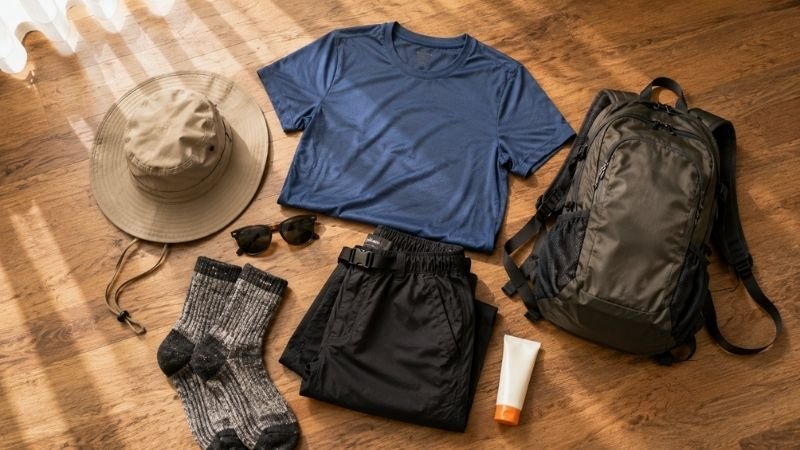
If You Only Have 10 Minutes: The Fast-Track Outfit
No time to think? Here’s a complete beginner hiking outfit you can assemble in ten minutes from most athletic wardrobes:
- Moisture-wicking athletic shirt (whatever you’d wear to the gym)
- Athletic leggings or running shorts
- Wool or synthetic hiking socks (buy these if you don’t have them)
- Trail runners or supportive athletic shoes you’ve worn before
- Light fleece or zip-up in your bag
- Sunscreen, hat, sunglasses
That’s a complete, functional hiking outfit for most easy to moderate day trails. You don’t need to spend more than $20 (on socks) to hike comfortably.
When Clothing Becomes a Safety Issue
Most of what to wear hiking comes down to comfort — but there are situations where clothing choices become genuinely safety-critical:
Cold + wet + cotton = hypothermia risk. If you’re hiking in temperatures below 60°F and cotton gets wet from rain or sweat, your body’s ability to maintain core temperature is compromised. This is how mild-weather hikes become emergencies. If someone in your group is shivering uncontrollably, confused, or unable to warm up — get them out of wet clothing, add insulation, and seek help.
Full sun with no UV protection at elevation. Severe sunburn can happen in under 2 hours on high-elevation exposed trails. It’s not just discomfort — significant sun exposure impairs your body’s ability to regulate temperature and increases dehydration risk.
Footwear failures mid-hike. Catastrophic blister formation, sole separation, or ankle instability on technical terrain can turn a day hike into a rescue situation. If footwear is causing significant pain or structural failure mid-trail, stop and assess before continuing.
FAQ: Real Questions About What to Wear Hiking
Q: Can I wear leggings hiking? Yes, absolutely. Synthetic athletic leggings are one of the most practical options for beginner hikers — comfortable, flexible, quick-drying, and something most people already own. Just make sure they’re not cotton-blend.
Q: Is it okay to wear running shoes hiking? For easy to moderate trails on well-maintained paths, running shoes with decent grip work fine. They lack the ankle support and sole stiffness of dedicated hiking footwear, but for short beginner trails they’re a completely reasonable starting point.
Q: What should I wear hiking if I get cold easily? Layer more aggressively than the weather suggests. Start with a moisture-wicking base, add a fleece mid-layer, and always pack a wind/rain shell. The key insight for people who run cold: you’ll warm up significantly while moving uphill, so don’t overdress at the trailhead — bring the warmth in your pack instead.
Q: What do women wear hiking? The same principles apply regardless of gender: moisture-wicking base, synthetic or wool layers, packable outer shell. In practice, many women start with athletic leggings and a gym shirt they already own, which works well for beginner trails. As hikes get longer or terrain gets more technical, purpose-built hiking pants offer more durability and pocket functionality.
Q: Do I really need to buy hiking-specific clothes? For beginner hikes? No. If you already own moisture-wicking athletic clothes, you’re most of the way there. The one purchase worth making immediately is proper hiking socks — everything else can wait until you know hiking is a habit you want to continue.
You’re More Ready Than You Think
What to wear hiking turns out to be one of the simplest parts of getting started — once you understand the underlying logic. No cotton. Layers you can adjust. Footwear you’ve broken in. Good socks.
That’s genuinely most of it. The trail doesn’t require a perfect outfit. It requires clothes that let you move, stay comfortable, and handle whatever the weather decides to do.
Check what’s in your closet. Buy a pair of hiking socks if you need them. And go.
Keep building your beginner hiking setup:
- The Complete Hiking Packing List for Beginners
- Hiking Boots for Beginners: How to Choose Without Wasting Money
- Hiking for Beginners: Everything You Need to Know Before Your First Trail
References
- American Cancer Society. UV Radiation and Elevation: Sun Safety Outdoors. cancer.org
- Havenith, G. (2002). Interaction of clothing and thermoregulation. Exogenous Dermatology, 1(5), 221–230. doi:10.1159/000068802
- American Hiking Society. Hiking Clothing and Layering Basics. americanhiking.org
- Texas Tech University Health Sciences Center. Hiking Emergency Preparedness — Dr. Brian Kendall, M.D. ttuhsc.edu
- Darn Tough Vermont. Merino Wool Sock Technology and Blister Prevention. darntough.com