
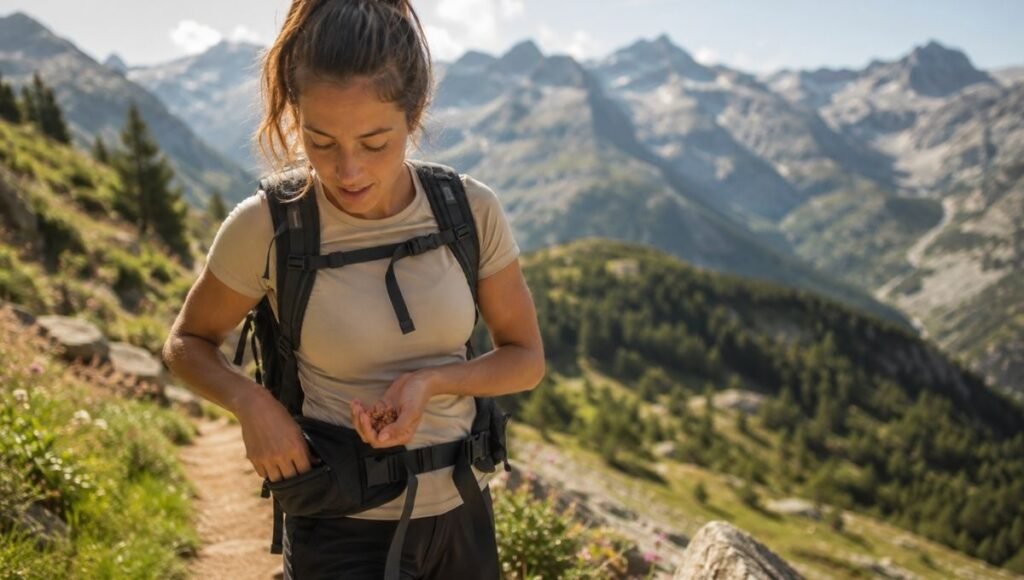
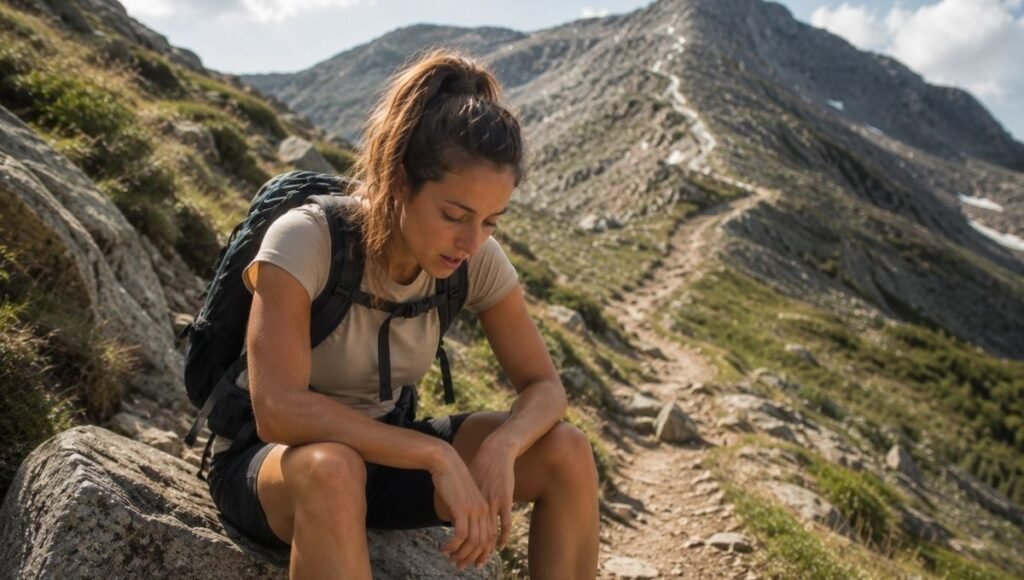
There’s a specific kind of miserable that hits around mile 4 on a longer hike. You’ve been moving for a couple of hours, the scenery is still beautiful, but your legs suddenly feel like they’re working three times as hard as they were an hour ago. Your focus goes fuzzy. The trail that seemed exciting this morning now just seems long. You reach for your water and realize you forgot to eat anything since breakfast.
In hiking communities, this is called “bonking” — the point where your body runs out of readily available glycogen and starts struggling to maintain pace and mental clarity. It’s incredibly common among beginners, and it’s almost entirely preventable with a little planning. The cruel irony is that you usually don’t realize you’re running low until you’re already there.
This guide is about solving that problem. We’ll cover how many calories hiking actually burns (the answer is more than you think), what makes a genuinely good hiking snack, 30+ specific options organized so you can build your own trail food system, and when to eat them. By the time you’re done reading, you’ll never finish a hike on empty again.
How Many Calories Does Hiking Actually Burn?
This is the number that changes how beginners think about trail food. Most people dramatically underestimate it.
Moderate hiking on varied terrain burns approximately 300–500 calories per hour for an average adult. Add elevation gain, a heavy pack, hot weather, or difficult terrain, and that number climbs to 500–600+ per hour. A full day of hiking — 6–8 hours — can burn 3,000–4,000 calories total.
For context: a typical granola bar is 150–200 calories. If you pack three granola bars for a 6-hour hike thinking that’s plenty, you’re entering a calorie deficit that will catch up with you around hour 3.
Research from the Journal of Sports Science and Medicine confirms that energy expenditure during hiking is substantially influenced by terrain and gradient — steep uphill sections dramatically increase caloric demand compared to flat walking. On a hike with real elevation gain, your body is doing significantly more work than a casual stroll implies.
The practical implication: plan for more food than feels necessary. Experienced hikers consistently report eating more on trail than they thought they needed. Bringing extra is never a mistake; running out is always a problem.
What Makes a Good Hiking Snack? The 4-Question Framework
Not all food that sounds healthy or tastes good at home works well on a hike. Before getting into specific recommendations, here’s the framework for evaluating any snack option.
1. Is it calorie-dense for its weight and size? On a hike, every ounce you carry has to earn its place. Foods that pack a lot of calories into a small, light package are the most efficient trail fuel. Nuts are the classic example: almonds have about 170 calories per ounce. Grapes, on the other hand, are mostly water and heavy for their calorie content. For most beginner day hikes, you don’t need to obsess over this — but it’s worth knowing why nuts, nut butter, and dried fruit outperform fresh fruit as sustained trail fuel.
2. Is it shelf-stable at outdoor temperatures? Chocolate melts. Cheese softens. Yogurt is pointless without refrigeration. Foods that spoil quickly or become unappetizing when warm are poor hiking choices, especially for longer outings. The best trail snacks travel at any temperature without changing significantly in texture or safety.
3. Can you eat it while walking, with one hand? This one matters more in practice than it sounds in theory. If you have to stop, open your pack, find the food, unwrap it, and eat it carefully — you’re going to eat less often because stopping constantly is annoying. Snacks you can grab from a hip belt pocket or top-of-pack pocket and eat while moving get consumed more regularly, which means more consistent energy.
4. Do you actually want to eat it at mile 5? This is the morale factor, and it’s real. Trail hunger is different from sitting-at-your-desk hunger. After a couple of hours of movement, the foods you enthusiastically packed that morning start to seem less appealing. Variety helps — so does packing a few things you genuinely enjoy rather than optimizing entirely for nutrition.
The Best Hiking Snacks by Category
The Reliable Backbone: Nuts and Nut Butter
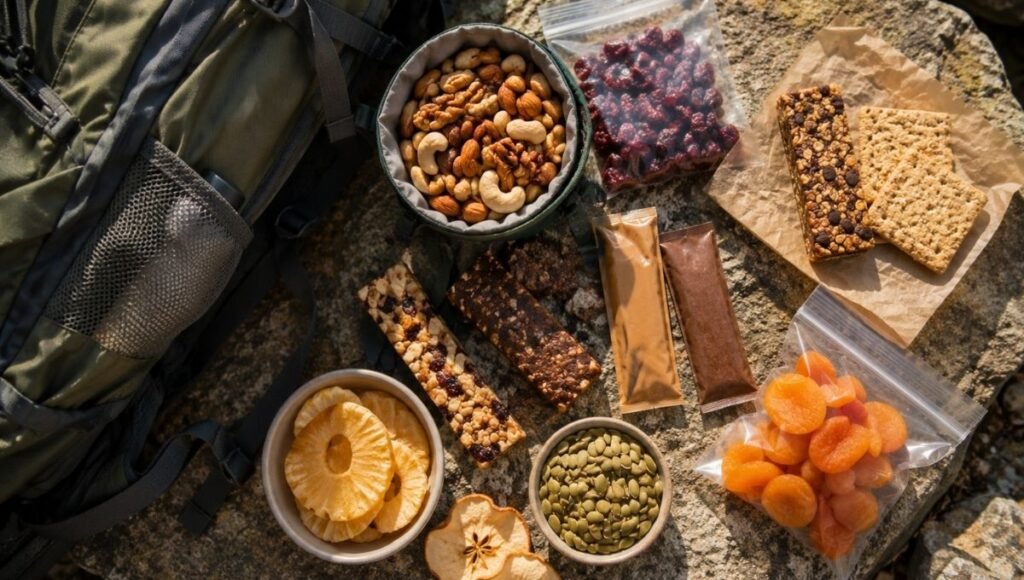
Nuts are the most universally recommended hiking snack across the outdoor community, and for good reason: they’re calorie-dense, protein and fat-rich for sustained energy, completely shelf-stable, and easy to eat while walking. A small handful of mixed nuts takes up almost no space and delivers 150–200 calories.
Best options:
- Almonds — classic, widely available, good calorie density
- Cashews — softer, often more palatable as your hiking hunger evolves
- Peanuts — the most calorie-efficient per dollar, good salted
- Walnuts — higher in omega-3s, slightly more delicate but still travel well
- Mixed nuts — variety helps with trail appetite fatigue
Nut butter packets (Justin’s, RX Bar, etc.) are one of the highest-ROI trail snacks available. Each packet is around 180–200 calories, weighs almost nothing, takes up no space, and can be squeezed directly into your mouth or onto a cracker or tortilla. They’re the hiking community’s secret weapon for calorie density in a tiny package.
Quick Energy: Dried Fruit and Trail Mix
Dried fruit provides quick carbohydrates — fast-burning energy that hits your bloodstream relatively quickly. Paired with nuts (which slow the energy release), it creates the classic trail mix effect: quick hit of carbs plus sustained fat and protein. This is why “GORP” (Good Old Raisins and Peanuts) has been a hiking staple for decades. It works.
Best dried fruit for hiking:
- Raisins — the original, still excellent
- Mango slices — sweet, chewy, highly palatable even at mile 6
- Apricots — good source of potassium, which you lose through sweat
- Dates — naturally sweet, high in quick carbs, calorie-dense
- Cranberries — tart, pairs well with nuts
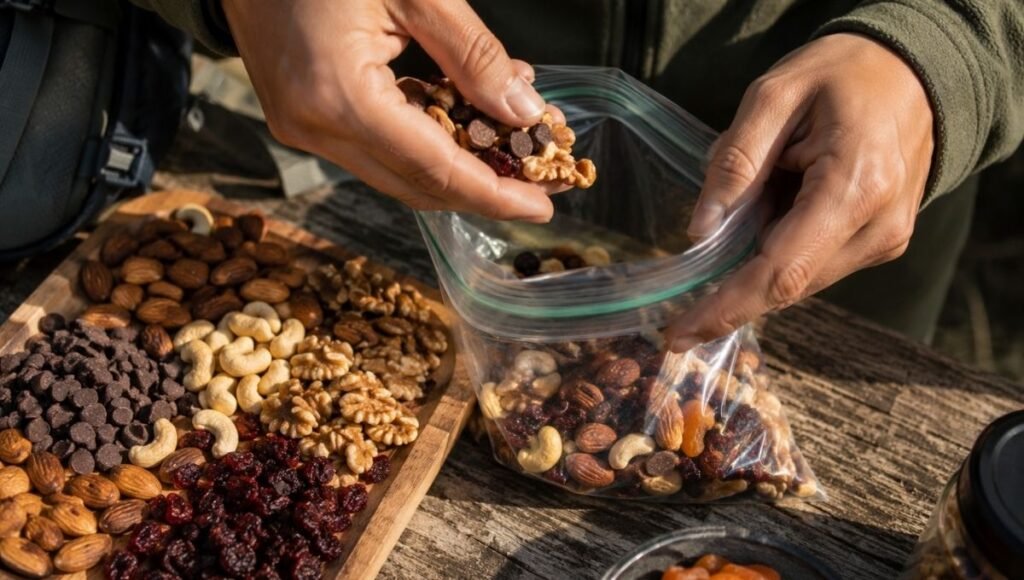
Building your own trail mix is significantly cheaper than buying pre-made and lets you control exactly what goes in it. A basic formula: nuts (50%) + dried fruit (30%) + something sweet or salty (20%). Dark chocolate chips, coconut flakes, pretzels, or sunflower seeds all work well in that last category.
Sustained Fuel: Energy Bars and Bars
Energy bars have earned a somewhat cynical reputation in outdoor circles — plenty of them are glorified candy bars with health-food branding. But there are genuinely good options that provide a balanced mix of carbs, protein, and fat in a compact, shelf-stable package.
What to look for:
- 200–300 calories per bar
- At least 5–8g protein
- Recognizable ingredients (nuts, oats, dates, seeds)
- Not so sweet that they’re hard to eat when you’re not particularly hungry
Consistently recommended options across hiking communities:
- Larabar — whole food ingredients, date-and-nut base, widely available
- RX Bar — high protein, whole ingredients, no artificial anything
- Clif Bar — higher in sugar but genuinely useful for intense activity where quick carbs are needed
- Kind Bars — nut-based, satisfying texture, good variety of flavors
Editor’s note: Bring more bars than you think you’ll eat. The ones you don’t use come home with you. The ones you forgot feel like a major problem at mile 8.
Salty and Savory Snacks
After sustained physical activity — especially on a warm day — many hikers develop a strong craving for salt. This is your body’s signal that you’re losing sodium through sweat and need to replace it. Ignoring salty cravings while hiking is a mistake; satisfying them is part of maintaining electrolyte balance.
Best savory hiking snacks:
- Jerky (beef, turkey, or plant-based) — high protein, salty, shelf-stable, intensely satisfying
- Cheese and crackers — hard cheeses (cheddar, parmesan, manchego) travel well for 4–6 hours without refrigeration in mild conditions
- Salami or pepperoni sticks — high fat and protein, very portable, no refrigeration needed for short trips
- Pretzels — light, salty, easy to eat while walking
- Crackers with nut butter — one of the most satisfying trail combinations; nut butter’s fat slows the cracker’s carb absorption for sustained energy
- Chips — dense in calories per serving, but bulky to pack; better for car picnics than pack-in hikes
Fresh Options (For the First Part of Your Hike)
Fresh food doesn’t travel as well as shelf-stable options, but it’s genuinely refreshing in the first hour or two before it gets warm or bruised.
Best fresh hiking snacks:
- Apples — durable, not easily crushed, high water content for hydration
- Bananas — get bruised easily but excellent quick energy source if eaten early
- Baby carrots — crunchy, hydrating, doesn’t require refrigeration for several hours
- Orange slices — pre-cut and packed in a container; refreshing and juicy at the start of a hike
- Grapes — easy to eat without preparation, but heavier than dried alternatives
The practical approach: pack one or two fresh items for the first part of the hike when they’re still cold and appetizing, then transition to shelf-stable foods for the rest.
Hiking Lunch Ideas: More Than Just Snacks
On hikes over 4 hours, you need more than snacks — you need a proper lunch that provides enough calories and protein to sustain the second half.
The most practical hiking lunches:
Tortilla wraps: The gold standard of trail lunches. Tortillas are more durable than bread, don’t require refrigeration, and work with almost any filling. Peanut butter and honey is the classic minimalist version. Turkey, cheese, and mustard works well if eaten within 3–4 hours. Hummus with sun-dried tomatoes and olives is an excellent no-refrigeration option.
Crackers with toppings: Hard crackers (Triscuits, water crackers, Wasa crispbreads) pair with nut butter, hard cheese, salami, or hummus. More work than a wrap but more variety.
Bagel halves: Denser than bread, more durable, and work well with cream cheese or nut butter. Good for cold-weather hikes when you want something more substantial.
Instant ramen or couscous (if you have a stove): If you’re carrying a camp stove for any reason, a hot lunch is genuinely restorative on longer hikes. Instant noodles, couscous, or instant mashed potatoes with olive oil and salami are quick, calorie-dense, and warm.
Editor’s note: The tortilla + peanut butter + honey combination appears in almost every experienced hiker’s trail food rotation. It sounds basic until you eat one at mile 7 and realize why people keep coming back to it.
When to Eat on the Trail: The Snacking Schedule That Prevents Bonking
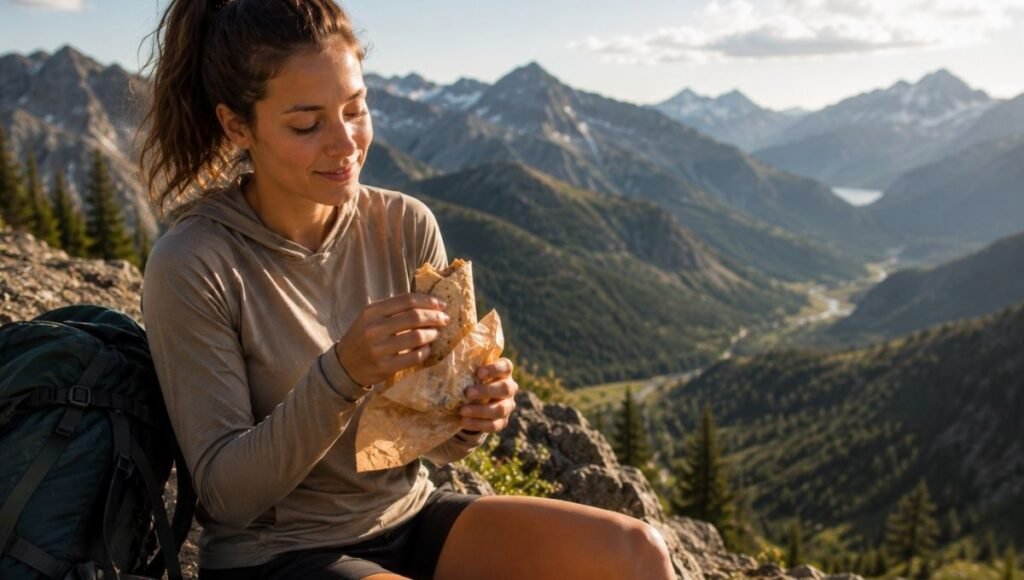
This is the practical piece most beginners miss. It’s not just about what you bring — it’s about when you eat it.
The rule: Eat something every 45–60 minutes, regardless of whether you feel hungry.
Hunger on the trail is a lagging signal. By the time you feel it, your blood sugar has already dropped and you’re working with reduced energy and focus. Eating before hunger keeps your energy stable throughout the hike rather than cycling through highs and lows.
A practical schedule for a 4-hour day hike:
- Before you start: Eat a proper breakfast within 1–2 hours of hiking
- At 45–60 minutes: Small snack (handful of nuts, energy bar)
- At 2 hours: Bigger snack or half your lunch
- At 3 hours: Remaining lunch or substantial snack
- At 3.5–4 hours: Light snack for the final push
Keep snacks accessible. This is a practical tip that sounds obvious and makes a real difference: don’t bury your snacks at the bottom of your pack. Put them in a hip belt pocket, the top pocket of your pack, or a front-accessible layer. If eating requires stopping and unpacking, you’ll do it less often.
How Much Food to Pack: Planning by Hike Length
Short hike (1–2 hours): 1–2 snacks, 200–400 calories. A single energy bar and a small bag of nuts is sufficient.
Half-day hike (3–4 hours): 3–4 snacks plus a light lunch, 600–900 calories of trail food. This is where most beginners underpack.
Full-day hike (5–8 hours): 4–6 snacks plus a proper lunch, 1,000–1,500 calories of trail food. You should have more food than you think you need.
The extra snack rule: Always pack one more snack than you think you’ll need. Hikes take longer than planned. Calorie needs are higher than expected. The extra granola bar you didn’t eat comes home with you; the one you forgot stays behind.
Budget-Friendly Hiking Snacks: Eat Well for Less
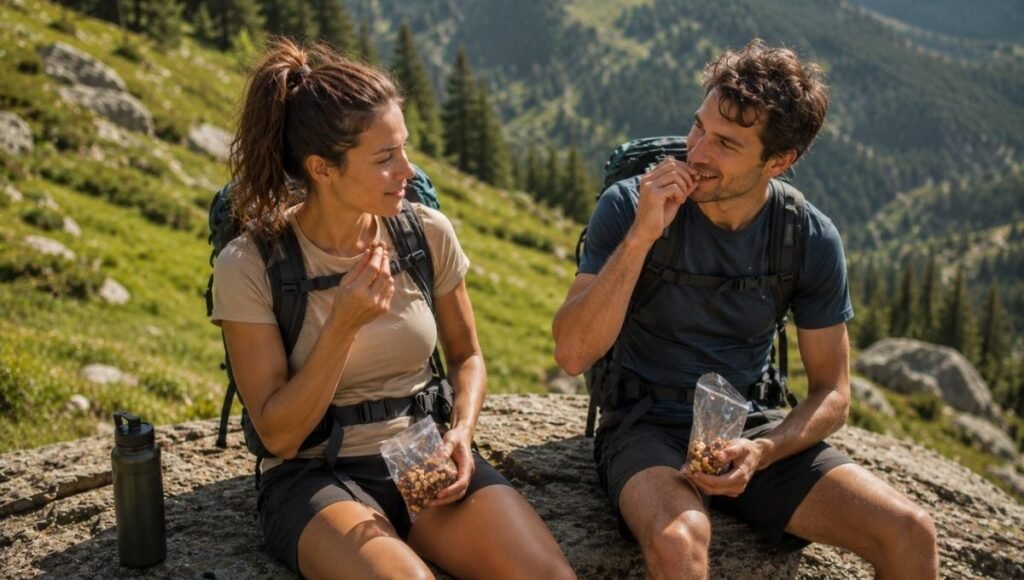
Pre-packaged trail food and energy bars add up quickly. Here’s how to build a solid snack kit without spending much:
Grocery store basics that cost almost nothing:
- Bulk mixed nuts from Costco or Trader Joe’s (~$0.50/oz)
- Peanut butter packets (~$0.50 each)
- Generic granola bars (Nature Valley, store brand) (~$0.25–0.40 each)
- Raisins in a small container (~$0.30/serving)
- Crackers (Triscuits, Wasa) + hard cheese (~$1–1.50 per serving)
- Tortillas + peanut butter + honey (~$0.75 for a full wrap)
A full day of excellent trail food assembled from grocery store ingredients: under $5. The same calories in specialty trail food and energy bars: $15–25.
If You Only Have 10 Minutes to Pack Snacks
Grabbing food quickly before a hike? Here’s the minimum viable hiking snack kit you can assemble from most kitchen pantries in 10 minutes:
- 1 handful of nuts or a small bag of trail mix
- 1–2 energy bars (Clif, Kind, Larabar — whatever you have)
- 1 piece of fresh fruit
- Some crackers or a tortilla
- A small piece of hard cheese or a few slices of salami (if you have it)
That covers a 3-hour hike adequately. Not perfect, but functional.
When to Be Concerned About Nutrition on the Trail

For most beginner day hikes, snack planning is about comfort and performance, not medical risk. But there are situations where food and hydration become genuinely important safety considerations:
Signs you’ve run too low on fuel (bonking):
- Sudden, disproportionate fatigue
- Difficulty concentrating or making decisions
- Irritability (trail hunger is real)
- Muscle weakness that seems unrelated to effort level
Treatment: Sit down, eat something immediately — something with quick carbs first (dried fruit, a handful of raisins, a few crackers), followed by more sustained fuel (nuts, an energy bar). Give it 15–20 minutes before resuming.
When to stop and seek help:
- Severe dizziness or disorientation that doesn’t improve with food and rest
- Signs of heat exhaustion alongside hunger (heavy sweating, pale skin, weakness)
- Anyone in your group showing confusion or losing consciousness
If someone isn’t recovering with food and rest, stop hiking and prioritize getting them to safety or calling for help.
FAQ: Real Questions About Hiking Snacks
Q: What are the best hiking snacks for energy? Nuts and nut butter for sustained energy (fat and protein slow energy release), combined with quick carbs like dried fruit or energy bars for immediate fuel. The classic trail mix formula — nuts + dried fruit + something sweet or salty — works because it addresses both immediate and sustained energy needs simultaneously.
Q: How much food should I bring on a hike? Plan for approximately 150–200 calories per hour of hiking as a baseline, plus extra buffer. A 4-hour hike needs roughly 600–800 calories of trail food beyond a proper breakfast. Always bring more than you think you need — extra food comes home; missing food stays behind.
Q: What are good hiking snacks that don’t need refrigeration? Nuts, trail mix, energy bars, dried fruit, jerky, hard cheese (for 4–6 hours in mild conditions), salami or pepperoni sticks, crackers, tortillas with nut butter, and dark chocolate all travel safely without refrigeration for day hike durations.
Q: Are energy bars good for hiking? Yes, as part of a varied snack strategy. Look for bars with 200–300 calories, reasonable protein content, and recognizable ingredients. They’re convenient and reliable, but eating only bars all day leads to taste fatigue — mix in nuts, fresh fruit, and savory options for variety.
Q: What should I eat before a hike? A balanced meal with carbohydrates, protein, and some fat 1–2 hours before starting. Oatmeal with nuts, eggs on toast, or yogurt with granola all work well. Avoid large, heavy meals immediately before starting — you want your body focused on hiking, not digestion.
Pack More Than You Think
The single most consistent piece of advice from experienced hikers about trail food: bring more than seems necessary. Hiking burns more calories than expected, hunger hits faster than anticipated, and the emergency snack you didn’t eat is always available as a bonus on the drive home.
Start with nuts, an energy bar, something fresh, and more than you think you’ll need. Eat before you’re hungry. Keep snacks accessible. The rest — the perfect trail mix ratio, the ideal bar brand, the optimal snacking schedule — comes with experience.
Build your complete hiking kit:
- The Complete Hiking Packing List for Beginners
- Best Hiking Water Bottle for Beginners
- Hiking for Beginners: Everything You Need to Know
- Easy Camping Meals for Beginners
References
- Ainsworth, B.E., et al. (2011). Compendium of Physical Activities: A second update of codes and MET values. Medicine & Science in Sports & Exercise, 43(8), 1575–1581.
- Burke, L.M., et al. (2011). Carbohydrates and fat for training and recovery. Journal of Sports Sciences, 29(S1), S17–S27.
- American Hiking Society. Nutrition and Hydration for Hiking. americanhiking.org
- National Park Service. Hiking Safety — Food, Water, and Preparation. nps.gov
- Casa, D.J., et al. (2000). Fluid Replacement for Athletes. Journal of Athletic Training, 35(2), 212–224.