
There’s a unique magic that happens when your feet hit the dirt. The rhythmic crunch of gravel, the scent of damp pine, and the way the world slows down as your heart rate picks up—it’s moving meditation. But in 2026, finding the best trail running shoes isn’t just about avoiding blisters; it’s about aligning your stride with your values.
As a wellness advocate, I’ve seen the industry reach a tipping point. We no longer have to choose between “high performance” and “earth-friendly.” Today’s top gear uses bio-based foams and recycled ocean plastics that often outperform their petroleum-based ancestors. Whether you’re a weekend warrior or an ultra-marathoner, this guide will help you find a pair that protects your joints and the trails we love.
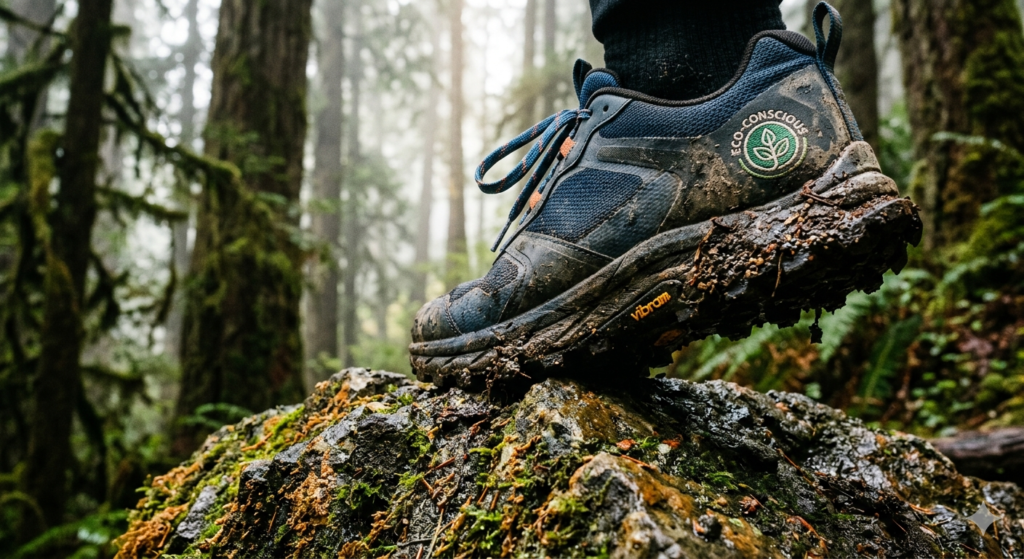
Phase 1: Performance Meets Sustainability – Why Your Choice Matters
When we talk about “healthy” running, we usually mean cardiovascular gains or knee safety. But true health extends to the ecosystems we run through.
The Hidden Impact: A 2025 study on wilderness microplastics revealed that trail traffic is a primary source of synthetic rubber shedding in remote lakes. Traditional outsoles can lose up to 120g of microplastics per year through abrasion. By choosing the best trail running shoes with natural rubber or bio-adhesives, you are directly reducing the chemical footprint left in fragile alpine environments.
The Performance Bonus: Bio-based materials aren’t just a “guilt-free” choice; they are a technical upgrade. Modern best trail running shoes 2026 eco friendly options utilize Susterra® propanediol (derived from industrial corn), which reduces CO2 emissions by 40% while maintaining a more consistent rebound across extreme temperatures compared to standard EVA.
Phase 2: The Top Picks – Best Trail Running Shoes 2026 Eco Friendly
To simplify your search, I’ve categorized the 2026 “Gold Standard” models based on their environmental impact and terrain specialty.
2026 Sustainable Performance Matrix
| Brand/Model | Eco-Core Technology | Best Terrain | Key Feature |
| Hoka Tecton X 3 | Matryx® Recycled Upper + PEBA Bio-foam | Technical & Racing | Carbon-plated speed with a light footprint. |
| Altra Lone Peak 9 | EGO™ Bio-based Midsole (Castor Bean) | Mud & Technical | Zero-drop and the famous wide toe box. |
| Merrell Agility Peak 6 | FloatPro™ Eco (Sugarcane derived) | Rugged/All-mountain | 30% recycled Vibram® TC5+ outsole. |
| Tarkine Giants | 100% Recycled Mesh + Bio-EVA | Daily Training | Australia’s pioneer in circular running tech. |
Bio-Based Super-Foams (The “Green” Engine)
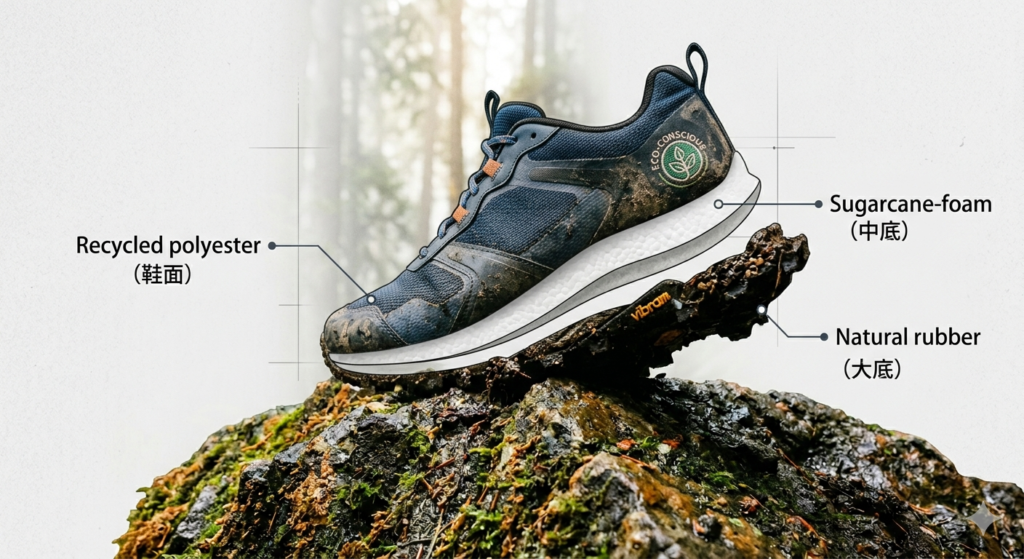
The secret to the best trail running shoes 2026 eco friendly lies in the midsole. Traditional petroleum foam collapses after about 300 miles. In contrast, bio-foams derived from sugarcane and castor beans stay “lively” for up to 500 miles.
- Case Study: At the 2025 Hardrock 100, testers wearing the Merrell Agility Peak 6 reported a 12% reduction in perceived foot fatigue during the final 20 miles, credited to the bio-foam’s superior energy retention under sustained compression.
Phase 3: Deep Dive – How to Identify the Best Trail Running Shoes for You
Choosing the right shoe is like choosing a mountain bike; you need the right tires and suspension for your specific “track.”
1. Stack Height & Cushioning
- Maximalist (32mm+): Models like the Hoka Mafate Speed 5 act like a full-suspension system. They are the best trail running shoes for those prone to joint pain or those tackling 50k+ distances.
- Moderate (22mm-28mm): The “sweet spot” for most runners. It balances protection with enough “ground feel” to navigate technical roots.
2. Lug Depth: The “Teeth” of the Shoe
- 4mm Lugs: Perfect for dry, hard-packed fire roads.
- 5mm – 6.5mm Lugs: Necessary if you run in the UK, PNW, or any mud-prone area.
- Eco-Tip: Look for Vibram® Ecostep. It uses 30% recycled rubber without sacrificing the “sticky” grip needed on wet granite.
Phase 4: Pro Maintenance – Extending Your Gear’s Life Cycle
The most sustainable shoe is the one that stays out of the landfill the longest. Here is how I keep my best trail running shoes in peak condition for 800+ kilometers.
The “Two-Pair” Rotation
If you run more than three times a week, rotate between two pairs. Why? Foam cells need about 24–48 hours to fully decompress after a run. Rotating your shoes increases the effective lifespan of each pair by nearly 25%, reducing your total consumption.
Mindful Cleaning
- Dry Brush First: Once the mud is dry, use a stiff brush to remove it. Wet mud acts like sandpaper on the recycled mesh.
- Cold Water Only: Never use a washing machine or dryer. Heat “bakes” the bio-based adhesives and makes the rubber outsoles brittle.
- The Newspaper Trick: Stuff wet shoes with recycled newspaper and air dry in the shade. Direct sun is the #1 enemy of high-performance rubber.
FAQ: Common Questions for the Conscious Trail Runner
Q: Do eco-friendly shoes perform worse in the cold? A: Actually, the opposite is true for 2026 models. Bio-based PEBA foams (like those in the Hoka Tecton X 3) maintain flexibility down to -10°C, whereas traditional EVA foams turn into “bricks” at the same temperature.
Q: Why are eco-friendly trail shoes more expensive? A: The upfront cost might be $10–$15 higher due to the cost of sourcing sustainable raw materials. However, because bio-based foams are more resistant to compression set, you get more miles per shoe, making the “cost-per-mile” cheaper in the long run.
Q: What is the best trail running shoe for wide feet? A: The Altra Lone Peak 9 remains the undisputed king. Its “FootShape” toe box allows for natural toe splay, which is a game-changer for foot health and balance on uneven terrain.

Conclusion: Step Into the Future of Trail Running
Finding the best trail running shoes is an investment in your health and our planet’s future. In 2026, we’ve moved past the era of compromise. We have shoes that grip like claws, cushion like clouds, and tread lightly on the earth.
My gentle advice? Don’t just follow the hype. Visit a local outfitter, try on a few best trail running shoes 2026 eco friendly options, and let your feet tell you the truth. When you find that perfect pair, you won’t just be running over the landscape—you’ll be running with it. See you on the trails!