
There is a profound, almost primal joy that comes from leaving the repetitive rhythm of the sidewalk and stepping onto a winding forest trail. The air is cooler, the sounds of traffic fade into birdsong, and every step requires a tiny, intuitive dance with the terrain. But to truly enjoy this “eco-therapy,” you need the right partner. Picking the right running shoes for trail running is the single most important decision you’ll make before hitting the dirt.
As a wellness advocate, I believe trail running is one of the best ways to reset your nervous system. However, the rocks, roots, and unpredictable mud of the wild demand a level of protection that your standard gym sneakers simply can’t provide. In 2026, the technology has leaped forward—offering better carbon plates and “super-foams”—but the fundamentals of fit and grip remain king. Whether you are hunting for the best trail running shoes for men or the best trail running shoes for women, this guide will ensure your feet stay happy while your soul wanders.
Phase 1: Road vs. Trail – Why Specialized Footwear is a Safety Must
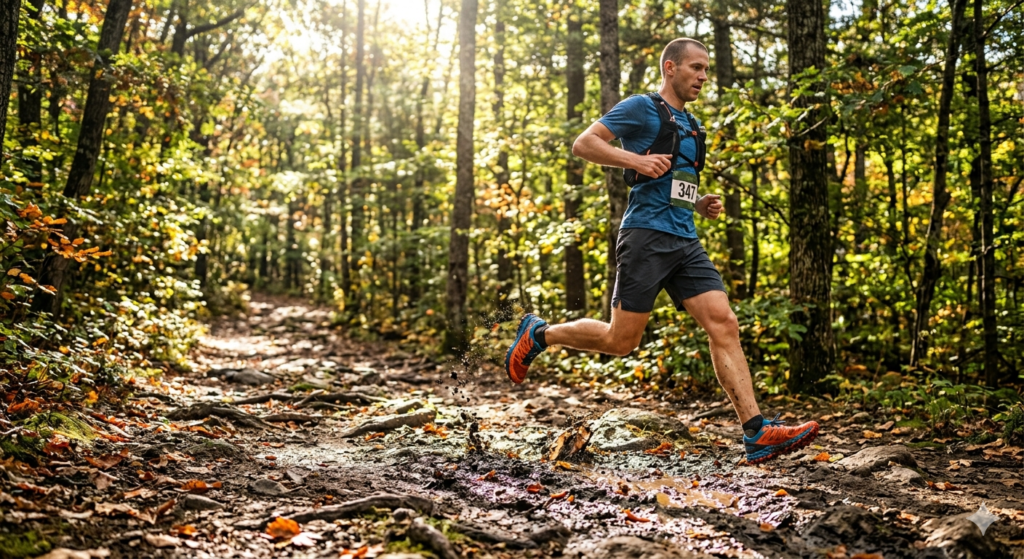
I often see beginners attempting their first trail loop in their favorite road shoes. While they might feel “fine” on a dry gravel path, road shoes are designed for linear movement on predictable surfaces. They prioritize forward energy return and high-impact cushioning on hard pavement.
In contrast, running shoes for trail running are built for multi-directional stability. The wilderness is rarely flat. According to biomechanical studies, trail running involves 15% more lateral ankle movement than road running. Trail shoes feature aggressive outsoles with rubber lugs (the “teeth” of the shoe) that claw into loose dirt. Without this specialized traction, you’re at a high risk for slips that can lead to chronic knee or hip misalignment.
Phase 2: Tailored to You – Top Picks for Every Runner
Men and women have distinct biomechanical needs when it comes to tackling technical terrain. In 2026, the industry has finally moved away from “shrink it and pink it” designs for women, focusing instead on anatomical precision.
| Feature | Best Trail Running Shoes for Men | Best Trail Running Shoes for Women |
| Midsole Density | Firmer (to support higher average body mass). | Softer (to provide better rebound for lighter frames). |
| Heel-to-Forefoot Ratio | Wider heel base for lateral stability. | Narrower heel cup to prevent “heel slip” and blisters. |
| Key 2026 Model | Hoka Speedgoat 6 Wide | Altra Lone Peak 9 (Women’s) |
Finding the Best Trail Running Shoes for Men
For men, the focus is often on rugged durability and rock protection. If you are a heavier runner or like to “bomb” downhills, look for shoes with an integrated Rock Plate. This is a thin layer of hardened foam or carbon that prevents sharp stones from bruising your feet. A 2026 favorite is the Brooks Cascadia 19, which offers a “shield” that doesn’t sacrifice flexibility.
Finding the Best Trail Running Shoes for Women
When searching for the best trail running shoes for women, the “Q-angle” (the angle at which the femur meets the tibia) is a major factor. Women often require more arch support to prevent over-pronation on uneven ground. Models like the La Sportiva Bushido III are legendary for their “locked-in” feel, ensuring your foot doesn’t slide forward on steep descents—the #1 cause of lost toenails.
Phase 3: The Anatomy of High-Performance Trail Shoes
To find the best trail running shoes, you need to look past the neon colors and understand the “Big Three” specs.
1. Lug Depth & Outsole Compounds
Lugs are the rubber bumps on the bottom of the shoe.
- 3mm – 4mm: Best for “door-to-trail” or dry, hard-packed paths.
- 5mm – 7mm: Essential for “Best Trail Running” in mud, snow, or loose scree.
- Pro Tip: Look for Vibram® Megagrip. Research shows it provides 25% more friction on wet granite than standard carbon rubber.
2. Stack Height & The Wide Toe Box Revolution
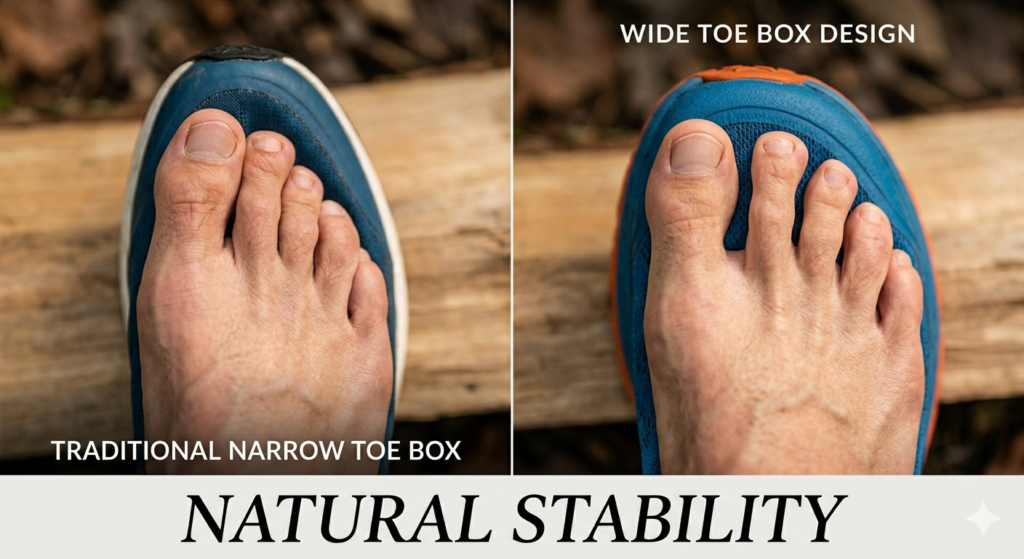
Stack height is the amount of foam between your foot and the ground. While “maximalist” shoes (30mm+) are great for joint protection, they can feel “tippy” on technical rocks. However, the most significant trend in 2026 is the Wide Toe Box. As seen in brands like Altra and Topo Athletic, a foot-shaped toe box allows your big toe to remain straight. This isn’t just about comfort—it allows your foot to splay naturally, increasing your balance by roughly 12% during lateral movements.
Phase 4: Pro Tips – Mastery Beyond the Purchase
Buying the shoes is only 50% of the battle. How you maintain them determines your “cost-per-mile.”
- The “Heel Lock” Lacing: Use that extra eyelet at the very top of your shoe. This “Racer’s Loop” keeps your heel pinned back, preventing your toes from smashing into the front of the shoe during downhill sections.
- The “Cold Wash” Rule: Never put your trail running shoes in the dryer. High heat destroys the adhesives and makes the midsole foam “flat” prematurely. After a muddy run, stuff them with newspaper and let them air dry in the shade.
- When to Retire? Most trail foams collapse after 350–500 miles. If you notice a “compressed” look in the foam or start feeling mysterious knee twinges, it’s time for a new pair.
FAQ: Common Questions from the Trail Community
Q: Can I wear my trail running shoes on the road? A: You can, but it’s not ideal. The soft rubber lugs designed for dirt will wear down rapidly on abrasive asphalt. If you do 50% road and 50% trail, look for a “Hybrid” shoe with 3mm lugs.
Q: Waterproof (GTX) or Breathable Mesh? A: If you live in a rainy climate (think PNW), GTX is great. But remember: once water gets in over the ankle, it’s trapped. For most runners, a breathable mesh that drains quickly is the healthier choice for foot skin.
Q: Do I need to “break in” my trail shoes? A: Modern running shoes for trail running should feel 90% perfect out of the box. If they hurt in the store, they will hurt more on the mountain. Take them for a 2-mile “shake-out” walk before your first big mountain day.
Conclusion: Your Journey Starts at the Trailhead
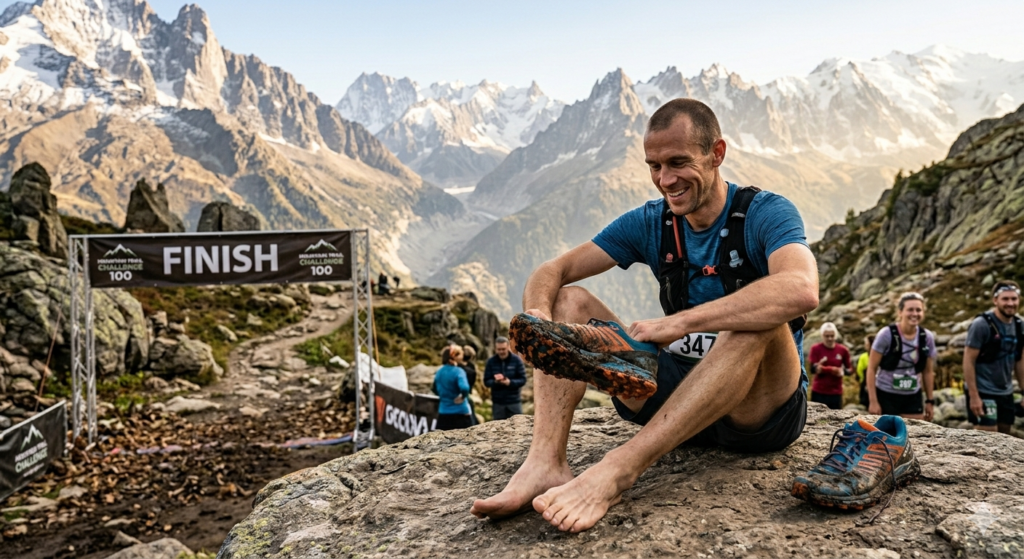
At the end of the day, the best trail running shoes for men or the best trail running shoes for women are the ones that make you want to keep going. When your footwear is dialed in, the gear disappears, leaving only the rhythm of your breath and the crunch of leaves beneath your feet.
My gentle advice? Go to a local store, get a gait analysis, and try on at least three different brands. Feel the way the lugs bite and the way the heel hugs. Once you find that perfect fit, the trails are yours to command. Happy running, and I’ll see you at the trailhead!