
There is a specific kind of sinking feeling that only happens at dusk, ten miles from the nearest trailhead, when you realize you packed the stove but forgot the fuel—or worse, the backup water treatment. When you’re prepping for a “Big Adventure,” your backpacking checklist isn’t just a piece of paper; it’s your lifeline.
In the backcountry, small oversights lead to big disasters. Whether you’re eyeing a weekend in the Sierras or a month-long thru-hike, you need a gear strategy that balances safety with weight. This guide breaks down the backpacking essentials that separate a successful expedition from a cold, wet, and potentially dangerous night in the woods.
The Anatomy of a Big Adventure: Why a Checklist is Your Best Safety Net
The biggest mistake most hikers make isn’t carrying too much—it’s carrying the wrong things. I’ve seen hikers lugging a cast-iron skillet but forgetting a $20 emergency satellite messenger. A professional multi-day hiking gear list ensures that every ounce in your pack serves a purpose.
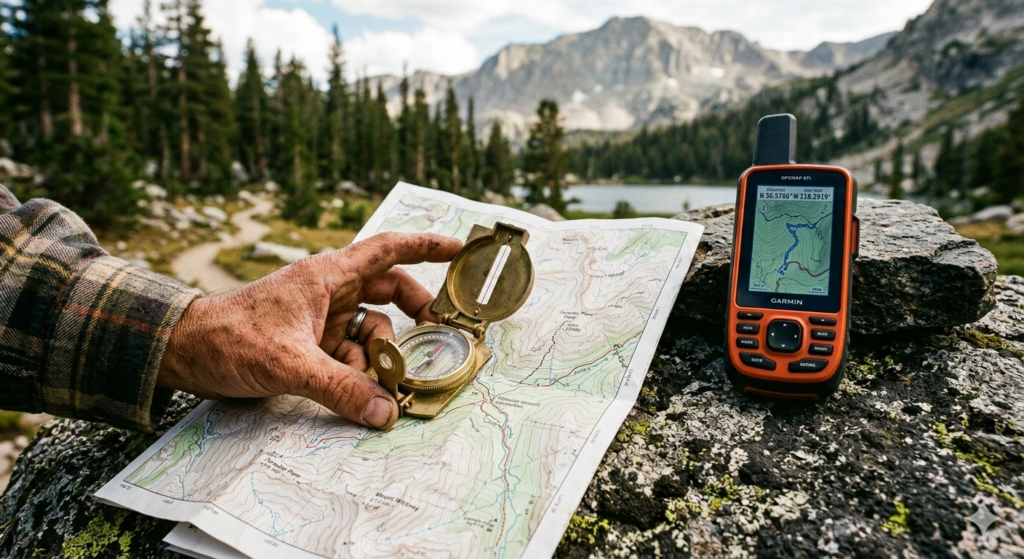
H3: The Navigation Trio (GPS, Map, Compass)
In 2026, we all rely on Gaia or FarOut on our phones, but “dead batteries don’t point North.”
- The Pain Point: Digital failure in a whiteout.
- The Fix: Always carry a physical topographic map and a baseplate compass. Know how to use them before the fog rolls in.
The Core Essentials: Surviving the Backcountry
If you can’t drink and you can’t stay warm, your adventure ends early. Your adventure travel packing list must prioritize the “Survival Six”: Water, Shelter, Sleep, Fire, First Aid, and Navigation.
H3: Water Security in Diverse Terrains
Don’t trust “pristine” alpine lakes. Between agricultural runoff and Giardia, your filtration system needs to be foolproof. For most adventures, a hollow-fiber filter (like a Sawyer Squeeze) is the gold standard, but always carry chemical tabs as a backup.
H3: Illumination & Power: Beyond the Headlamp
Your headlamp is useless if it’s buried at the bottom of your pack when the sun dips. Keep it in an external pocket. In 2026, we recommend a 10,000mAh PD (Power Delivery) bank—enough to charge your phone and GPS twice over.
Technical Apparel: The 3-Layer Rule for Extreme Weather
Cotton is the enemy of the adventurer. It absorbs 27 times its weight in water and stays wet forever. To stay safe, you need a modular layering system.
| Layer | Material Recommendation | Purpose |
| Base Layer | Merino Wool / Synthetic | Moisture-wicking & odor control |
| Mid Layer | 800+ Fill Down / Fleece | Trapping body heat |
| Outer Shell | Gore-Tex / Pertex | Wind & Rain protection |
cenario-Specific Add-ons: Tailoring Your Adventure
A checklist for the desert is a death sentence in the Pacific Northwest. You have to adapt your backpacking essentials to the biome.
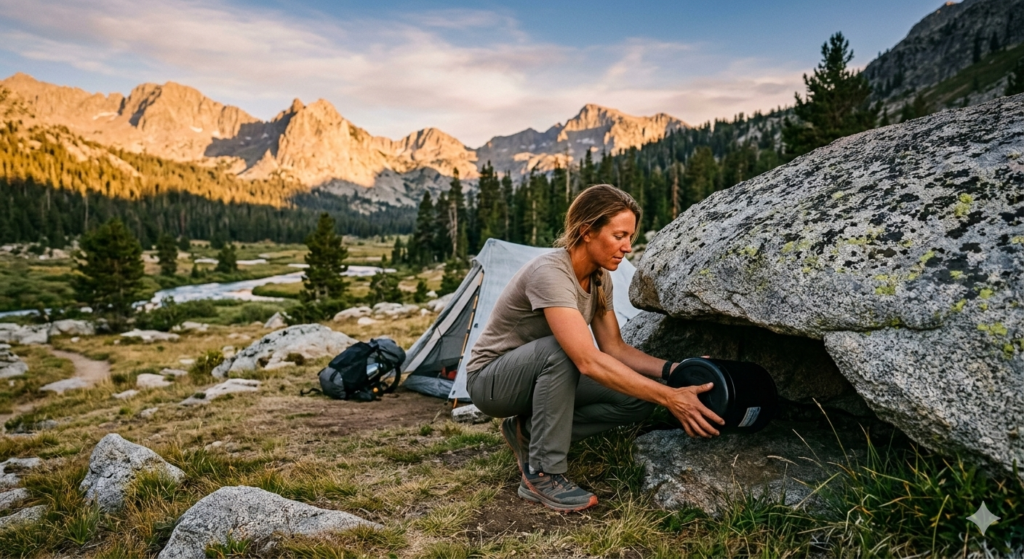
- Scenario 1: Bear Country (Sierra/Rockies): If you’re in “Griz” territory, a bear canister isn’t just a suggestion—it’s often the law. It’s heavy, but it’s better than losing your food (and your life) to a curious black bear.
- Scenario 2: Desert Hiking (Arizona/Utah): Water capacity is king. You should have the ability to carry at least 4-6 liters for long dry stretches.
- Scenario 3: High-Latitude Rain: Focus on “internal waterproofing.” Use a trash compactor bag as a pack liner. Even the best “waterproof” packs leak eventually.
FAQ: Pro Tips for the Long Trail
Q: What is the most common item hikers regret bringing? A: Extra clothes. You really only need two pairs of socks (one on, one drying) and one set of “camp clothes” that stay dry no matter what. Everything else is just dead weight.
Q: Do I really need a satellite messenger? A: If you are going solo or into true wilderness, yes. Devices like the Garmin inReach have saved countless lives. For more on emergency protocols, refer to the National Park Service Search and Rescue guidelines.
Final Thoughts: The “Shake-Down”
Before you head out on your “Big Adventure,” do a trial run. Pack your bag exactly as the checklist says, walk five miles in your local park, and set up your tent in the dark. If you find yourself struggling with a piece of gear at home, you’ll hate it in the wild.
TrailNexo Expert Tip: The best gear in the world can’t replace a solid itinerary left with a trusted friend.