
If you’ve ever found yourself three miles from the summit, gasping for air while your shoulder straps dig into your collarbones like blunt knives, you don’t have a fitness problem. You have a weight problem.
In 2026, the old-school mentality of “heavy duty equals safe” is dead. Ultralight backpacking isn’t about suffering or cutting the handle off your toothbrush (though some still do); it’s about efficiency. By following a streamlined ultralight backpacking checklist, you can drop your base weight—the total weight of your gear minus consumables like food and water—to under 10 pounds.
As someone who transitioned from a 45lb “kitchen sink” pack to a sub-12lb setup on the Pacific Crest Trail, I can tell you: your knees will thank you, and your daily mileage will skyrocket.
The “Big Three” Overhaul: Where the Battle is Won
The fastest way to shave five to ten pounds is to focus on your shelter system, sleeping bag, and backpack. If these three items combined weigh more than 6 pounds, you’re carrying “dead weight.”
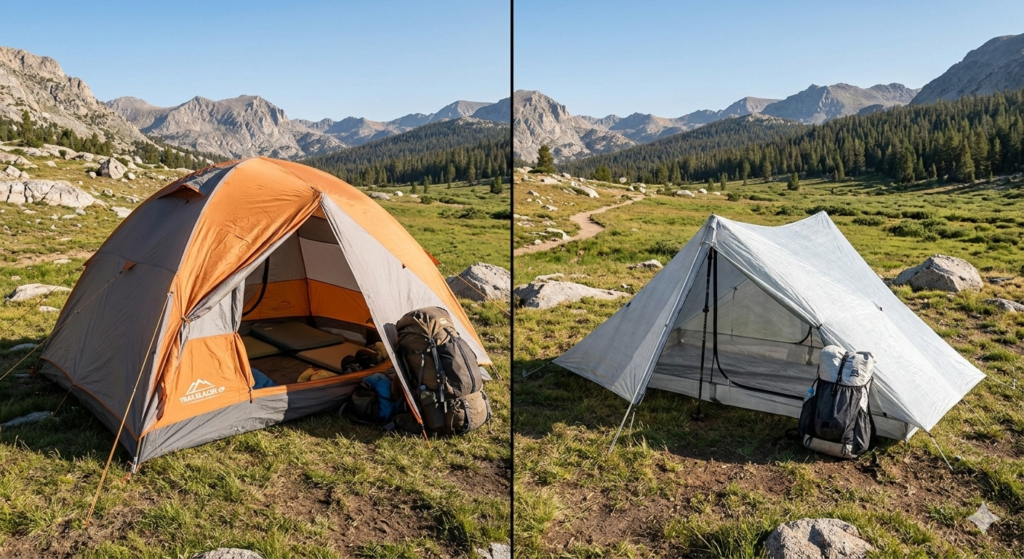
Modern Shelter Systems (The 2lb Limit)
In 2026, Dyneema Composite Fabric (DCF) is the gold standard. We are seeing trekking-pole-supported tents that offer full storm protection at under 18 ounces.
- The Pain Point: Traditional tents are heavy and hold water.
- The Fix: Switch to a non-freestanding shelter.
Sleep Systems: Warmth vs. Grams
Stop carrying a heavy mummy bag if you’re a side sleeper. An ultralight quilt saves weight by removing the hood and the insulation underneath you (which gets compressed and becomes useless anyway). Pair it with a high R-value inflatable pad to ensure you aren’t losing heat to the ground.
Data-Driven Comparison: Traditional vs. 2026 Ultralight Setup
To see the real-world impact, let’s look at the numbers. This isn’t just theory; it’s physics.
| Gear Category | Traditional Setup (lbs) | 2026 UL Setup (lbs) | Weight Saved |
| Shelter (Tent/Stake) | 5.2 | 1.1 | 4.1 lbs |
| Sleeping Bag/Quilt | 3.5 | 1.3 | 2.2 lbs |
| Backpack (Frameless) | 4.8 | 1.8 | 3.0 lbs |
| Total Base Weight | 13.5 lbs | 4.2 lbs | 9.3 lbs |
Scenario-Based Packing: From Weekend Warriors to Thru-Hikers
Your thru-hiking gear needs to change based on where you are. A “one size fits all” list is a recipe for a heavy pack.
- The 3-Day Summer Peak Bagging: You can ditch the heavy stove. Go “cold soaking” with a lightweight plastic jar to save 15oz of fuel and metal.
- High-Altitude Treks: Don’t skimp on the layering system. A 7oz 1000-fill power down jacket is non-negotiable when the sun drops.
The “Ditch List”: 5 Items Ruining Your Hike
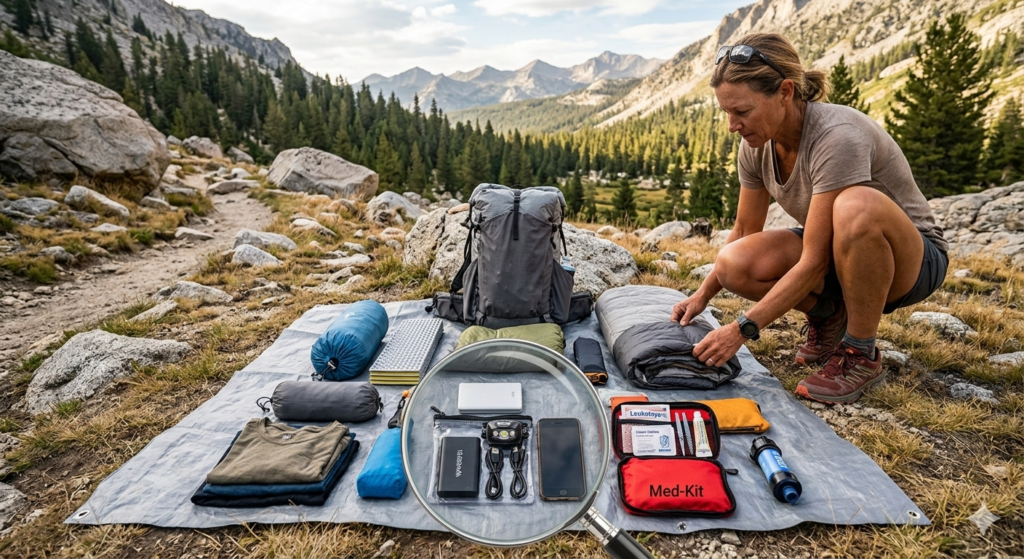
Most hikers carry “just in case” items that never leave the pack. To truly master the ultralight backpacking checklist, you need to leave these behind:
- Multi-tools with 20 functions: You only need a small blade and maybe scissors.
- Camp Shoes: If your trail runners are comfortable, you don’t need Crocs.
- Heavy Hard-Shells: Unless it’s a literal hurricane, a 5oz rain shell is plenty.
- Excessive Water: Research your water sources. Carrying 4 liters when there’s a stream every 3 miles is carrying 8lbs of unnecessary weight.
- Cotton Clothing: It’s heavy, stays wet, and causes chafing. Stick to merino or synthetics.
FAQ: Is Ultralight Actually Durable?
Q: Will a DCF tent rip in high winds? Actually, DCF has a higher strength-to-weight ratio than steel. While it requires more care regarding punctures, it won’t sag when wet like nylon. For more on material science, check out the Outdoor Gear Lab’s durability testing.
Q: Can I go ultralight on a budget? Yes! You don’t need $1,000 tents. Start by “editing” your current pack. Removing the brain of your backpack and switching to smartwater bottles instead of heavy bladders costs $0 and saves nearly a pound.
Final Thoughts: The 1% Rule
Don’t try to swap everything at once. Focus on the Big Three first. Every time you pack, ask yourself: “Did I use this last time?” If the answer is no, it doesn’t belong on your backpacking essentials list.
TrailNexo Expert Tip: Use a digital hanging scale. If you don’t weigh it, you won’t change it.