
There is a specific kind of magic that happens around a campfire. The crackle of the wood, the smell of toasted marshmallows, and the endless canopy of stars above—it’s the ultimate reset for a tired mind. But let’s be honest: that magic fades pretty quickly if your back is aching because you’re perched on a jagged rock or a damp log.
Finding the right camping chairs is often an afterthought for many beginners, but as any seasoned outdoor enthusiast will tell you, it is arguably the most important piece of “luxury” gear you can own. Research from the Journal of Physical Therapy Science indicates that sitting on unsupported surfaces can increase spinal pressure by up to 40% compared to standing. After a long day of hiking, your body doesn’t just need a seat; it needs a recovery station.
In this guide, we’re going to dive deep into the world of outdoor seating. Whether you need heavy-duty folding camping chairs for a weekend at the lake or a feather-light stool for a trek into the backcountry, I’ve got you covered. Let’s make sure your next trip is your most comfortable one yet!
Phase 1: Decoding the Comfort – Why Your Choice of Seat Matters
As someone who advocates for a healthy, active lifestyle, I can’t stress enough how much ergonomics matter—even in the woods. When we camp, we’re often pushing our bodies harder than usual, carrying heavy packs or navigating uneven terrain. Proper recovery starts with how you sit.
The best camping chairs provide lumbar support that prevents the “slump” that leads to lower back pain. If you’re sitting around a fire for three hours every night, a poorly designed chair can leave you feeling stiff the next morning, robbing you of the energy you need for your morning hike. Think of your chair as a mobile wellness station. Look for a backrest angle between 105° and 110°; this is the “Goldilocks zone” for reducing intervertebral disc pressure.
Phase 2: The Contenders – Comparing Different Types of Folding Camping Chairs
The market is flooded with options, but most folding camping chairs fall into a few distinct categories. Choosing the right one depends on your “mode of transport.”
1. The Classic Quad Chair
This is the “standard” camp chair you see everywhere. It folds up like an umbrella and usually comes with a carry bag.
- Pros: Affordable, includes cup holders, stable on flat ground.
- Cons: Bulky and heavy (usually 8-12 lbs).
- Best for: Car camping and sideline sports.
2. Backpacking Chairs
If you are carrying everything on your back, weight is your enemy. Ultralight camping chairs from brands like Helinox use 7075 aircraft-grade aluminum to keep the weight under 2 pounds.
- Pros: Extremely packable, often the size of a water bottle when folded.
- Cons: Can be tippy on soft sand; expensive.
- Best for: Multi-day treks and minimalist travelers.
3. Rockers and Recliners
Why stop at just sitting? Modern folding camping chairs now include rocking mechanisms or zero-gravity reclining features.
- Pros: Ultimate comfort; great for stargazing.
- Cons: Very heavy; large storage footprint.
- Best for: Glamping and long-term basecamps.
Phase 3: The “Goldilocks” Guide – How to Choose the Perfect Chair
When you’re shopping for your next seat, don’t just sit in it for five seconds at the store. Consider these “hard data” points:
- Material Specs: Look for 600D (Denier) Polyester or higher. This indicates the density of the fabric. High-end chairs often feature UV-resistant coatings to prevent the fabric from becoming brittle after a summer in the sun.
- The “Feet” Factor: If you camp on soft ground, look for chairs with “sand feet”—wide, bulbous plastic covers that prevent the legs from sinking into the mud.
- Weight Capacity: Standard chairs support 250 lbs. If you need something more robust, “King Size” models like the ALPS Mountaineering King Kong support up to 800 lbs with reinforced steel frames.
Phase 4: Pro Tips for Campfire Mastery
Owning the gear is one thing; using it like a pro is another. Here are a few “hacks” from my years on the trail:
- The Tennis Ball Trick: If your chair has thin legs that sink, slit four tennis balls and pop them onto the feet. It’s a $2 solution that rivals a $150 chair’s stability.
- The “Pre-Heat” Hack: In temperatures below 50°F (10°C), the air underneath your chair is cold. Drape a small wool blanket or a closed-cell foam pad over the seat before you sit down. It creates a thermal barrier that keeps your backside warm.
- The Windbreak Strategy: Position your chair with its back to the wind and drape your heavy jacket over the backrest. It creates a small micro-climate that traps the fire’s heat around your body.
Phase 5: Longevity – How to Store Camping Chairs Properly
This is the part most people ignore until they pull out a moldy, rusted chair next spring. If you want to know how to store camping chairs properly, follow this 3-step longevity ritual:
1. The Deep Clean
After a trip, wipe down the aluminum or steel frame with a damp cloth. Salt from beach camping is the #1 killer of folding camping chairs. If there’s spilled marshmallow goo on the fabric, use a soft brush and mild biodegradable soap.
2. The UV and Moisture Purge
Never fold up a damp chair. Mold can ruin polyester fibers in as little as 48 hours. Let your chair air dry in the sun for 2 hours before packing it. The UV light also acts as a natural disinfectant.
3. The Strategic Storage Spot
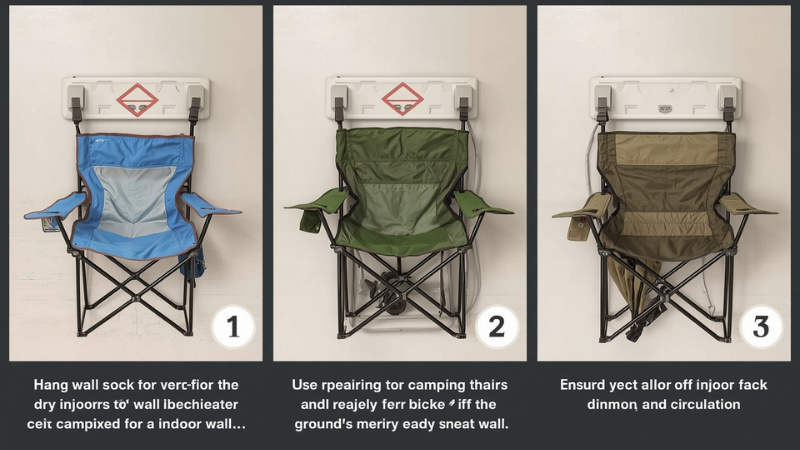
When considering how to store camping chairs for the winter, avoid the garage floor. Concrete wicks moisture. Instead, hang them on wall-mounted hooks or store them in a dry, climate-controlled closet. Avoid areas that exceed 100°F (38°C), as extreme heat can degrade the plastic joints and elastic bungees.
Frequently Asked Questions (FAQ)
Q: What are the best camping chairs for people with back pain?
A: Look for chairs with “hard arms” (rather than fabric ones). Hard arms provide a solid surface to push off of when standing. Also, prioritize chairs with vertical back supports rather than “X” frames, which tend to sag over time.
Q: Can I leave my camping chairs outside all season?
A: I wouldn’t recommend it. Even the best camping chairs suffer from UV degradation. The sun’s rays break down the chemical bonds in the fabric, leading to sudden rips. Always bag them when not in use.
Q: How to store camping chairs if I live in a small apartment?
A: Look for “Trekking Stools” or ultralight models. They are the size of a baguette when folded and can easily fit under a bed or in a suitcase.
Conclusion: Take a Load Off
At the end of the day, your choice of camping chairs is a personal one. It’s about where you want to spend those quiet moments of reflection between adventures. Whether you choose a minimalist stool or a high-tech rocker, the goal is the same: to slow down, recover, and enjoy the view.
My gentle suggestion? Think of your chair as an investment in your physical and mental health. A good seat means more time spent around the fire, more stories shared, and a better night’s sleep afterward. Grab your favorite seat, find a fire, and let the relaxation begin.