
From no-cook lunches to one-pot dinners — a practical guide to eating well at camp without stress, complicated equipment, or giving up the foods you actually like.
Key Takeaways
- The best camping meals for beginners are either no-cook or one-pot — minimizing dishes and maximizing time enjoying the outdoors
- Prep at home before you go — chopped vegetables, pre-measured spices, and marinated proteins dramatically reduce campsite cooking stress
- The USDA recommends keeping perishable food below 40°F at all times — a properly packed cooler with enough ice is non-negotiable for food safety
- Camping metabolism is real: hiking and outdoor activity significantly increase calorie burn — plan for larger portions than you’d eat at home
- Most camp cooking can be done with a single-burner stove, one pot, and one pan — more equipment doesn’t mean better meals
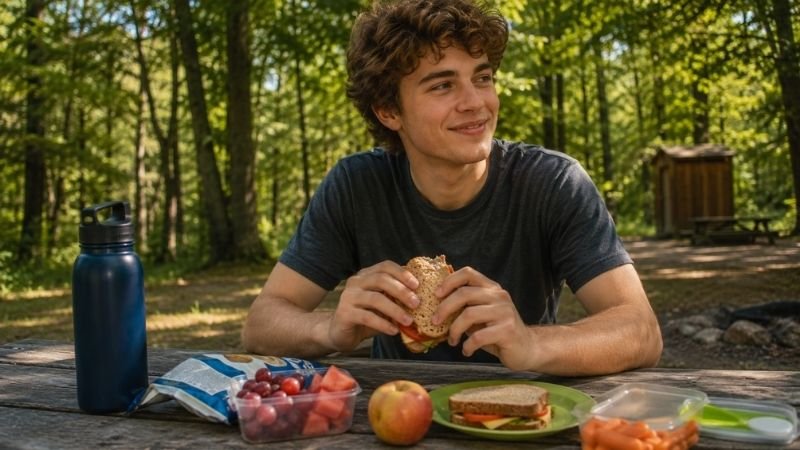
You’re planning your first camping trip. The tent is sorted, the sleeping bag is picked, the packing list is mostly done. And then someone asks: “What are we eating?”
Suddenly it hits you. No kitchen. No fridge. No delivery apps. A camp stove you’ve never lit, a cooler you’re not sure how to pack, and the vague memory of eating sad, soggy sandwiches at a childhood picnic. The whole camping food situation feels like it could either make or break the trip.
Here’s the truth that experienced campers know and beginners rarely hear: outdoor food almost always tastes better than the same food eaten indoors. Something about fresh air, physical activity, and eating with your hands around a fire makes even simple meals feel like a genuine experience. You don’t need elaborate recipes or chef-level skills. You need a handful of reliable ideas, a little preparation done at home, and the willingness to keep it simple.
This guide gives you exactly that — easy camping meals organized by category, written for people who have never cooked outside before, with realistic options for every meal of the day.
The 3 Rules of Beginner-Friendly Camp Cooking
Before the food, three principles that make everything easier:
Rule 1: Prepare at home, assemble at camp. The single most effective camping cooking strategy is doing as much work as possible before you leave. Chop vegetables the night before and store in containers. Pre-measure spices into small bags. Marinate proteins in ziplock bags. Mix dry pancake ingredients in a jar. At camp, you’re assembling and heating, not starting from scratch — which is the difference between a 15-minute meal and a 45-minute ordeal.
Rule 2: One pot, one pan, done. Every dish you bring to camp is a dish you have to clean without running water and dish soap. For most beginner camping trips, all your cooking can happen in one pot and one pan. Embrace this constraint — it makes packing simpler, cooking faster, and cleanup much less painful.
Rule 3: Simple > ambitious. Your first camping trip is not the time to attempt a multi-course meal. Save the elaborate recipes for when you know your camp stove, your cooler, and your campsite. For trip one: sandwiches for lunch, pasta for dinner, oatmeal for breakfast. Nobody is judging you, and simple food eaten outside tastes great.
No Cook Camping Meals: The Easiest Option for Beginners
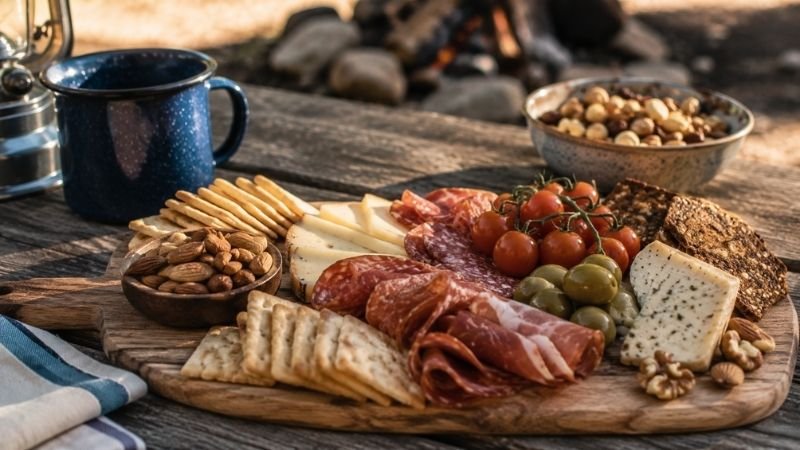
The most overlooked category in camping food guides — and the one that beginners actually need most. These require zero cooking equipment, produce zero dishes beyond a plate or bowl, and take almost no time.
For your first camping trip, consider making day one entirely no-cook. You’ll be busy setting up camp, figuring out the site, and getting oriented. You don’t need to also figure out the camp stove on day one.
No-Cook Camping Lunch and Snack Ideas
The classic: Sandwiches, wraps, or pita pockets. Build them at home and wrap individually. Good for 6–8 hours if kept in a cooler. Fillings that travel well: peanut butter and jam, turkey and cheese, hummus with roasted vegetables, tuna with avocado.
The grazer’s spread: Crackers, cheese, cured meats (salami, pepperoni), olives, cherry tomatoes, baby carrots, nuts. No preparation required, endlessly customizable, and somehow always satisfying outdoors. This works for lunch, pre-dinner snacking, and late-night campfire grazing.
Grain salads: Couscous, quinoa, or pasta salad made at home and stored in a sealed container. Stays good in a cooler for 1–2 days. Dress lightly and add extra dressing at camp if needed.
Energy-dense snacks: Trail mix (nuts, seeds, dried fruit, chocolate chips), energy bars, jerky, dried mango, apple chips. Pack more than you think you need — outdoor activity increases appetite significantly.
No-Cook Camping Breakfast
Overnight oats: Mix rolled oats, milk (or water), chia seeds, and whatever mix-ins you like (nut butter, honey, dried fruit) in a sealed jar the night before. Refrigerate in your cooler. Ready to eat cold in the morning with zero cooking.
Yogurt parfaits: Pre-portion yogurt into containers, pack granola separately (keeps it crunchy), and bring fresh or dried fruit. Assemble at camp in about 2 minutes.
Bagels with cream cheese or nut butter: Compact, calorie-dense, no refrigeration required (if eating within a day or two), and require exactly zero effort.
Editor’s note: No-cook breakfasts are genuinely underrated. When you’re at camp in the morning and everything is beautiful and you just want to eat something quickly and go explore — a jar of overnight oats is far preferable to a production involving a stove, a pan, and 20 minutes of effort.
Easy Camping Breakfast Ideas: When You Want Something Hot
Once you’re comfortable with the camp stove, hot breakfasts are one of the genuine pleasures of camping. The smell of coffee and eggs cooking outdoors is its own form of joy.
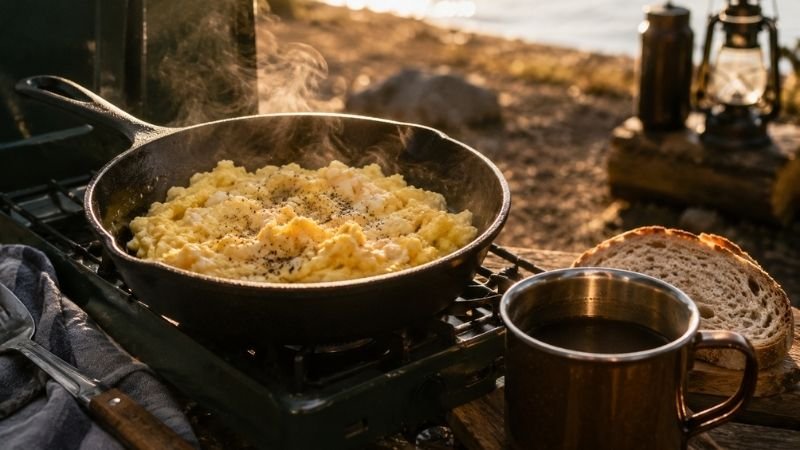
Scrambled Eggs at Camp
The easiest hot breakfast. Crack and pre-beat your eggs at home, store in a sealed container in the cooler, and pour them into a buttered pan at camp. Add whatever fillings you have — cheese, pre-chopped vegetables, salsa. Done in under 5 minutes.
Pro tip: Pre-mix the eggs with salt, pepper, and any spices before you leave. It makes camp cooking even faster and reduces what you need to pack.
Classic Camping Oatmeal
Bring instant or quick-cook oats. Boil water on the stove, pour over oats, wait 3 minutes. Top with whatever you packed: brown sugar, cinnamon, dried fruit, nuts, nut butter. This is the most reliable camping breakfast because the only thing that can go wrong is under-boiling the water — and even then, oats will eventually soften.
For a heartier version: cook the oats in the pot with some butter and a pinch of salt, then top. The difference in texture is worth the minimal extra effort.
Camping Pancakes
Slightly more effort, but universally loved. The best approach: pre-measure all the dry ingredients (flour, sugar, baking powder, salt) into a ziplock bag or mason jar at home. At camp, add the wet ingredients (egg, milk, oil), shake or stir to combine, and cook on a buttered pan or griddle. Takes about 15–20 minutes total.
Common beginner mistake: Adding too much batter to the pan and getting a pancake too thick to cook through. Keep them smaller than you think, about 4–5 inches in diameter, for even cooking.
Camp Breakfast Hash
Use up leftover potatoes, onions, and whatever protein you have. Everything in one pan, 15 minutes. This is the classic “second-day breakfast” when you have leftovers from the night before and want a hot, hearty start.
Easy Camping Lunch Ideas: Fast, Portable, and Satisfying
Lunch at camp is usually eaten after a morning activity — hiking, swimming, exploring — when everyone is hungry and nobody wants to cook an elaborate meal.
The strategy: Keep lunch either no-cook (best option) or one-step simple. Save your cooking energy for dinner.
Quesadillas in a pan: Tortilla, shredded cheese, whatever fillings you have (beans, salsa, canned chicken, pre-cooked vegetables). Heat in a dry pan for 2–3 minutes per side. Crispy, satisfying, and requires exactly one piece of cookware.
Wraps with pre-made fillings: Make a batch of something versatile at home — seasoned black beans, chicken salad, tuna salad — and pack in a sealed container. Scoop into tortillas or serve over crackers at camp.
Soup from a can: For cooler weather camping, canned soup heated over the stove is legitimately satisfying and requires zero preparation. Upgrade it with a handful of crackers, some hot sauce, or a fried egg on top.
Instant ramen with additions: Better than the dorm room version — add an egg (crack it directly into the hot broth in the last minute of cooking), some fresh or dried vegetables, and any protein you have. Done in under 10 minutes.
One Pot Camping Meals: Dinner Done Simply
One-pot camping meals are the workhorse of beginner camp cooking — everything goes into a single pot, you eat out of bowls, and cleanup involves rinsing one pot. This is the method that makes camp cooking genuinely manageable.
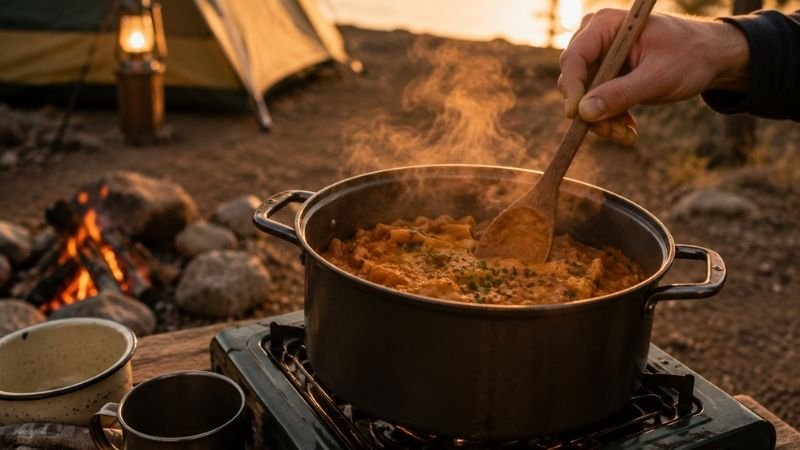
Pasta with Jarred Sauce
The most reliable beginner camping dinner. Boil water, cook pasta, drain, add jarred sauce, heat briefly. Add canned tuna, pre-cooked chicken, or chickpeas for protein. Parmesan in a shaker bottle if you want to feel like you tried.
Timing: 15–20 minutes from stove on to eating. Serves as many people as you have pasta and sauce for.
One-Pot Chili
Brown any ground meat or canned beans in the pot with onions and garlic (pre-chopped at home). Add canned tomatoes, canned beans, chili powder, cumin, salt. Simmer for 15 minutes. Serve with crackers, bread, or over instant rice.
This is an excellent make-ahead option: cook the chili at home, freeze it in a ziplock bag, and thaw in the cooler as you drive to the campsite. By dinnertime, it’s defrosted and just needs reheating.
Camping Curry
Same principle as chili. Canned coconut milk + curry paste (sold in small jars) + whatever vegetables and protein you have + instant rice. Add coconut milk and curry paste to the pot, add vegetables, simmer 10 minutes, serve over rice. Warming, satisfying, and genuinely impressive for how little effort it requires.
Black Bean and Rice Bowl
Cook instant rice in the pot. Add canned black beans, a packet of taco seasoning, some salsa. Stir and heat for 5 minutes. Top with cheese, sour cream (if your cooler situation allows), and any fresh toppings you brought. This is a genuinely complete and satisfying camp dinner that costs almost nothing per serving.
The one-pot camping meal principle: almost any combination of protein + starch + liquid + seasoning works. Canned beans + rice + spices is a pattern you can repeat with infinite variations.
Foil Packet Camping Meals: The Campfire Option
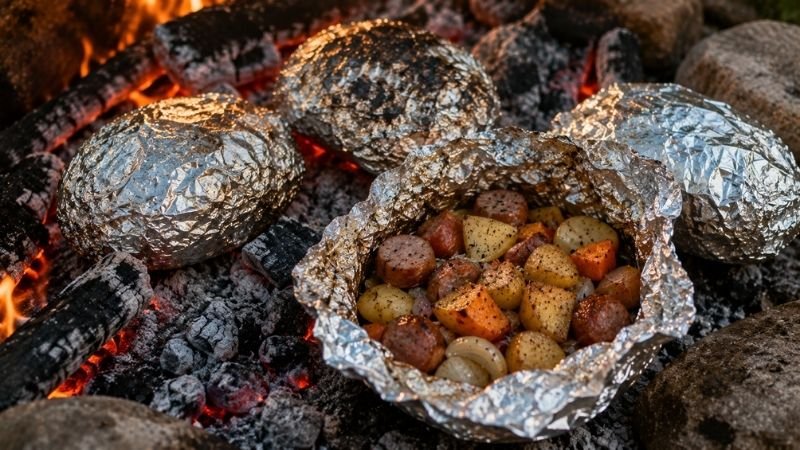
Foil packet meals — wrapping food in heavy-duty aluminum foil and cooking in a campfire or on a grill — are a camping classic. They’re genuinely beginner-friendly because the foil does most of the work and cleanup is throwing away foil.
Important caveat: Many campgrounds, especially in fire-prone areas of the western US, prohibit open campfires or have seasonal fire bans. Always check fire regulations for your specific campsite before planning any fire cooking.
Basic Foil Packet Method
- Tear off a large piece of heavy-duty aluminum foil (about 18 inches)
- Place food in the center — protein, vegetables, seasonings, a pat of butter or oil
- Bring the long sides of the foil together and fold down in small folds to seal
- Fold the short ends up and over to seal
- Cook in campfire coals (not flames) for 20–30 minutes, flipping halfway
Beginner-friendly foil packet ideas:
Foil Packet Potatoes: Cubed potatoes, olive oil, garlic powder, salt, pepper, optional cheese. 25–30 minutes in coals.
Foil Packet Sausage and Vegetables: Sliced sausage, bell peppers, onions, olive oil, Italian seasoning. 20–25 minutes in coals.
Foil Packet Salmon: Salmon fillet, lemon slices, dill, butter, salt. 15–20 minutes in coals — done when fish flakes easily.
Camping Snacks and Desserts
Snacks Worth Packing
Trail mix is the obvious answer — calorie-dense, shelf-stable, infinitely customizable. But there’s more to camp snacking than gorp:
- Fresh fruit for the first day (apples and oranges travel best)
- Baby carrots, celery, snap peas with single-serve hummus cups
- String cheese (stays good in a cooler for days)
- Dark chocolate (holds up better than milk chocolate in heat)
- Popcorn in a sealed bag (surprisingly good campfire snack)
- Peanut butter packets with crackers or apple slices
The Classic Camping Dessert: S’mores
No camping food guide is complete without s’mores — and they genuinely require almost zero explanation. Graham crackers, chocolate, marshmallows. Roast marshmallow over fire or camp stove flame until golden (or charred, if you’re that kind of person). Sandwich between graham crackers with a piece of chocolate. The chocolate barely melts, you’ll probably burn at least two marshmallows, and it will still be the best dessert you’ve had in months.
The less classic but equally valid option: campfire banana boats. Slice a banana lengthwise (leaving the skin on), fill with chocolate chips and mini marshmallows, wrap in foil, and heat in campfire coals for 5–10 minutes. Eat directly from the foil with a spoon. Outstanding and much easier than it sounds.
Camping Food Safety: The Part Nobody Talks About Enough
Food safety at camp is genuinely important — not to be alarmist, but because improperly stored food can ruin a trip in the most unpleasant way possible. The basics are simple:
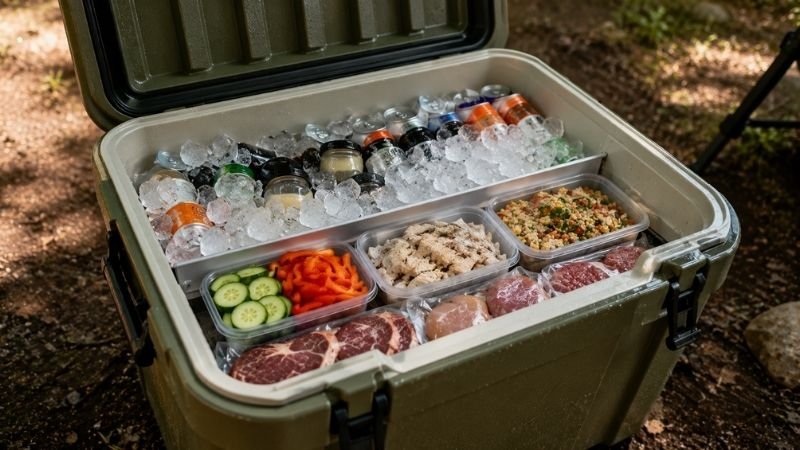
The 40°F Rule: The USDA recommends keeping all perishable foods (meat, dairy, eggs, prepared foods) below 40°F to prevent bacterial growth. This means:
- Your cooler needs to actually maintain 40°F or below — not just feel “cold”
- Pack with block ice rather than cubed (lasts significantly longer)
- Pre-chill your cooler with ice before packing food
- Minimize opening the cooler — every opening lets warm air in
Cooler packing strategy: Raw meat goes at the bottom in a sealed bag (so juices don’t contaminate other food). Dairy and most-needed items in the middle. Drinks in a separate cooler if possible — drink coolers get opened constantly and drain ice faster.
The 2-Hour Rule: Any perishable food left out at temperatures above 40°F should be discarded after 2 hours. In hot weather (above 90°F), that window shrinks to 1 hour. When in doubt, throw it out.
Food storage at night: Even if there are no bears, wildlife will investigate any accessible food. Store food in your car or in the campsite’s provided food storage boxes when you’re done eating, and especially overnight.
A Simple 2-Night Camping Meal Plan (Ready to Use)
Day 1 — Arrival Day (keep it simple)
- Dinner: Pre-made chili or curry reheated from a frozen bag + crackers
- Evening snack: S’mores, trail mix, fresh fruit
Day 2
- Breakfast: Overnight oats from the cooler + coffee
- Lunch: Wraps with pre-made filling + apple + trail mix
- Snack: Cheese and crackers, fresh vegetables with hummus
- Dinner: Pasta with jarred sauce + canned tuna or chickpeas + garlic bread (bread buttered in foil and heated over the stove)
Day 3 — Departure Day
- Breakfast: Scrambled eggs (pre-beaten) + toast on the pan + camp coffee
- Lunch: Use-it-up wraps with whatever’s left
If You Only Have 10 Minutes to Plan Camp Food
No time to research? Here’s your minimum viable camp food plan:
- Breakfast: Instant oatmeal (just add boiling water) or overnight oats
- Lunch: Pre-made sandwiches + fruit + trail mix
- Dinner: Pasta + jarred sauce + canned protein
- Snacks: Trail mix, energy bars, crackers and cheese
- Dessert: S’mores (you need three ingredients and a stick)
Buy ingredients at the grocery store the day before. Spend 20 minutes prepping (chop any vegetables, pre-beat eggs if you want them, pre-mix oatmeal ingredients). Pack in a well-iced cooler. That’s it.
FAQ: Real Camping Food Questions
Q: What are the easiest camping meals for beginners? No-cook meals (sandwiches, wraps, overnight oats, cheese and crackers) and one-pot meals (pasta with jarred sauce, chili from a can, instant rice with beans) are the easiest starting points. They require minimal equipment, produce minimal cleanup, and are genuinely satisfying outdoors.
Q: What camping food doesn’t need refrigeration? Shelf-stable options that camp well without refrigeration: peanut butter, crackers, trail mix, energy bars, jerky, dried fruit, instant oatmeal, pasta, rice, canned beans, canned tuna, canned soup, tortillas, hard cheeses (like parmesan or aged cheddar), chocolate, nuts, and most condiments in individual packets.
Q: How do you keep food cold while camping? Use block ice rather than cubed — it lasts 2–3 times longer. Pre-chill your cooler with ice for a few hours before packing food. Keep raw meat at the bottom in sealed bags. Minimize cooler openings. If possible, keep drinks in a separate cooler. Keep the cooler in the shade and cover with a blanket or towel for added insulation.
Q: What are good one pot camping meals? Pasta with jarred sauce, chili (from scratch or a can), camping curry with coconut milk and vegetables, black bean and rice bowls, ramen with additions, and soup-based meals are all excellent one-pot options. The common thread: combine protein + starch + liquid + seasoning and heat through.
Q: Can you do camping food without a camp stove? Yes. A no-cook camping approach works completely for shorter trips in moderate weather: sandwiches, wraps, crackers and cheese, trail mix, overnight oats, yogurt, fresh fruit, energy bars, and cold salads all work without any cooking equipment. If there’s a campfire allowed at your site, you can do basic fire cooking without a stove.
Eat Well, Camp Better
Easy camping meals are really just regular meals made with the constraints of outdoor cooking in mind. The key isn’t complicated recipes — it’s smart preparation, realistic expectations, and a willingness to let simple food be satisfying.
Prep what you can at home. Keep cooking simple at camp. And don’t underestimate how good a basic meal tastes when you’ve spent the day outside.
Plan your complete camping experience:
- The Complete Camping Packing List for Beginners
- Camping for Beginners: The Complete First-Timer’s Guide
- How to Set Up a Tent for the First Time
- Outdoor Safety for Beginners
References
- USDA Food Safety and Inspection Service. Keeping Food Safe During an Emergency — The 40°F Rule and Cooler Safety. fsis.usda.gov
- Centers for Disease Control and Prevention (CDC). Food Safety for Outdoor Eating and Camping. cdc.gov/foodsafety
- National Park Service. Food Storage and Wildlife Safety at Campgrounds. nps.gov
- Leave No Trace Center for Outdoor Ethics. Leave No Trace in Camp — Food Waste and Wildlife. lnt.org