
What those numbers on the label actually mean, which one to use when shopping, and exactly what temperature sleeping bag you need for your camping trips.
Key Takeaways
- Sleeping bag temperature ratings come in two types: Comfort rating (for cold sleepers, typically used on women’s bags) and Lower Limit rating (for warm sleepers, typically used on men’s bags) — always check which one is listed
- For beginners, buy a bag rated 10–15°F colder than the lowest temperature you expect — this buffer accounts for individual variation and real-world conditions
- The number in a sleeping bag’s name (like “Marmot Trestles 15”) may not match its actual tested temperature rating — always check the actual spec, not just the product name
- A sleeping bag is only part of the warmth equation — your sleeping pad’s R-value, your clothing, and tent type all significantly affect how warm you actually feel
- For most beginner car camping in spring through fall: a 20°F or 30°F bag covers the vast majority of conditions
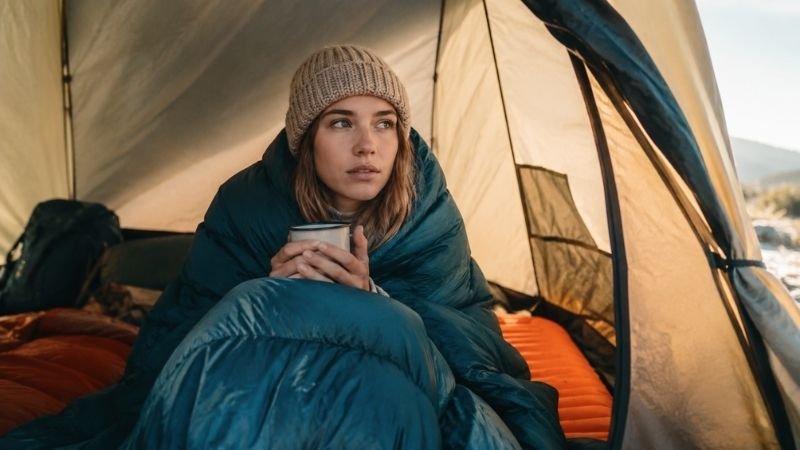
You bought a sleeping bag that said “20 degrees” on the tag. You were camping in temperatures that dropped to maybe 35°F overnight — well above what your bag was rated for. And you still woke up at 3am, genuinely cold, wondering what went wrong.
This is one of the most universal beginner camping experiences, and the frustration is completely understandable. The sleeping bag temperature rating system exists to help people choose the right bag — but it’s confusing enough that many people misread it, misapply it, or choose a bag that doesn’t match their actual needs. Then they blame themselves for being “bad at sleeping outside” when the real issue was a number on a label they didn’t fully understand.
This guide fixes that. By the end, you’ll know exactly what sleeping bag temperature rating means, which number to actually use when you’re shopping, what temperature sleeping bag you need for your specific situation, and why a sleeping bag is only part of the warmth story. No unnecessary technical jargon — just the things you actually need to know to sleep comfortably at camp.
What Is a Sleeping Bag Temperature Rating? The Simple Version
A sleeping bag temperature rating is the manufacturer’s estimate of the lowest temperature at which a sleeping bag will keep you warm enough. A bag rated “20°F” is designed to keep you warm in temperatures down to 20°F.
Simple enough — except the system has a few complications that trip up almost every new camper.
The first complication: there are two different temperature ratings on most bags.
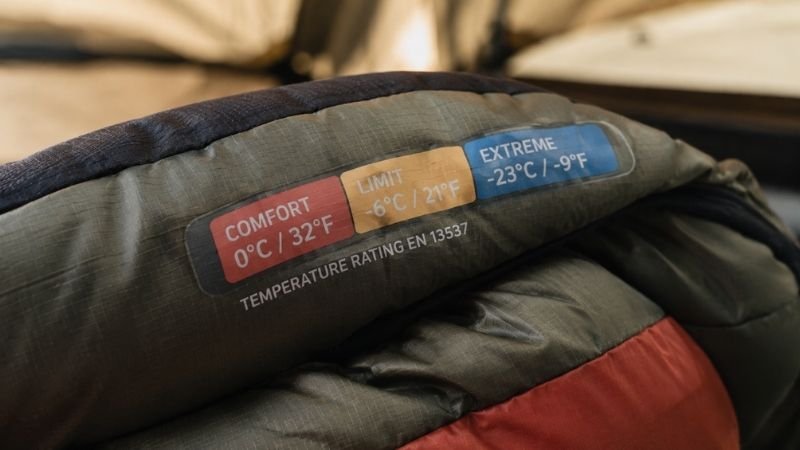
Modern sleeping bags tested under the international EN/ISO standard (the system adopted by most major brands to ensure consistent, comparable testing across companies) produce two different temperature numbers:
Comfort Rating: The temperature at which a cold sleeper — someone who tends to run cold at night — would sleep comfortably. This is the more conservative number, and it’s the one most brands use on bags marketed to women.
Lower Limit Rating: The temperature at which a warm sleeper would sleep comfortably. This is a less conservative number, and it’s what most brands use on bags marketed to men.
These two ratings on the same bag can differ by 10–15°F. A bag might have a Comfort rating of 25°F and a Lower Limit of 15°F. Which number applies to you depends entirely on whether you tend to sleep warm or cold.
Editor’s note: The gendered framing of these ratings is increasingly outdated, but the underlying principle is sound. If you regularly sleep cold — socks in bed, extra blankets, always the person who’s chilly — use the Comfort rating as your reference. If you sleep warm — kicking off covers, usually the warmest person in the room — use the Lower Limit.
Comfort Rating vs Lower Limit Rating: Which One Should You Use?
This is the question that resolves most sleeping bag confusion, so let’s address it directly.
Use the Comfort Rating if:
- You tend to run cold (you’re often the coldest person in the room)
- You’re female (women’s bags use this rating as standard)
- You want a conservative, reliable warmth guarantee
- You’re camping in variable or unpredictable conditions
Use the Lower Limit Rating if:
- You tend to run warm (you’re usually the warmest person in the group)
- You want a lighter bag and are willing to trade some warmth margin for weight
- You’re camping in conditions you’re confident won’t drop below that temperature
For most beginners: Default to the Comfort Rating. The downside of being slightly too warm (you unzip the bag a bit) is much less unpleasant than the downside of being too cold (a miserable, sleepless night). Warmth errors are adjustable; cold errors are not.
What Temperature Sleeping Bag Do You Actually Need?
This is what most people really want to know, and it’s what most sleeping bag guides make too complicated. Here’s the direct answer by camping scenario:
Summer Camping (Nighttime Lows Above 50°F)
Bag rating needed: 35°F–45°F
Nights above 50°F are warm enough that you won’t need serious insulation. A 35°F bag handles the occasional cooler night while not making you sweat on warmer ones. Many experienced campers use a lightweight quilt or liner for true summer camping.
Spring and Fall Camping (Nighttime Lows 30–50°F)
Bag rating needed: 20°F–30°F
This is the sweet spot for most beginner car camping in temperate climates. A 20°F or 25°F bag covers nearly every condition you’ll encounter spring through fall at most North American campgrounds. This is the range TrailNexo recommends for a beginner’s first sleeping bag purchase.
Cold Weather Camping (Nighttime Lows Below 30°F)
Bag rating needed: 0°F–15°F
For camping in genuinely cold conditions — late fall, shoulder season at elevation, early spring in cold climates — you need a bag rated well below freezing. A 15°F bag is a solid all-around choice for cold-weather camping for most people.
Winter Camping (Nighttime Lows Below 20°F)
Bag rating needed: -10°F to -20°F or colder
Winter camping is a specialized pursuit that goes significantly beyond beginner territory. If you’re considering it, get specific advice for your conditions rather than relying on a general guide.
The 10–15°F Buffer Rule
Whatever temperature you’re expecting, buy a bag rated 10–15°F colder than that. If you’re camping where nights drop to 40°F, buy a 25°F bag rather than a 40°F bag.
Why? Because temperature ratings are tested under controlled lab conditions — a standardized sleeping pad, base layer clothing, a warming protocol before the test begins. Real camping conditions involve more variables: your actual sleeping pad, what you ate for dinner, how tired you are, whether you’re slightly dehydrated, how cold you were before you got in the bag. All of these affect how warm you feel. The buffer accounts for this real-world variation.
Research in thermal physiology consistently shows that individual metabolic variation among people — how much heat your body generates while at rest — can cause identical people to report comfort at temperatures varying by 15°F or more. This is why “I was cold in a 20-degree bag at 35°F” is a legitimate experience, not user error.
The Product Name Number vs the Actual Rating: A Common Confusion
Here’s a specific thing to check when you’re shopping that catches a lot of beginners off guard.
A sleeping bag might be called the “Company X Trail 20” — implying a 20°F temperature rating. But when you look at the actual EN/ISO spec on the product page, the Lower Limit rating might be 18°F and the Comfort rating might be 30°F.
Brands round the numbers in product names for simplicity, and there are no standardized rules about whether they round up or down. The “20” in the name might reflect the Lower Limit (the warmer number) rather than the Comfort rating — meaning cold sleepers who bought this bag expecting 20°F performance might find themselves cold at 25°F.
The rule: Always look at the actual EN or ISO temperature rating spec on the product page — both the Comfort and Lower Limit numbers if listed. Don’t trust just the number in the product name.
5 Things That Affect How Warm You Actually Feel (Beyond the Sleeping Bag)
Your sleeping bag’s temperature rating is one input into a larger warmth equation. Here are the other factors that significantly affect whether you sleep comfortably — and which ones you can control.
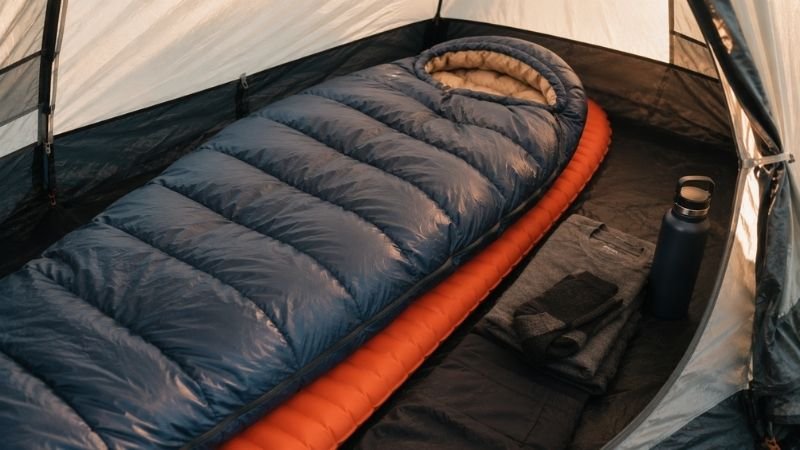
1. Sleeping Pad R-Value
This is the most underestimated factor in camp sleep comfort, and we covered it in our camping for beginners guide — but it bears repeating here.
The ground conducts heat away from your body much faster than the air around you. A sleeping bag insulates you from air. A sleeping pad insulates you from the ground. Without an adequate sleeping pad, even a high-quality sleeping bag underperforms significantly.
For three-season camping, a sleeping pad with an R-value of 2.0 or higher is the baseline. For cold-weather camping below 30°F nights, R-value 4.0+ is recommended.
2. What You’re Wearing Inside the Bag
The EN/ISO test protocol assumes the sleeper is wearing a base layer — a thermal top and bottoms. If you crawl into your bag in just a t-shirt and shorts, you’re sleeping significantly colder than the bag’s rating assumes.
Practical rule: wear a moisture-wicking base layer, clean dry socks, and a beanie to bed. The beanie matters more than most people realize — significant body heat is lost through the head even inside a sleeping bag.
3. Your Hydration and Calorie Status
This sounds more obscure than it is. Your body generates heat through metabolic processes, and both dehydration and calorie deficit meaningfully reduce your body’s ability to generate and maintain warmth.
Practical rule: eat a real meal before bed (not just a snack) and drink enough water before sleeping. Campers who skip dinner and go to bed slightly dehydrated consistently report sleeping colder than their bag’s rating would suggest.
4. Your Tent
A tent — even a basic one — creates a microclimate that can be several degrees warmer than the outside temperature, simply by blocking wind and trapping your body heat. Camping in an open tarp setup vs. a closed tent can feel like a 10°F difference in effective temperature.
For cold-weather camping specifically, a four-season tent (with less ventilation and more structural strength) traps significantly more warmth than a three-season tent.
5. Whether the Bag Is Lofted Properly
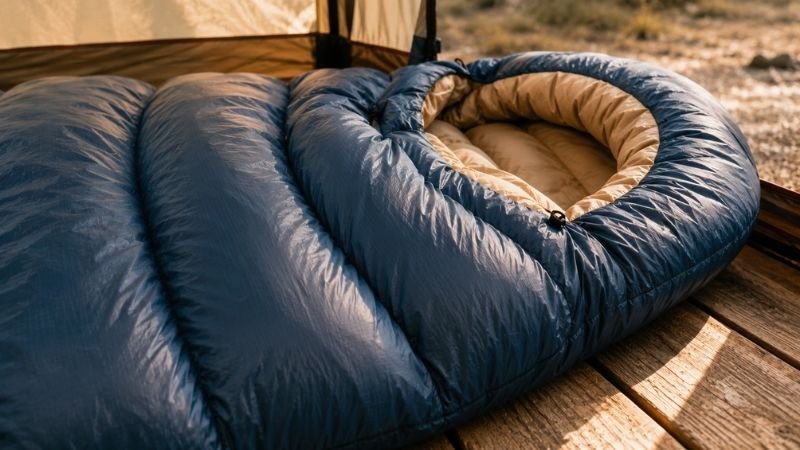
A sleeping bag’s insulation works by trapping warm air in its fill material (down or synthetic). A bag that’s been stored compressed for a long time, or one that’s slightly damp, may not loft fully — meaning the insulation isn’t expanded to its full thickness and the bag will underperform its rating.
Give your sleeping bag time to loft before you use it — take it out of its compression stuff sack at least 30 minutes before bed, or better yet, when you first set up camp.
Sleeping Bag Temperature Rating Quick Reference Table
| Camping Scenario | Expected Night Temp | Recommended Bag Rating | Notes |
|---|---|---|---|
| Summer camping | Above 50°F | 35–45°F | Lightweight; liner works for warm nights |
| Spring/fall camping | 30–50°F | 20–30°F | Best all-around beginner range |
| Cold-weather camping | Below 30°F | 0–15°F | Pair with R-4.0+ sleeping pad |
| Winter camping | Below 20°F | -10°F to -20°F | Specialized — seek specific guidance |
All ratings assume Comfort Rating (not Lower Limit) for conservative warmth. Cold sleepers should add 5–10°F additional buffer.
What If You Bought the Wrong Temperature Sleeping Bag?
This happens. You bought a 35°F bag and you’re camping somewhere that drops to 25°F. Or you’re simply running colder than your bag’s rating accounts for. Here are practical solutions that work:
Layer up inside the bag. Add base layers, a beanie, socks, and even a light fleece inside the bag. Each layer you add effectively extends the warmth range of the bag by several degrees.
Use a sleeping bag liner. A silk, cotton, or fleece liner slips inside your sleeping bag and adds 5–15°F of warmth depending on material. They’re lightweight, packable, and inexpensive — a useful addition to any camping kit.
Add a hot water bottle. Fill an insulated water bottle with hot water before bed and place it at the foot of your sleeping bag. This genuinely works and can make a significant difference on cold nights.
Upgrade your sleeping pad. If your sleeping pad is the issue (thin foam or air pad without insulation), adding a closed-cell foam pad underneath your existing pad adds meaningful warmth at very low cost and weight.
Sleep in your clothes. Not comfortable for long trips, but for one cold night it’s a functional solution. Wear your warmest dry layers to bed.
If You Only Have 5 Minutes: The Sleeping Bag Rating Cheat Sheet
Short on time? Here’s everything you actually need to know:
- Two numbers on the bag: Comfort = conservative (use this), Lower Limit = warmer sleeper estimate
- Buy a bag rated 10–15°F colder than the lowest temp you expect
- For most beginner car camping: 20°F or 30°F bag covers spring through fall
- The number in the bag’s name may not match the actual spec — always check the actual rating
- Your sleeping pad matters as much as your bag — don’t skip it
When Sleeping Cold Becomes a Safety Concern
For most beginner camping scenarios at established campgrounds, a cold night is uncomfortable but not dangerous. However, there are situations where body temperature concerns become genuinely serious:
Signs of mild hypothermia: Uncontrollable shivering, slurred speech, confusion, clumsiness. If anyone in your group shows these signs, address it immediately — add insulation, get them into a warm shelter or vehicle, give warm (not hot) drinks if they’re alert.
Early hypothermia prevention: If you wake up cold in your tent, don’t just endure it. Put on more layers. Add a hot water bottle. Get up and do light activity to generate warmth. Mild hypothermia is a legitimate medical concern, not just discomfort.
Seek emergency help if: Someone loses consciousness, stops shivering despite being cold (this indicates worsening hypothermia), or shows signs of severe confusion. In these cases, call emergency services and keep the person still and insulated while waiting for help.
FAQ: Real Questions About Sleeping Bag Temperature Ratings
Q: What does “20 degree sleeping bag” mean? It means the bag is rated to keep you warm at temperatures down to 20°F (approximately -7°C). Whether this reflects the Comfort or Lower Limit rating depends on the bag — check the product spec page for the actual EN/ISO rating breakdown. The “20” in the name may be rounded from the actual tested temperature.
Q: Is a 0 degree sleeping bag too warm for summer camping? Yes, for most summer camping. A 0°F bag will be uncomfortably hot on summer nights, and the extra insulation adds significant weight and bulk. Match your bag to your actual expected conditions, and if you camp year-round, consider owning two bags — a lightweight summer bag and a warmer three-season or cold-weather bag.
Q: What’s the difference between EN and ISO sleeping bag ratings? Almost nothing practical. EN (European Norm) was the original testing standard adopted by the sleeping bag industry. ISO (International Standards Organization) now oversees the same testing protocol with minimal changes. EN-rated bags and ISO-rated bags can be directly compared — the numbers mean the same thing.
Q: Do sleeping bag temperature ratings differ between men’s and women’s bags? Yes. Women’s bags typically display the Comfort rating (the more conservative number), while men’s bags typically display the Lower Limit rating (the less conservative number). This means a men’s “20°F bag” and a women’s “20°F bag” from the same brand are not equally warm — the women’s bag will typically be warmer, because its 20°F reflects the Comfort rating while the men’s reflects the Lower Limit.
Q: Can I use a summer sleeping bag in colder weather? You can, but you’ll need to compensate with extra clothing, a liner, or a hot water bottle. A 35°F bag used in 20°F conditions requires significant additional insulation from your clothing to be functional. For regular cold-weather camping, buying the appropriate bag is more practical than repeatedly compensating with layering.
Sleep Warm, Camp More
Understanding sleeping bag temperature ratings removes one of the most common sources of beginner camping frustration. Choose your bag based on the Comfort rating, add a 10–15°F buffer for real-world conditions, pair it with an adequate sleeping pad, and layer up inside the bag on cold nights.
The rest — the campfire, the stars, the morning coffee outside — is much more enjoyable when you’ve actually slept.
Plan your complete camping sleep system:
- The Complete Camping Packing List for Beginners
- Camping for Beginners: The Complete First-Timer’s Guide
- How to Set Up a Tent for the First Time
- Outdoor Safety for Beginners
References
- REI Co-op. Understanding Sleeping Bag Temperature Ratings. rei.com/learn/expert-advice/understanding-sleeping-bag-temperature-ratings.html
- ISO (International Standards Organization). ISO 23537 — Requirements for Sleeping Bags. iso.org
- Parsons, K.C. (2003). Human Thermal Environments: The Effects of Hot, Moderate, and Cold Environments on Human Health, Comfort and Performance. Taylor & Francis. (Chapter on individual variation in thermal comfort)
- Wilderness Medical Society. Cold Injuries and Hypothermia Prevention in Outdoor Recreation. wms.org
- American Alpine Club. Gear and Safety Recommendations for Cold-Weather Camping. americanalpineclub.org