
Your complete guide to what to pack for a hike — organized by trip length, budget-friendly, and written for people who’ve never done this before.
Key Takeaways
- Most beginners overpack by 30–40% on their first hike — this guide helps you bring exactly what you need, nothing more
- The Ten Essentials framework (developed by mountaineering experts) forms the backbone of any safe hiking packing list
- For a hike under 2 hours, you can get away with a 10-15L daypack weighing under 10 lbs total
- Hydration is the #1 thing beginners underestimate — plan for at least 0.5L of water per hour of hiking
- You don’t need to spend a fortune: a functional beginner kit can cost under $75 if you shop smart

You’re finally doing it.
You booked the weekend, you told your friends, and now you’re standing in your bedroom at 10pm the night before your first hike — staring at a half-open backpack, Googling “what to bring hiking” with a rising sense of panic.
Sound familiar? You’re not alone. Almost every beginner hiker has been there: that weird mix of excitement and dread, wondering if you’re forgetting something that’ll turn a fun morning into a miserable disaster. The blister you didn’t see coming. The water you ran out of at mile 3. The moment the clouds rolled in and you realized you left your jacket in the car.
Here’s the thing — a good hiking packing list isn’t about cramming in every possible item “just in case.” It’s about knowing which things matter, why they matter, and how to make smart decisions based on your specific hike. That’s exactly what this guide is for.
Whether you’re heading out for a quick 90-minute trail loop or planning your first half-day adventure, this hiking packing list will get you out the door confident, comfortable, and prepared — without turning your backpack into a survival bunker.
Why Your Hiking Packing List Can Make or Break Your First Trail
Let’s be honest: most people think the hardest part of hiking is the actual hiking. The uphill. The distance. The altitude.
But ask anyone who’s come back from a rough first hike, and the story usually starts with something in their bag — or something they forgot to put there. Shoes that weren’t broken in. A single water bottle for a 4-hour trail. No snacks. No rain jacket on a “probably fine” cloudy day.
The American Hiking Society reports that the vast majority of trail rescues involve hikers who were underprepared — not out of recklessness, but out of simply not knowing what they didn’t know. A well-thought-out packing list is your insurance policy. It’s also what makes the difference between “that was a bit rough” and “I never want to do that again.”
The good news? You don’t need expensive gear or years of experience to pack well. You just need a clear, organized list — which is exactly what follows.
The Backbone of Every Hiking Packing List: The Ten Essentials
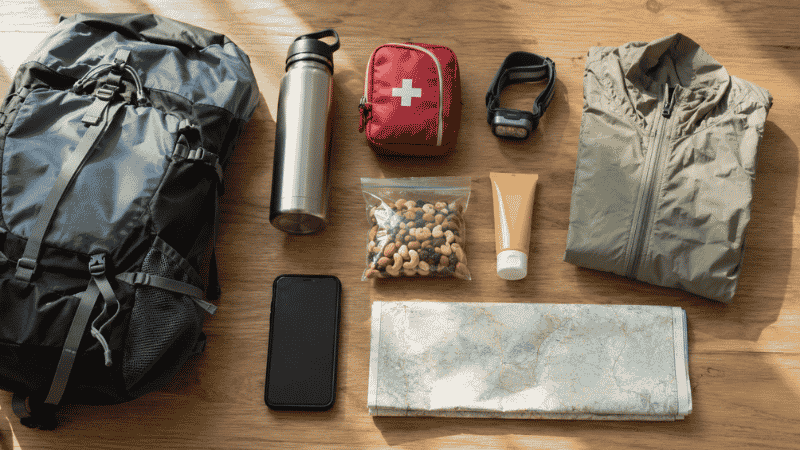
Before we get into the specifics, there’s a framework worth knowing about. The Ten Essentials is a list originally developed by The Mountaineers, a Seattle-based outdoor organization, and it’s been the gold standard for safe hiking preparation for decades. Think of it less as ten specific items and more as ten categories of protection — each one covering a type of problem that can come up on the trail.
Here’s the beginner-friendly version:
1. Navigation — A trail map for your specific route, downloaded offline on your phone (apps like AllTrails work great). Don’t assume you’ll have cell service.
2. Sun Protection — SPF 30+ sunscreen, UV-blocking sunglasses, and a hat with a brim. Sun hits differently when you’re out for hours with no shade.
3. Insulation — An extra layer beyond what you’re wearing. Weather changes fast, especially in the morning or at elevation. A lightweight fleece or packable jacket weighs almost nothing.
4. Illumination — A headlamp with fresh batteries. Even on day hikes. Hikes take longer than expected. Trails look very different in the dark.
5. First Aid — A basic first aid kit. At minimum: blister pads (the real MVP of beginner hiking), bandages, pain reliever, and any personal medications.
6. Fire — A lighter or waterproof matches. Not because you’re planning a campfire — but because if something goes wrong and you need to signal for help or stay warm, you’ll be grateful you have it.
7. Repair Tools — A small multi-tool or knife, plus a bit of duct tape wrapped around your water bottle. Sounds overkill. Isn’t.
8. Nutrition — Food for the day plus a little extra. More on this below.
9. Hydration — Water. More than you think you need. We’ll talk numbers.
10. Emergency Shelter — A lightweight emergency blanket (the foil kind costs about $5 and weighs an ounce). For most beginner day hikes, this is your safety net if something goes sideways.
Your Hiking Packing List by Trip Length

One of the biggest mistakes beginners make is treating every hike the same. A 90-minute trail loop and a 6-hour summit hike are completely different physical and logistical challenges — and your pack should reflect that.
Here’s how to think about it:
Short Hike Packing List (Under 2 Hours)
This is your “just getting started” scenario — a local trail, relatively flat, easy to navigate. Keep it light.
The Essentials:
- Water: at least 1L (500ml per hour)
- Trail snacks: a handful of nuts, a granola bar, some fruit
- Sunscreen + lip balm
- Sunglasses + hat
- Your phone with the trail downloaded offline
- Basic first aid (blister pads + bandages)
- An extra layer (light jacket or hoodie)
- Comfortable, closed-toe shoes (trail runners or hiking shoes — more on footwear below)
Backpack size: 10–15L daypack, or even a large fanny pack
Total pack weight goal: Under 5 lbs
Editor’s note: This is genuinely all you need for a short hike. Don’t let gear lists intimidate you into buying things for a 2-hour trail that you’d only need for a multi-day trip.
Half-Day Hiking Packing List (2–4 Hours)
This is where most beginner hikers spend their first few months — and honestly, it’s the sweet spot. Long enough to feel like a real adventure, short enough that you’re back home for a late lunch.
Everything from the short hike list, plus:
- Water: 2L minimum (bring more if it’s hot or you’re a heavy sweater)
- A real lunch or substantial snacks (trail mix, a sandwich, energy bars)
- Headlamp (even if you’re planning to be back before dark — plans change)
- Basic first aid kit
- Emergency blanket
- Trekking poles (optional, but knees will thank you on descents)
- Light rain jacket — especially if there’s any cloud cover in the forecast
Backpack size: 15–25L daypack
Total pack weight goal: Under 10 lbs
Full-Day Hiking Packing List (4–8 Hours)
Now we’re getting into serious territory. This is still a day hike — no tent needed — but your margin for error is much smaller. The weather could change. You might be out past sunset. Your body will need real fuel.
Everything from the half-day list, plus:
- Water: 3L+, or a water filter if you’ll pass streams (a Sawyer Squeeze filter is beginner-friendly and under $40)
- Extra food beyond your meal (trail fatigue is real — your body burns more than you expect)
- Dry sack or rain cover for your pack
- Change of socks (this sounds unnecessary until hour 5 — then it’s everything)
- Navigation backup: a physical map or downloaded offline route
- Personal locator beacon or satellite communicator if you’re going somewhere remote (optional for well-trafficked trails)
Backpack size: 25–35L daypack
Total pack weight goal: Under 15 lbs
What to Wear Hiking: The Clothing Layer Your Pack Depends On
Here’s something that confuses a lot of beginners: some of the most important “gear” you bring isn’t in your pack — it’s on your body. Clothing decisions make a massive difference in comfort and safety.
The Golden Rule: No Cotton
Cotton holds moisture, dries slowly, and will make you miserable (and potentially hypothermic in cold conditions). Stick to moisture-wicking synthetics or merino wool for anything touching your skin.
What to wear on a hike:
- Base layer: moisture-wicking t-shirt or long sleeve (synthetic or merino)
- Bottoms: quick-dry hiking pants or shorts — avoid jeans entirely
- Socks: wool or synthetic hiking socks (this single upgrade makes more difference than almost anything else)
- Footwear: trail runners or hiking shoes for most beginner trails; boots if you’re on rocky or wet terrain
- Mid-layer: lightweight fleece or packable jacket in your pack
- Outer layer: packable rain jacket if there’s any precipitation risk
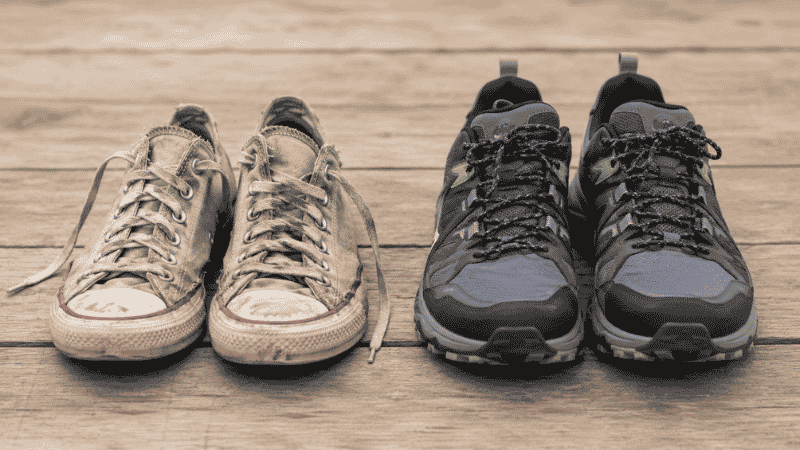
The footwear question: You don’t need expensive hiking boots for your first trails. A pair of trail runners with good grip will serve most beginners well. What you do need is footwear you’ve actually worn before — never break in new shoes on a hike.
Hiking Hydration: The #1 Thing Beginners Get Wrong
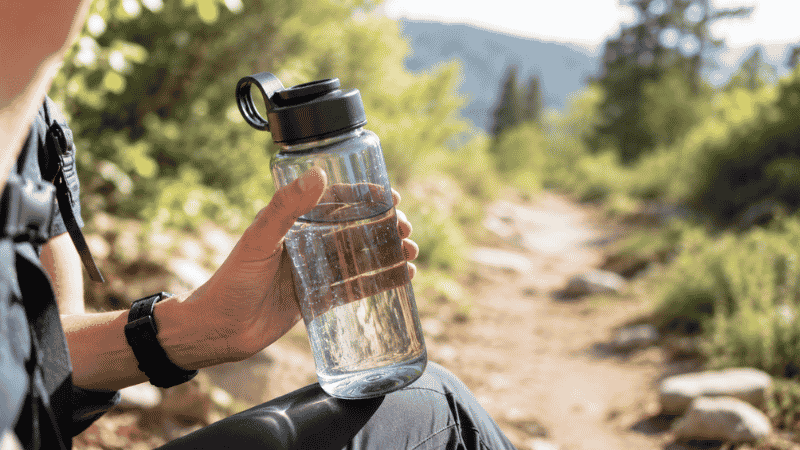
Let’s talk about water, because this is where so many first-time hikers suffer unnecessarily.
The general guideline from sports medicine research is 0.5 liters of water per hour of moderate hiking activity. That means a 4-hour hike requires at least 2 liters — and more if it’s hot, sunny, humid, or you’re working hard on elevation gain. The CDC also notes that thirst is often a late signal — by the time you feel thirsty, you’re already mildly dehydrated.
Practical hydration advice:
- Start drinking before you start hiking
- Take small sips every 15–20 minutes rather than gulping when thirsty
- Bring more water than you think you’ll need — you can always carry it back
- On longer hikes, consider electrolyte packets (not just water — you lose salt when you sweat)
- If you’re passing streams or natural water sources, a filter like the Sawyer Squeeze lets you refill safely
The one thing I’d go back and tell my first-hike self: bring a second water bottle. Even if you’re convinced you won’t need it. You will probably need it.
Hiking Snacks & Nutrition: Fuel That Actually Works on the Trail
Hiking burns significantly more calories than most people realize — roughly 400–600 calories per hour depending on terrain, pace, and body weight. What you eat before and during your hike directly affects how you feel in hours 3 and 4.
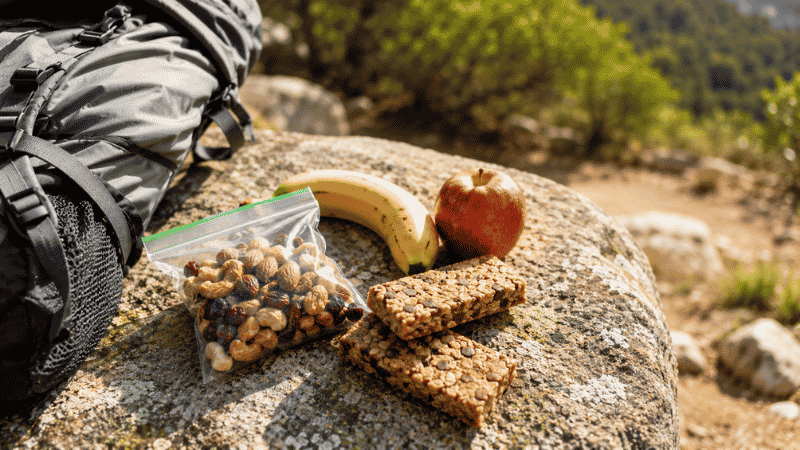
Best snacks for hiking (practical and trail-tested):
- Trail mix (the calorie density is unbeatable)
- Energy or granola bars (Rx Bars, Clif Bars, or store-brand work fine)
- Fresh fruit for the first hour (bananas, apples, oranges)
- Peanut butter packets (surprisingly practical and calorie-dense)
- Jerky or cheese sticks for protein
- Crackers or pretzels for salt replenishment
What to avoid: Heavy meals right before or during a hike tend to sit like a rock in your stomach. Stick to lighter, easily digestible foods while you’re moving, and save the real meal for when you’re done.
Budget-Friendly Gear: What You Actually Need to Buy First
One of the biggest myths about hiking is that it requires a huge gear investment. It doesn’t — at least not at the beginning. Here’s a realistic priority order for a beginner on a budget:
Spend money here first:
- Good hiking socks ($15–25 for a 2-pack of Darn Tough or Darn Tough alternatives) — this single item prevents more suffering than almost anything else
- A reliable daypack that fits your back ($30–60 gets you a solid beginner pack)
- Water bottles or a hydration bladder ($15–30)
- A basic headlamp ($20–35 for a reliable Black Diamond Spot or similar)
You can wait on these:
- Trekking poles — helpful but not essential for short hikes
- A fancy GPS device — your phone with AllTrails works fine to start
- Specialized hiking clothing — moisture-wicking athletic wear you already own works for beginner trails
You can DIY or improvise:
- Emergency blanket ($5–8 at any outdoor store)
- Basic first aid kit (assemble your own from drugstore supplies)
- Pack rain cover (a cheap poncho draped over your pack works in a pinch)
A complete beginner kit covering all the essentials can realistically come together for $75–150 if you’re intentional about it. You don’t need to spend $500 to have a great first hike.
10 Beginner Hiking Mistakes That a Good Packing List Prevents
These are the lessons that come from painful experience — so you don’t have to learn them the hard way.
1. Wearing new shoes on your first hike. Always wear footwear you’ve already broken in. New shoes + long trail = blisters guaranteed.
2. Bringing only one water bottle for a 3-hour hike. Do the math before you go. 3 hours = 1.5L minimum. Most water bottles are 500ml–1L. Pack accordingly.
3. Trusting the weather at your house. Trail conditions — especially at elevation — are completely different from what’s happening in your parking lot. Check the forecast for your specific trailhead.
4. Not downloading your trail map offline. Cell service disappears. AllTrails, Gaia GPS, and similar apps let you download maps for offline use. Do this before you leave the house.
5. Packing heavy “just in case.” Every pound in your pack is a pound your legs carry uphill. Pack intentionally, not anxiously.
6. Skipping snacks because “it’s just a short hike.” Even a 2-hour trail burns more energy than sitting at a desk. A small snack keeps your energy and mood stable.
7. Wearing cotton socks. Cotton holds moisture. Wet feet blister faster. This is the cheapest and most impactful gear upgrade you can make.
8. Not telling anyone your plan. Before any hike, tell a friend or family member where you’re going and when you expect to be back. It takes 30 seconds and matters a lot if something goes wrong.
9. Ignoring the turnaround time. A good rule: plan to turn around when you’re one-third of the way through your energy and water, not halfway. You need reserves for the way back.
10. Waiting until you’re thirsty to drink water. Thirst is a late indicator of dehydration. Drink on a schedule, not on demand.
If You Only Have 10 Minutes to Pack: The Ultra-Minimal Checklist
Sometimes you wake up, see the weather is perfect, and decide to just go. No shame. Here’s the absolute minimum you need for a short, well-trafficked trail:
- Water (at least 1L)
- Your phone with the trail pulled up
- Sunscreen + sunglasses
- A snack
- An extra layer
- Your ID and a small amount of cash
That’s it. For well-marked, popular trails under 2 hours, this gets you out the door safely. Add to it as you gain experience and start tackling longer routes.
Outdoor Safety Basics Every Beginner Hiker Should Know
A hiking packing list is only part of the preparation equation. Here are a few safety principles that are worth internalizing before your first trail:
The rule of thirds for turnaround: Use the first third of your energy going out, the second third coming back, and keep the final third in reserve. This is a simple mental model that prevents people from getting into trouble by pushing too far.
What to do if you get lost: Stop moving. Stay calm. Look around for trail markers. Check your offline map. If you genuinely can’t find your way, stay where you are and call for help — moving around randomly makes it harder for rescuers to find you.
Know your limits honestly. Trail ratings (easy / moderate / hard) are subjective and can vary wildly between trail systems. Read recent reviews on AllTrails and look at the elevation profile before committing. A 5-mile trail with 2,000 feet of elevation gain is very different from a flat 5-mile trail.
When to seek help: If someone in your group experiences chest pain, severe shortness of breath, confusion, or signs of heat stroke (hot, dry skin; confusion; rapid pulse), stop immediately and call emergency services. These are not situations to push through.
FAQ: Real Questions Beginners Actually Ask
Q: Do I really need hiking boots, or can I wear regular sneakers? For most beginner-friendly trails on well-maintained paths, trail runners or athletic shoes with decent grip work fine. Boots offer more ankle support and waterproofing for rocky or wet terrain. If you’re starting on easy, dry trails, don’t buy boots just because you think you’re supposed to.
Q: How heavy should my daypack be? A good rule of thumb: your loaded pack should weigh no more than 10–15% of your body weight. For a 150-lb person, that’s 15–22 lbs maximum. For short day hikes, aim for well under that.
Q: What’s the best hiking app for beginners? AllTrails is the most beginner-friendly option — it has trail ratings, reviews, photos, and offline map capability. Download your trail before you leave home, not when you’re in the parking lot with spotty signal.
Q: Can I hike if I’m not in good shape? Absolutely. Start with short, flat trails and build up. Hiking is one of the most accessible forms of exercise precisely because you control the pace and distance. The best hike for a beginner is one that leaves you feeling accomplished, not destroyed.
Q: How do I know if a trail is right for my fitness level? Look at two numbers: total distance and elevation gain. Under 3 miles with under 500 feet of elevation gain is a genuinely easy hike for most people. Add difficulty gradually from there.
Q: Is it safe to hike alone as a beginner? It can be, on popular, well-trafficked trails. Tell someone your plan, download your route offline, bring more water than you think you need, and stick to trails with recent reviews. As you gain experience, solo hiking becomes more comfortable.
Q: What time should I start a hike? Earlier is almost always better — cooler temperatures, quieter trails, and more daylight buffer if things take longer than expected. For morning summer hikes, aim to be on the trail by 7–8am to avoid peak heat.
Your Next Steps on the Trail
You now have everything you need to pack for your first hike with confidence. Keep this hiking packing list bookmarked and review it the night before every trail until the process becomes second nature.
Start small. Seriously — a 60-minute trail on a clear morning is the perfect first hike. It builds the habit, the confidence, and the knowledge of how your body feels on a trail. Every experienced hiker started there.
Once you’ve got your first few hikes under your belt, explore some of our other beginner guides:
- How to Choose Your First Hiking Trail (without picking one that’s too hard)
- Best Hiking Boots for Beginners on a Budget — our honest picks under $100
- Outdoor Safety for Beginners — what to do if something goes wrong on the trail
The trail is waiting. Pack smart, start easy, and enjoy every step of it.
References
- The Mountaineers. Mountaineering: The Freedom of the Hills — Original source of the Ten Essentials framework.
- American Hiking Society. Trail Safety & Preparedness Resources. americanhiking.org
- Centers for Disease Control and Prevention (CDC). Physical Activity and Heat Stress — Hydration guidelines during physical activity. cdc.gov
- Casa, D.J. et al. (2000). National Athletic Trainers’ Association Position Statement: Fluid Replacement for Athletes. Journal of Athletic Training, 35(2), 212–224.